Suction-Cup Shower Basket vs Over-the-Door Shower Caddy for Renters
Choose a suction-cup basket when the manufacturer approves your smooth, nonporous wall and you want products within easy reach. Choose an over-the-door caddy when a compatible shower door has enough top, hinge, and closing clearance and you would rather keep the wall untouched. Neither format is universally removable or mark-free; the better choice is the one your actual support surface can carry without interfering with the shower.
As an Amazon Associate, The Good Home Doc may earn from qualifying purchases.
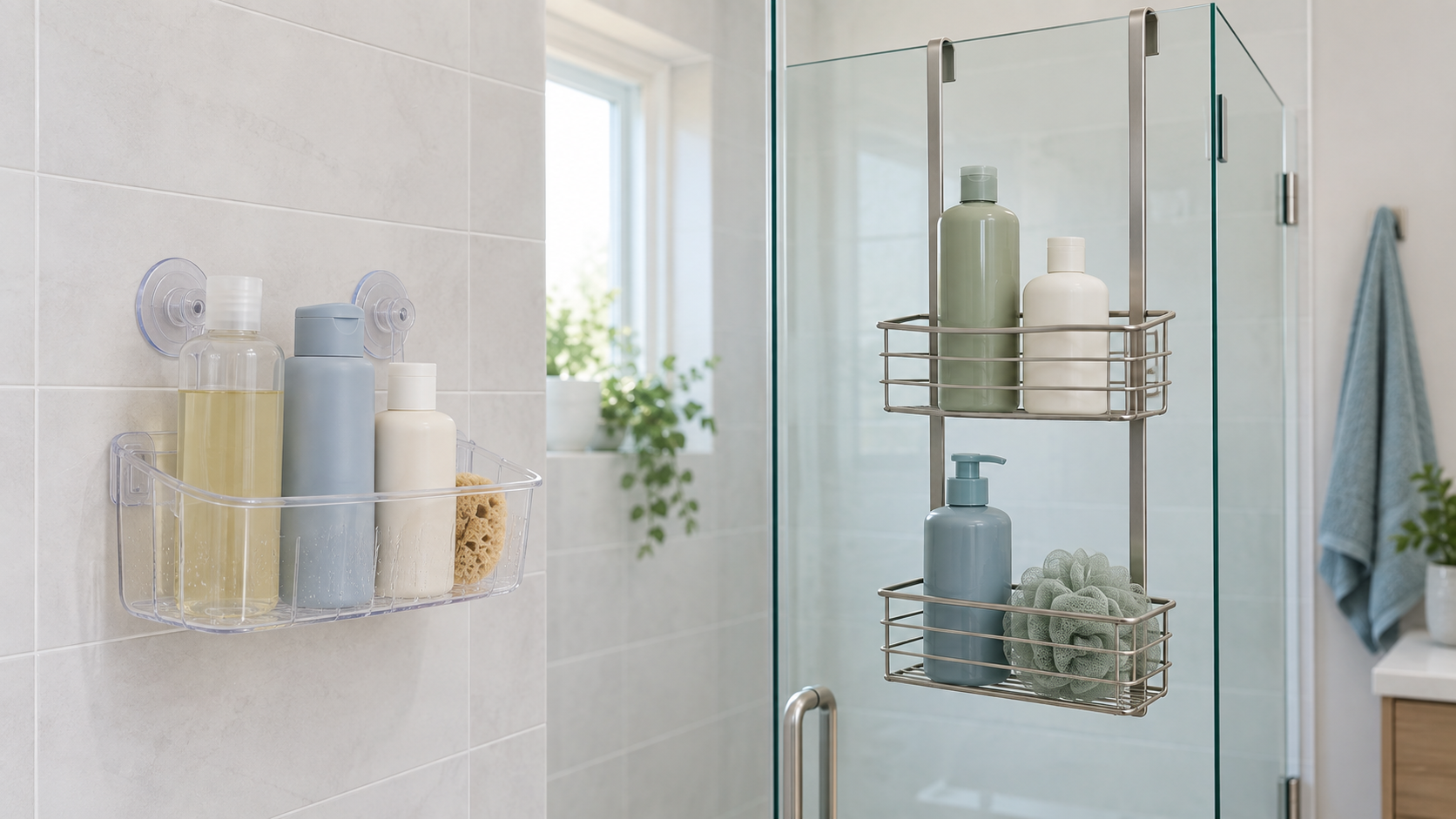
Quick decision before shopping
First measure the available space, identify the setup or surface constraints, and decide who will maintain the item. Skip the category if it blocks access, conflicts with the manufacturer's instructions or lease, or adds more upkeep than the problem justifies.
Check the support surface before shopping: These affiliate category links are comparison starting points, not tested winners.
- Browse category: Compare suction-cup shower basketsVerify approved wall materials, cup layout, basket dimensions, stated load, preparation, reattachment, drainage, and cleaning instructions.
- Browse category: Compare over-the-door shower caddiesCheck door type and thickness, hook padding, top and side clearance, basket projection, stated load, drainage, and care.
This is a category comparison, not an installation or damage-free guarantee. Follow the current product, shower-surface, shower-door, and lease instructions. Never use either organizer as a grab bar, body support, step, or storage for breakable containers.
Quick comparison
| Decision | Suction-cup basket | Over-the-door caddy |
|---|---|---|
| Support point | Approved smooth, nonporous wall surface | Compatible shower-door top edge |
| Critical measurement | Flat cup-contact area outside grout lines | Door thickness plus top, hinge, frame, and closing clearance |
| Placement | Flexible within the approved wall area | Fixed by door geometry and hook spacing |
| Main conflict | Texture, grout, coatings, residue, or repeated suction loss | Door closure, sweep, frame, hinge, seals, or a sliding panel |
| Move-out storage | Usually compact after removal | Bulkier hooks and baskets need protected packing space |
Start with surface and door compatibility
Suction is a surface-specific attachment method. Check the maker's approved-material list rather than assuming every tile or panel will work. Smooth glazed tile or glass may be listed; textured tile, grout, porous stone, flexible surrounds, curved corners, damaged finishes, and treated glass may be excluded. Each cup needs a complete flat contact patch, so map grout lines before choosing basket width and cup spacing.
An over-door caddy transfers its load to the top edge of a compatible door. Confirm that the maker allows the exact door material and thickness, then check the door manufacturer or property guidance before hanging anything from glass. Sliding, framed, folding, and hinged doors have different clearances. Skip the format if a hook would touch a frame, seal, hinge, adjacent panel, ceiling, or wall during normal travel.
Measure the working shower, not just the product
For a suction basket, check bottle height, pump clearance, elbow room, spray exposure, grab-bar access, curtain travel, and whether the basket projects into the entry path. Measure the wall area between grout lines rather than using tile size alone.
For an over-door model, measure the top-edge thickness and the clear gap above the door through its entire movement. Check hook width and drop, basket depth on both sides, handles, rollers, seals, towel-bar hardware, and the space needed to lift the caddy off for cleaning. Open and close the unloaded door slowly before adding products. Do not force a door past resistance.
Compare usable load and daily access
Use current stated-load guidance only for the exact model and installation method. Count the bottles used during a normal week, record their dimensions, and keep bulk refills outside the shower. Pumping a bottle while it sits in a basket can add leverage that a static load number does not describe; remove it first unless the instructions specifically allow in-place use.
A wall basket can place products close to the user, but only if the cups remain fully seated and the basket stays outside movement paths. A door caddy can provide more vertical storage, but added bottles increase the load on the hooks and make the door heavier to operate. Neither format should hold razors loosely, glass bottles, large refill containers, or anything that could injure someone if it falls.
Setup, removal, and lease constraints
Clean and prepare a suction surface exactly as directed, including any required drying time. Do not add undocumented adhesives, sealants, or improvised hardware to rescue poor suction. If a cup repeatedly releases, unload the basket and choose another format instead of accepting surprise falls.
For a door caddy, install supplied pads, sleeves, bumpers, or stabilizers in their documented positions. Padding can reduce contact, but it does not guarantee a scratch-free edge. Check the lease or ask the landlord when shower-door accessories are restricted, when glass is already chipped or scratched, or when door documentation is unavailable. Record pre-existing surface condition and keep removal instructions and parts for move-out.
Drainage, noise, and maintenance
Open bottoms help water leave, but bottle rings, soap residue, cup edges, hooks, coatings, and wall bumpers still need cleaning. Compare whether the basket detaches without tools and whether every contact point can dry. Use only cleaners allowed for both organizer and shower surface. Corrosion, cracks, deformed cups, peeling coatings, loose welds, or torn padding are reasons to unload the product.
A suction basket may click or fall if attachment degrades. A door caddy can rattle as the door moves unless documented stabilizers fit correctly. Do not wedge towels or improvised foam where they interfere with seals or closure. If quiet operation matters, assess the complete loaded movement during the return period rather than trusting labels such as “non-slip” or “no-rattle.”
Who should choose each format?
A suction-cup basket is the stronger candidate when the full cup pattern fits an approved flat surface, the desired location stays clear of controls and body movement, the household needs a modest working set of products, and periodic removal and reattachment fit the cleaning routine.
An over-the-door caddy is the stronger candidate when the exact door and top edge are approved for the product, hooks clear all moving parts and seals, the loaded caddy does not obstruct entry or closure, and the renter has space to pack the larger organizer later.
Skip both when the wall is textured, porous, damaged, or outside the product instructions; the door is sliding, folding, frameless, thin, chipped, poorly aligned, or otherwise unverified; the lease prohibits the attachment; or anyone might mistake the organizer for support equipment. A permitted tension caddy, showerhead caddy, freestanding floor organizer, or storage just outside the wet area may fit better.
When to involve the landlord or a professional
Storage does not fix loose tile, cracked glass, a dragging or misaligned door, damaged seals, active leaks, persistent dampness, or movement at a fixture. Report those conditions through the rental's repair process. Do not drill, modify door hardware, adjust plumbing, or alter the enclosure unless the owner authorizes the work and the appropriate qualified professional handles anything outside ordinary accessory setup.
Bottom line
Choose by the verified support point. A suction basket offers flexible placement but demands the right uninterrupted surface and routine rechecking. An over-door caddy avoids wall attachment but depends on exact door geometry, protected contact, and unobstructed movement. Measure first, keep the load modest, preserve access, and skip any setup whose instructions or rental permission remain unclear.