Silicone Baking Mat vs Parchment Paper for Sheet-Pan Cooking
A silicone baking mat and parchment paper can both line a sheet pan, but they do not create the same buying or kitchen routine. A mat is a reusable item that must fit, wash, dry, and store. Parchment is a replaceable supply that is easy to cut to size but must stay stocked. The better choice starts with the recipe and the product instructions—not a blanket claim that one liner cooks everything better.
As an Amazon Associate, The Good Home Doc may earn from qualifying purchases.
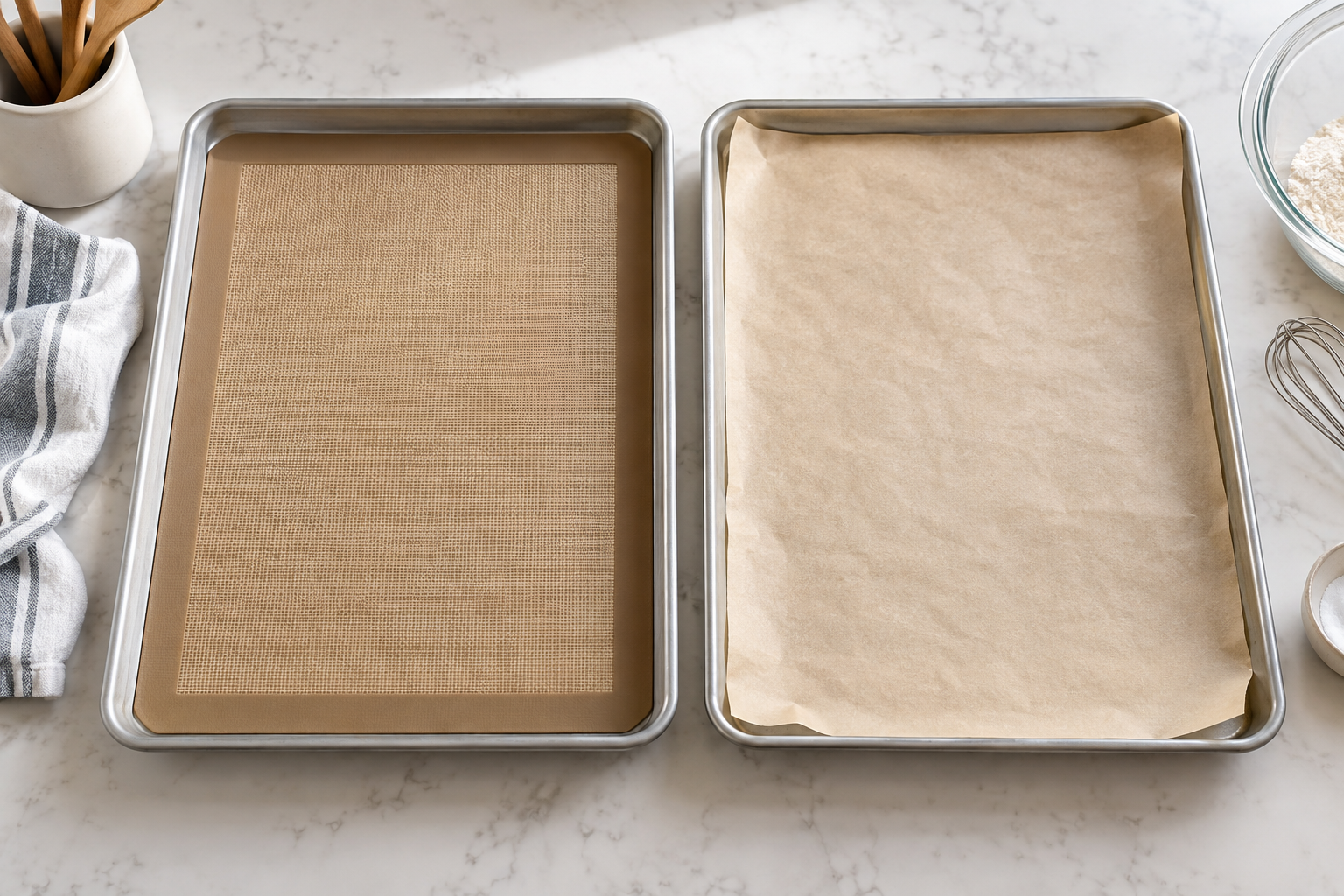
Quick decision before shopping
First measure the available space, identify the setup or surface constraints, and decide who will maintain the item. Skip the category if it blocks access, conflicts with the manufacturer's instructions or lease, or adds more upkeep than the problem justifies.
Compare both formats after checking the recipe and your exact pan:
- Browse category: Compare silicone baking mats and parchment paperCheck finished dimensions, documented temperature and appliance limits, care instructions, storage needs, and whether the liner is permitted for the food and cooking method you use.
This is a category search, not a tested ranking. Confirm current materials, fit, use limits, care directions, quantity, and return terms before buying.
Quick decision
| Choose | Best fit when | Main tradeoff |
|---|---|---|
| Silicone baking mat | You repeatedly use a compatible sheet pan and recipe, and you will wash, fully dry, and store the mat correctly | Exact fit, care, storage, and eventual replacement become part of the routine |
| Parchment paper | You want a liner that can be sized for different pans and discarded after use, where the recipe and package permit it | You need storage for a roll or sheets and an ongoing supply |
| Bare or otherwise prepared pan | The recipe or pan maker calls for it | Cleanup and food release depend on that specific method |
Neither liner belongs under every food or heating method. Follow the recipe, cookware instructions, and liner maker's current directions together. Do not assume that an oven-safe claim also permits broiling, direct contact with a heating element, stovetop use, grilling, or use beyond a stated temperature.
Start with the recipe, not the promise of easy cleanup
A liner changes the surface between the food and the metal pan. That can matter to spreading, browning, crispness, and release, but the result depends on the recipe and the specific liner. If a recipe was developed for parchment, a silicone mat, a greased pan, or bare metal, treat that direction as part of the method rather than an interchangeable suggestion.
This is also why universal performance claims are unhelpful. Two products in the same category can have different thicknesses, textures, coatings, temperature limits, and first-use directions. Check the package or current manufacturer documentation instead of relying on the material name alone.
Measure the pan before choosing a reusable mat
Measure the flat interior floor of the sheet pan inside its rolled or raised edges. A silicone mat should lie flat within that usable area without riding up the sides, folding, or overlapping. Product names such as half-sheet or quarter-sheet are useful starting points, but finished dimensions are the real check.
Parchment is more adaptable because a sheet can be chosen or trimmed to the pan under its instructions. Keep it within the pan and away from exposed heating elements. Do not use a loose, overhanging sheet or rely on food to make an otherwise prohibited setup acceptable.
Compare the whole ownership routine
Silicone baking mat
- Before use: confirm the exact size, permitted appliances and temperatures, first-use washing, and which side faces up if the maker specifies one.
- After use: follow the washing instructions, remove residue without prohibited abrasives or sharp tools, and let the mat dry completely.
- Storage: store it flat or rolled only as directed. Avoid creases, cuts, and pressure from sharp pan edges.
- Replacement: stop using a mat that is cut, torn, deeply creased, separating, or otherwise outside the maker's continued-use guidance.
Parchment paper
- Before use: confirm the package's temperature and appliance limits and whether the recipe calls for greasing or another preparation.
- During use: keep the paper fitted to the pan and away from heating elements or other prohibited contact.
- After use: follow disposal guidance appropriate to the paper, residue, and local collection rules; do not assume every used sheet is compostable or recyclable.
- Storage: keep the roll or precut sheets dry, clean, and protected from crushing or torn edges.
Recurring cost versus cleaning work
A reusable mat asks for more money up front and adds washing, drying, inspection, and storage. Parchment spreads the cost across replacement rolls or boxes and usually shortens the post-bake routine. The useful comparison is not simply reusable versus disposable: estimate how often the exact compatible task happens and whether you will maintain the mat.
If you bake on the same pan frequently, a correctly fitted mat may earn its storage space. If recipes, pan sizes, or cooking methods vary, parchment may be easier to fit—but only where its instructions permit the use. Occasional bakers should count the cabinet space and care routine of a mat, not just the number of theoretical reuses.
Must-haves and nice-to-haves
Must-haves
- Dimensions that fit the pan's flat cooking surface.
- Clear temperature, appliance, food-contact, and care instructions.
- A method permitted by the recipe and cookware maker.
- Flat placement without folds, torn edges, or contact with a heating element.
- A realistic cleaning or restocking routine.
Nice-to-haves
- Precut parchment sheets that match a pan you use often.
- A mat with visible size and use markings, provided they match the current instructions.
- Packaging or a dedicated spot that keeps sheets flat and mats protected.
- A second compatible liner only when you regularly use two pans at once.
Who should skip each option?
Skip a silicone mat if you cannot verify the size or use limits, need to cut the liner, routinely use a prohibited cooking mode, lack room to clean and dry it, or are unlikely to inspect and replace damaged material. Do not cut a mat unless its maker explicitly designed and instructs it for cutting.
Skip parchment if the recipe, appliance, cookware, temperature, or heating method falls outside its package directions. It is also a poor fit if keeping disposable supplies stocked is the friction you are trying to remove.
Skip both when the recipe or pan maker specifies another preparation. A liner is a cooking-surface choice, not an automatic upgrade.
Bottom line
Choose a silicone baking mat when one verified size and use pattern repeats often enough to justify washing, drying, storage, and inspection. Choose parchment when permitted recipes and changing pan sizes make a trim-to-fit, replaceable liner more practical. In either case, the recipe and current product instructions decide the safe operating limits; convenience comes second.