Shower Curtain Liner vs Splash Guard for a Tub Shower
Choose a shower curtain liner when routine spray can escape across much of the tub opening. Choose a small splash guard when water mainly slips through one repeatable gap where the tub rim meets the wall or curtain edge. A guard is a targeted add-on, not a substitute for an intact, correctly sized liner or a repair for failed surfaces.
As an Amazon Associate, The Good Home Doc may earn from qualifying purchases.
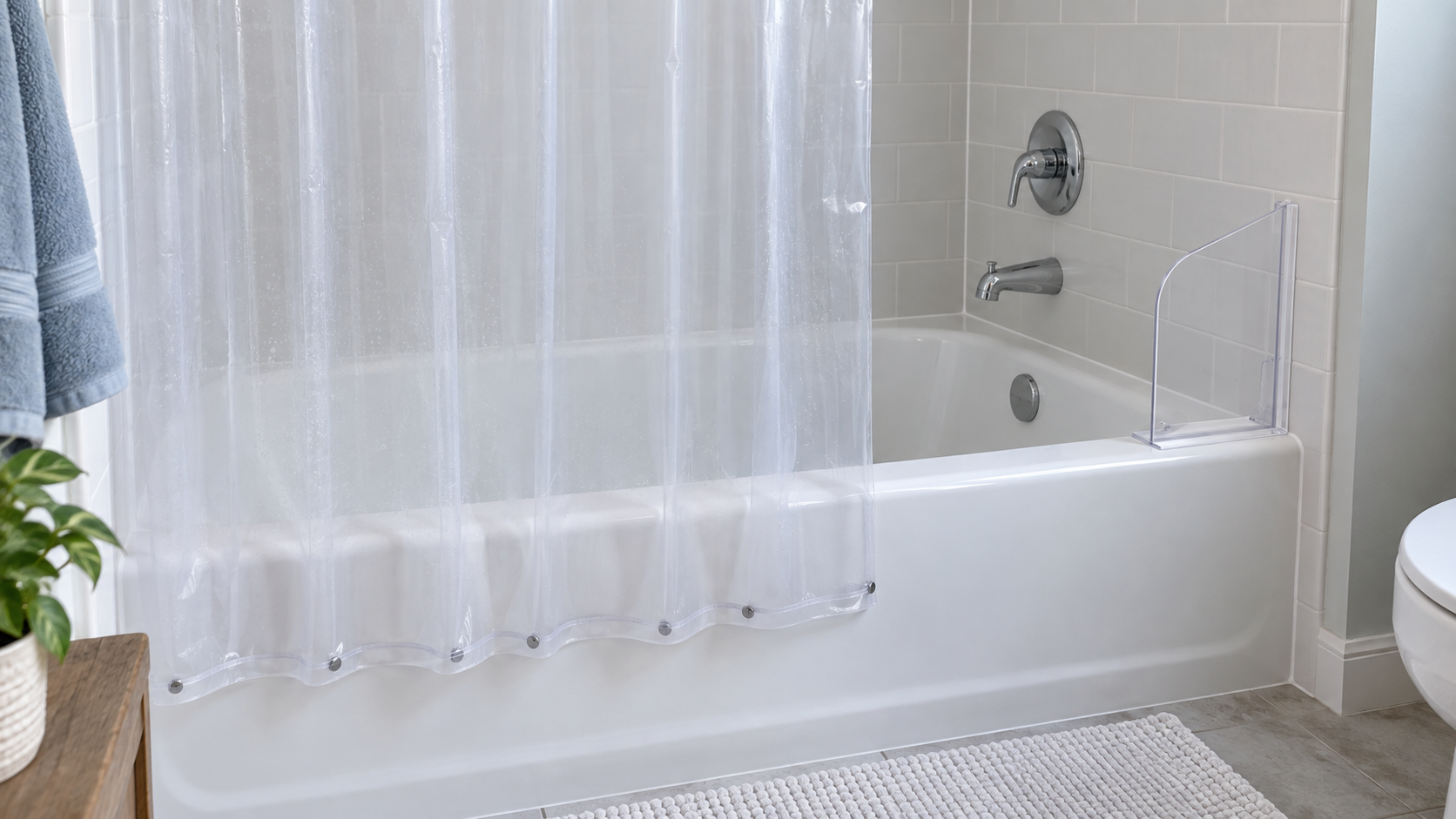
Quick decision before shopping
First measure the available space, identify the setup or surface constraints, and decide who will maintain the item. Skip the category if it blocks access, conflicts with the manufacturer's instructions or lease, or adds more upkeep than the problem justifies.
Find the water path before shopping: These affiliate category links are comparison starting points, not tested winners.
- Browse category: Compare weighted tub-shower linersMeasure opening width and rod-to-tub drop; check material, hem design, care, and curtain pairing.
- Browse category: Compare tub corner splash guardsCheck guard dimensions, tub-rim geometry, wall surface, mounting method, cleaning access, and removal instructions.
Neither product repairs leaking plumbing, failed caulk, loose tile, damaged wall material, or an enclosure that sends water outside the tub. Address defects through the property manager or a qualified professional.
Quick comparison
| Decision point | Shower curtain liner | Tub splash guard |
|---|---|---|
| Best fit | Water escaping along a broad part of the opening | Water escaping at one corner or curtain-end gap |
| Main measurement | Opening width and rod-to-inside-tub drop | Tub-rim width, wall angle, guard footprint, and curtain overlap |
| Surface dependency | Mostly depends on rod, rings, tub, and liner fit | Often depends on a smooth, compatible mounting surface |
| Cleaning | Large flexible surface that must spread out and dry | Small rigid part with seams and edges to wipe |
| Renter issue | Usually removable hardware, subject to the existing rod | Adhesive residue or surface damage may require permission |
| Cannot solve | Failed caulk, plumbing leaks, damaged walls, bad drainage, or water outside the normal spray path | |
First identify where the water escapes
Dry the floor and tub edge, then observe the next normal shower from outside the spray area if that can be done safely. Do not create a slippery test. Look for a broad wet line along the tub, a curtain that lifts inward or sits outside the rim, or a concentrated stream at the wall-side corner.
A broad pattern usually points to coverage, placement, or liner fit. One corner may point to a gap between the wall, curtain, and tub rim. Water appearing beneath trim, through grout or caulk, behind the wall, or when the shower is not running is not a routine splash-control shopping problem.
Choose a liner for full-opening coverage
A liner creates a flexible barrier across the tub opening. Its bottom edge belongs inside the tub so water returns to the basin. Measure the opening width, the drop from the installed rod and rings to the inside tub surface, and the overlap needed at both walls. “Standard size” is not a measurement.
A modestly weighted hem can reduce ordinary movement, but weights cannot correct a liner that is too short, stretched too tightly, pushed outside the tub, or pulled by a strong air current. Curved rods, fans, open doors, and the outer curtain can all affect how the liner hangs.
Choose a liner if:
- Spray or runoff can reach several points along the opening.
- The current liner is missing, too short, too narrow, or difficult to keep inside the tub.
- You can open it fully after use so both sides dry.
- You want a completely removable product without attaching parts to the wall or tub.
Skip a liner-only fix if:
- Water consistently bypasses one wall-side end even with a correctly fitted liner.
- The rod or enclosure is loose, damaged, or cannot hold the liner correctly.
- Water is emerging from a fixture, seam, wall, floor, or concealed area.
Choose a splash guard for one repeatable corner gap
A corner guard is a small rigid barrier designed to interrupt water at the end of the tub. It can help where the curtain does not remain close enough to the wall or where the rim channels routine spray toward the outer corner. It does not protect the rest of the opening, so it usually works with a liner rather than instead of one.
Trace the proposed footprint before buying. Check the flat usable width of the tub rim, wall angle, tile and grout position, rounded edges, nearby trim, curtain overlap, and whether the guard would hold water. Follow the maker’s exact surface preparation and mounting instructions; products intended for smooth tile may not suit textured surrounds, weak finishes, uneven grout lines, or flexible surfaces.
Choose a guard if:
- The escape point is narrow, repeatable, and clearly at the tub-wall corner.
- The tub rim and wall provide the compatible footprint the instructions require.
- The curtain can overlap the guard without snagging or leaving another gap.
- You can reach every edge for normal cleaning and drying.
Skip a guard if:
- You would need it to cover failed caulk, damaged material, or an active leak.
- The mounting area is textured, loose, curved, narrow, or excluded by the instructions.
- It would interfere with tub entry, a grab-bar path, bathing assistance, or cleaning.
- Your lease or property manager does not allow the mounting method.
Renter, cleaning, and access checks
A liner is generally simpler to take down, but confirm that the existing rod and rings are secure and permitted. An adhesive guard can leave residue or lift a finish even when marketed as removable. Read the lease, obtain permission when needed, photograph the clean surface first, and do not assume damage-free removal.
Keep either product open to air after use and clean it only as directed. Inspect guard edges for trapped residue and liner hems for buildup or damage. Replace a product that no longer hangs, mounts, or cleans as intended rather than adding improvised adhesive, clips, or weights.
Do not add a guard where it narrows safe entry or conflicts with household accessibility needs. If someone relies on a transfer setup, seat, grab bar, or assistance, preserve that route and consult the appropriate qualified professional before changing the enclosure area.
When to stop shopping and report or repair the problem
Stop treating the issue as ordinary splash when water continues after the shower is off, appears from a fixture or wall, softens or stains surrounding material, produces a persistent musty odor, or returns despite correct routine containment. Renters should document the condition and notify the property manager. Homeowners should use a qualified professional when the source or extent is unclear.
Also stop if the tub drains slowly enough that water level or pooling changes the normal containment path. A liner or guard should not hide a drainage, plumbing, waterproofing, or damaged-surface problem.
Bottom line
A correctly measured liner is the first choice for broad, everyday spray across an open tub shower. A splash guard is a narrow add-on for a verified corner gap with a compatible, cleanable mounting surface. Many tubs need a liner; only some benefit from a guard. Follow the water path, protect access, and treat building defects as repair issues rather than accessory problems.