How to Choose Shower Curtain Liners for Small Tub Showers
A good liner for a compact tub shower keeps its lower edge inside the tub without puddling on the floor, crowding the person showering, or turning routine cleaning into a wrestling match. Measure the opening and rod-to-tub drop first; material and hem weight only help after the basic fit is right.
As an Amazon Associate, The Good Home Doc may earn from qualifying purchases.
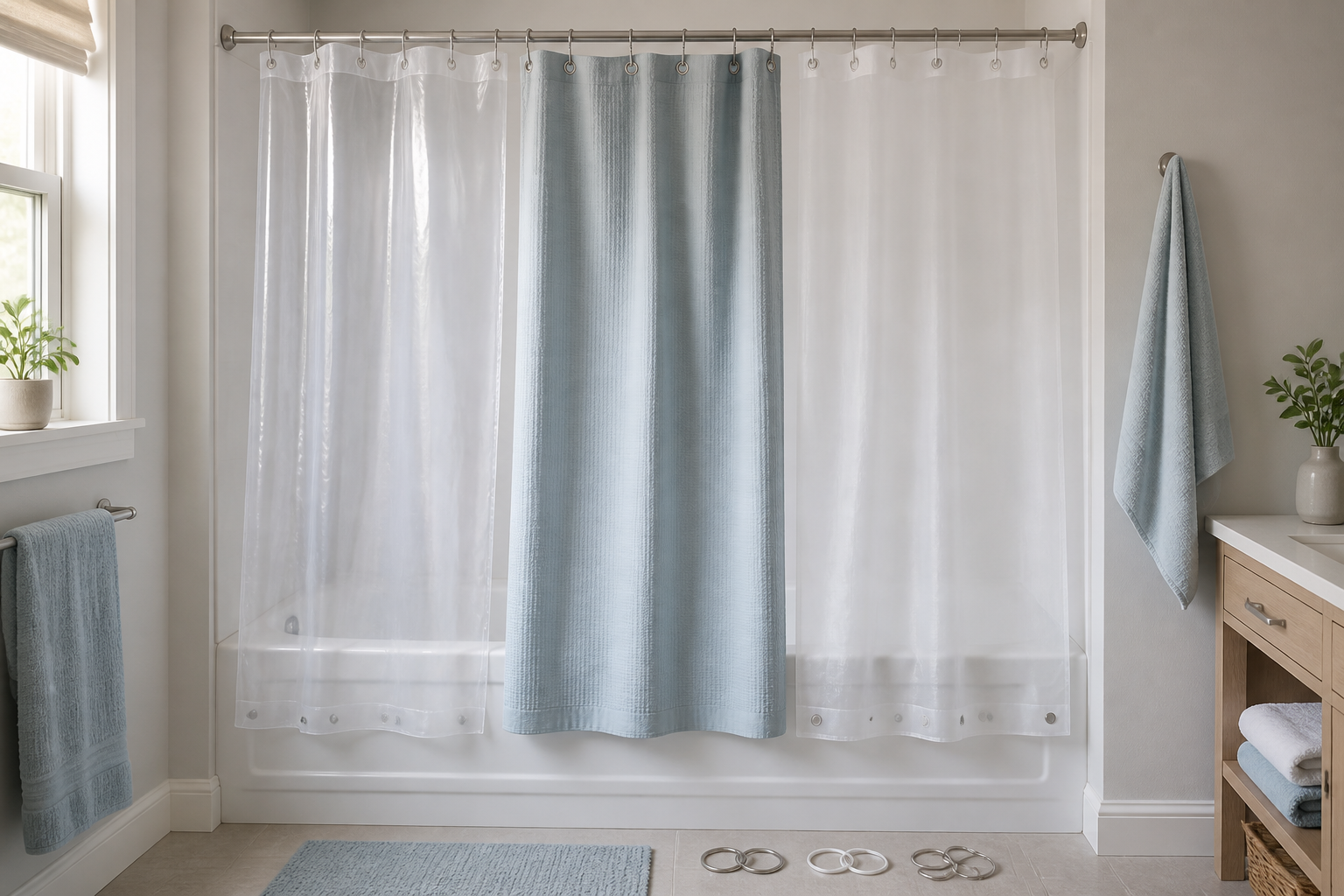
Quick decision before shopping
First measure the available space, identify the setup or surface constraints, and decide who will maintain the item. Skip the category if it blocks access, conflicts with the manufacturer's instructions or lease, or adds more upkeep than the problem justifies.
Compare the liner format first: These affiliate category links are shopping starting points, not named winners or tested rankings.
- Browse category: Small tub-shower curtain linersStart with an exact width and length that keeps the hem inside the tub without dragging.
- Browse category: Washable fabric shower curtain linersCompare care instructions, drying time, hem construction, and whether the fabric needs a separate waterproof barrier.
- Browse category: Weighted PEVA-style shower curtain linersCheck disclosed material, hem weights, grommets, odor guidance, and care instructions.
Confirm the listed dimensions, material disclosure, hem construction, hook compatibility, care label, and return terms before buying.
This guide covers a removable liner for routine splash containment in an intact tub-shower setup. If water escapes only at one tub-wall corner, compare a full liner with a targeted splash guard before buying another liner. A liner cannot repair failed caulk, loose tile, a leaking fixture, damaged wall material, or water escaping from another source. Renters should report building defects through the property manager; homeowners should use qualified help when the source is unclear or damage is visible.
Quick Picks by Tub-Shower Setup
- Best simple default: a correctly sized, moderately weighted liner with reinforced hanging holes and clear wipe-clean instructions.
- Best for frequent laundering: a washable fabric liner whose care label fits your washer and drying routine.
- Best for seeing tub edges and stored items: a clear or frosted liner that does not block light.
- Best for a narrow enclosure: the least bulky material that still hangs inside the tub and stays controlled at the hem.
- Best when the current liner pools: a shorter measured drop—not merely a heavier replacement.
Measure Before Choosing Material
Measure the usable width from wall to wall along the rod, then allow enough fullness for the liner to close without pulling taut. Count the rod rings or hook positions and compare them with the liner holes. For length, measure from the rod or ring attachment point to a spot inside the tub that contains routine spray without letting the hem sit on the tub floor.
Do not assume “standard” fits a small tub shower. Rod height, tub depth, curved rods, unusually narrow alcoves, and the length added by hooks can change the result. If a liner lies on the tub floor, it can stay wet and become harder to clean. If it ends above the inner tub wall, routine spray can escape underneath.
Compare the Main Liner Formats
PEVA-Style and Other Flexible Plastic Liners
These liners are usually thin, water-resistant barriers that wipe clean and let some light through. The useful comparison points are a clearly disclosed material, enough body to hang predictably, reinforced holes, a controlled bottom hem, and care instructions you will follow.
Watch for: vague material descriptions, a harsh persistent odor, brittle folds, weak hanging holes, or cleaning instructions that do not fit your routine. Do not treat “vinyl-free,” “non-toxic,” or similar seller language as proof of health or safety.
Washable Fabric Liners
Fabric can feel less clingy and may be easier to launder when the care label permits machine washing. It is often bulkier in a narrow tub, absorbs more water than a smooth plastic-style surface, and needs enough airflow to dry fully between uses.
Watch for: assuming every fabric liner is a waterproof barrier. Read the manufacturer description and care label, check whether a separate liner is required, and make sure the wet fabric does not remain bunched against the tub wall.
Weighted or Magnetic-Hem Liners
Extra weight can reduce inward movement when the liner is already the right size. Magnets only help when they meet a compatible ferrous surface in the right place; many tubs and surrounds will not hold them.
Watch for: exposed or corroding hem pieces, weights that make laundering awkward, and the assumption that a heavier liner can correct poor rod placement or an oversized length.
Must-Have Features
- Exact listed dimensions: width and length should match your measured rod, hooks, and tub overlap.
- Reinforced hanging points: grommets or reinforced holes should align with the hooks you plan to use.
- Documented material: avoid listings that obscure what the liner is made from.
- A manageable lower hem: enough control to remain inside the tub without dragging or blocking the drain.
- Realistic care directions: wiping, washing, and drying requirements should fit your bathroom and laundry access.
Nice-to-Have Features
- A translucent upper section that preserves light in a dark enclosure.
- A label or subtle marker that makes the tub-facing side easy to identify.
- Replaceable hooks that slide quietly and fit the rod diameter.
- A hem that opens enough to rinse clean rather than trapping residue in thick folds.
Pair the Liner With the Outer Curtain
If you use a decorative outer curtain, confirm that both layers can move independently and hang without crowding the tub. The liner belongs inside the tub during a shower; the decorative curtain generally stays outside. A liner that is much longer or fuller than the curtain can bunch at the ends and become harder to spread open for drying.
A curved rod may create more shoulder space, but it can also change the liner’s path at the ends. Check that routine spray is still directed into the tub and that the rod and curtain do not interfere with doors, windows, grab bars, or required access. Follow the rod maker’s installation guidance rather than improvising structural or wall mounting.
Cleaning, Drying, and Replacement
After showering, spread the liner across the rod so folds can dry instead of leaving it bunched at one end. Follow the care label: some liners are wipe-clean only, while some fabric or flexible liners permit a specific wash cycle. Do not assume a hot dryer, bleach, abrasive pad, or strong cleaner is compatible.
Clean or replace the liner when residue no longer comes off using the allowed care method, hanging holes tear, seams separate, the material becomes brittle, or hem components become exposed. Persistent staining, odors, soft wall materials, or recurring dampness outside the tub point to a room or building problem—not simply a worn liner.
Who Should Skip a New Liner
Skip the purchase when the current liner is intact and only needs correct positioning or label-approved cleaning. Also pause shopping if water appears behind the surround, below the tub, around a fixture, through a ceiling, or beside failed caulk or grout. A different liner will not diagnose or repair those conditions.
People who use a shower door rather than a rod-and-curtain setup need door seals, sweeps, and manufacturer-specific maintenance—not a liner. If mobility, caregiving, or access needs affect the opening, do not add weights, magnets, or extra fabric that could obstruct entry; seek setup guidance appropriate to the person and bathroom.
Bottom Line
For most compact tub showers, the best liner is the one whose measured drop ends safely inside the tub, whose width closes without stretching or excessive bunching, and whose material you can keep clean and fully dry. Choose PEVA-style material for a light wipe-clean barrier, washable fabric for a laundering routine and softer feel, or a modest weighted hem when inward movement remains after fit is corrected. Fix the dimensions first, then compare material and extras.