Powder vs Liquid Laundry Detergent for Small Apartments
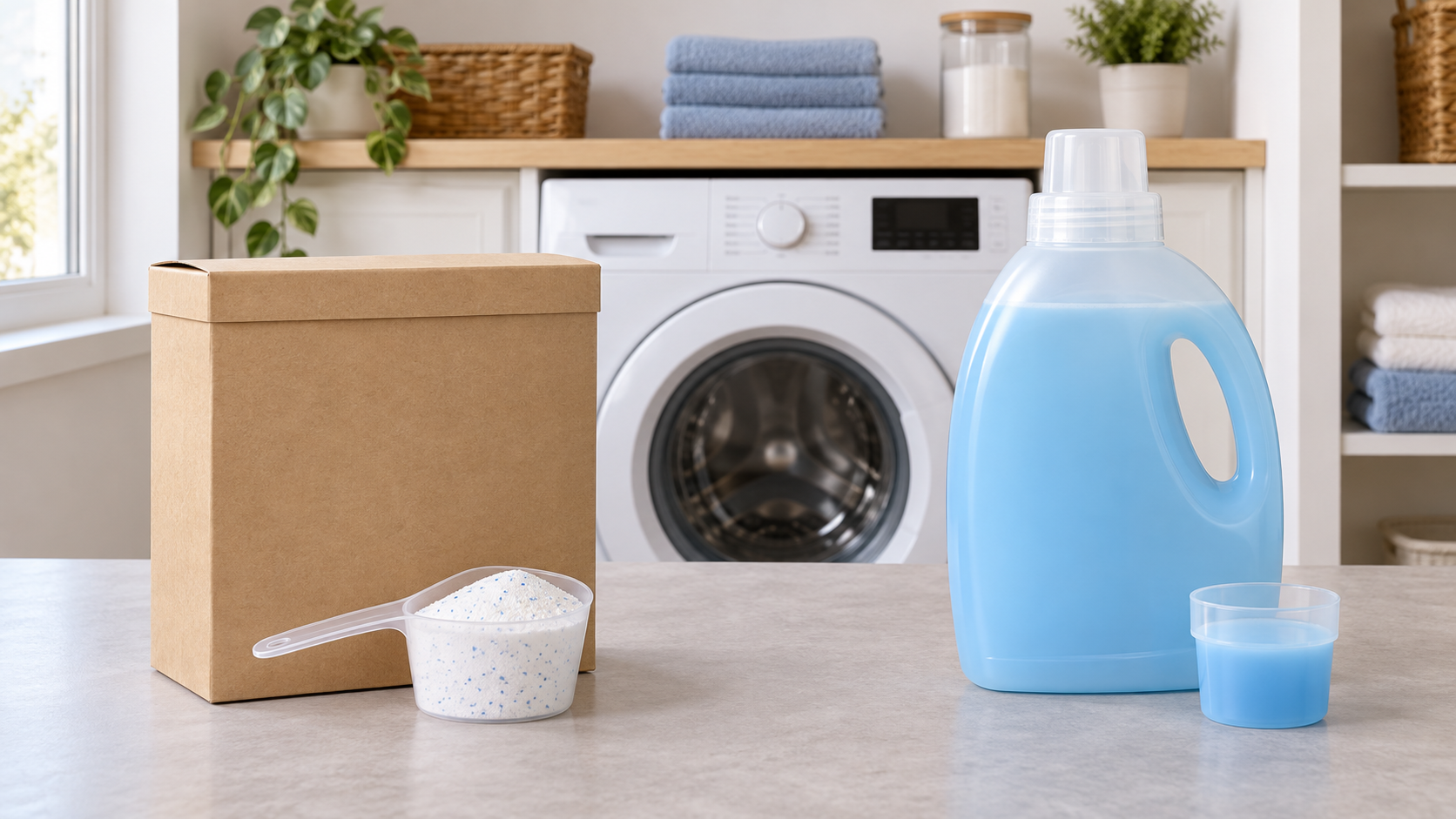
Powder detergent often fits a dry shelf neatly and avoids a liquid leak, while liquid detergent makes direct pretreating and cold-water measuring familiar for many households. The better choice is the format your washer permits, your clothes require, and your storage routine can keep dry, contained, and out of reach—not a universal winner.
As an Amazon Associate, The Good Home Doc may earn from qualifying purchases.
Quick decision before shopping
First measure the available space, identify the setup or surface constraints, and decide who will maintain the item. Skip the category if it blocks access, conflicts with the manufacturer's instructions or lease, or adds more upkeep than the problem justifies.
Start with the format your washer manual allows:
- Browse category: Compare powder laundry detergentCheck machine compatibility, dosing directions, ingredients, package closure, and storage instructions.
- Browse category: Compare liquid laundry detergentCheck concentration, measuring marks, dispenser guidance, cap cleanup, and container dimensions.
These are category routes, not tested rankings. Follow the detergent label, garment care label, and washer manual; keep all laundry products secured away from children and pets.
Quick answer
- Choose powder when you have a reliably dry storage spot, prefer a box or refillable canister shape, and your machine instructions support it.
- Choose liquid when direct pretreating is part of your routine and you can store the bottle upright in a contained, accessible place.
- Skip either format if its label conflicts with the washer, fabric, water temperature, or household handling needs.
- Do not combine products or move detergent into an unlabeled food or drink container.
Powder vs liquid at a glance
| Decision point | Powder detergent | Liquid detergent |
|---|---|---|
| Best fit | A dry shelf and a careful scoop-and-level routine. | An upright, contained storage spot and a cap-measuring routine. |
| Pretreating | May require mixing only when the label permits. | Some labels permit direct pretreating; follow time and rinse directions. |
| Storage risk | Humidity and wet scoops can cause clumping. | A loose cap or damaged bottle can leak. |
| Dispenser care | Use only the compartment or drum placement the manual specifies. | Wipe drips and clean the permitted dispenser parts. |
| Measuring | Read scoop lines in good light and keep the scoop dry. | Read cap lines on a level surface and account for concentration. |
Who powder detergent fits
Powder can suit a household with a narrow, dry shelf and predictable loads. A rectangular box may use space efficiently, and there is no liquid to run across a cabinet if the package tips. But a damp laundry closet, wet hands, or a scoop returned with residue can turn storage messy. Measure from the product directions rather than filling the scoop automatically.
Check the washer manual for detergent type and placement. Do not assume powder belongs in every drawer or directly in every drum. If it does not dissolve as expected, stop and compare the label, selected cycle, water conditions, load size, and machine guidance instead of simply adding more.
Who liquid detergent fits
Liquid can fit households that pretreat permitted washable stains with the same product or want a pourable format. It still needs deliberate dosing: concentrated formulas can use different cap lines, and a large cap can make a small amount hard to see. Store the bottle upright, close it fully, and consider a washable tray beneath it if the shelf would be damaged by a leak.
Follow label limits for pretreating and never let detergent dry on a garment unless directed. Wipe the bottle neck and cap before returning it to storage. A bottle that is awkward to lift or pour when full is a poor fit even if it occupies less shelf width.
Setup and storage in a small apartment
Measure the shelf width, depth, and height with the cabinet door closed. Also measure the space needed to lift a scoop or tilt a bottle. Keep detergent in its original labeled package, or retain all identification and directions if the manufacturer supplies an approved refill system. Do not place it above food, beside a heater, on an unstable appliance top, or where a child or pet can reach it.
Shared laundry rooms add a carrying decision. A smaller tightly closed package may be easier than transporting a bulk container. Keep the measuring tool with the detergent in a washable tote, and bring the product home after the load rather than leaving it in a common area.
Maintenance and spill response
For powder, keep the package and scoop dry, brush granules from the shelf, and replace a torn liner or closure. For liquid, wipe the cap, inspect the bottle and handle, and wash the storage tray according to its instructions. Clean washer dispensers only as the appliance manual directs; residue can have several causes, so avoid improvised chemicals or mixing cleaners.
For any spill or exposure, follow the product label. Keep the package available when contacting Poison Control or local emergency services, and seek urgent help for breathing trouble or other severe symptoms. Never mix laundry products in an attempt to improve cleaning.
Who should skip each option?
Skip powder if your only storage is humid, you cannot read or level the dose comfortably, or your washer instructions exclude it. Skip a large box if you cannot lift or keep it securely closed.
Skip liquid if you lack upright contained storage, find the bottle difficult to grip, or routinely lose track of concentration and cap lines. A leaking bottle is not a small-space convenience.
Skip both candidates when the washer or textile requires a different product. Fragrance sensitivity, allergies, septic-system questions, specialty fabrics, and local wastewater rules require label-specific or qualified guidance rather than format assumptions.
Bottom line
Powder rewards dry storage and a consistent scoop routine; liquid rewards secure upright storage and careful cap measuring, with a convenient pretreating path when its label permits. Measure the storage location, read all three instruction sources—detergent, garment, and washer—and choose the format whose full routine you can maintain.