Mesh Laundry Bag vs Pillowcase for Delicates
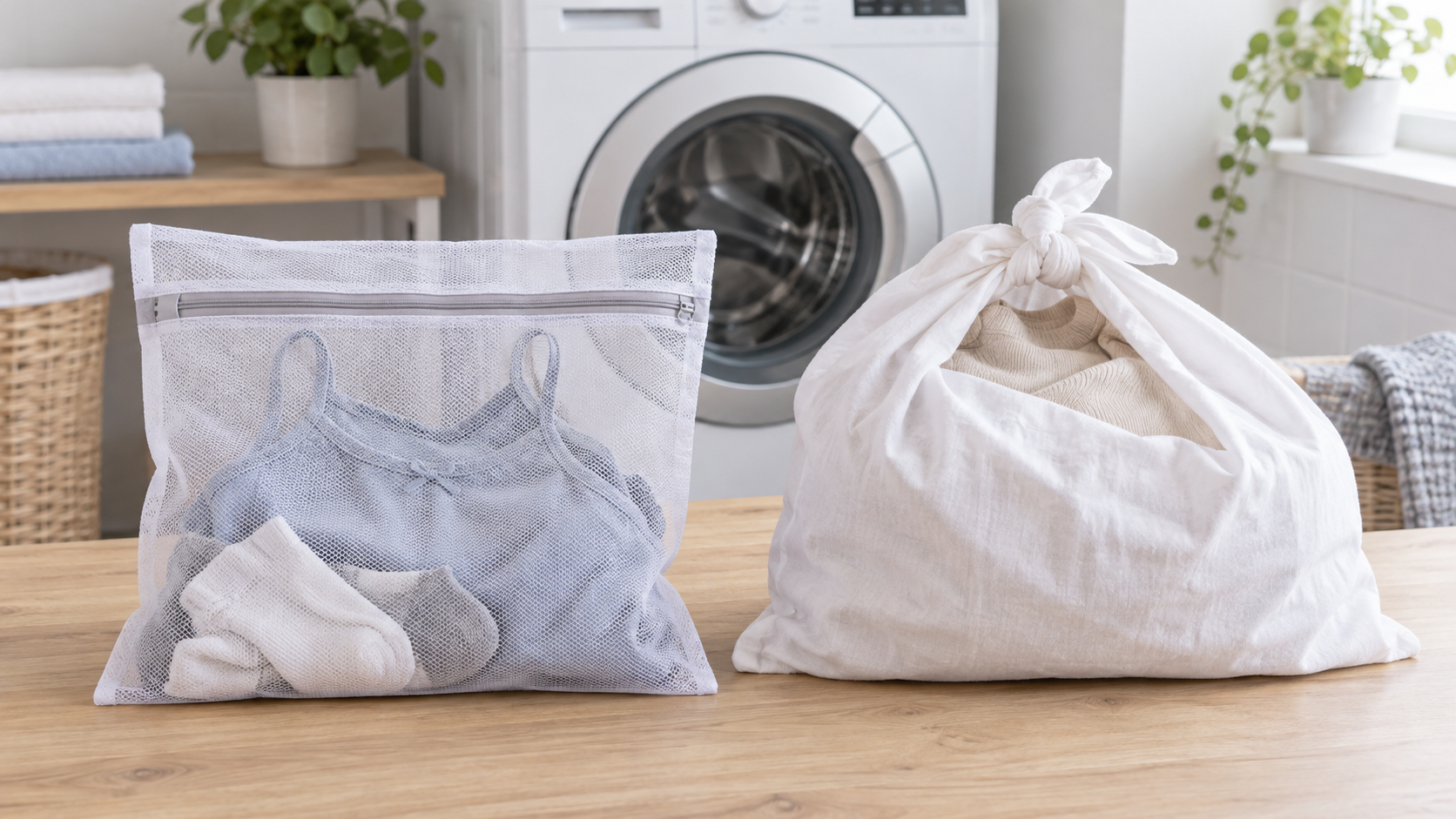
A zippered mesh laundry bag is usually the more predictable choice for containing small, strappy, or lightly structured items because it is made for the job and comes in useful sizes. A tied cotton pillowcase can be a reasonable no-buy fallback for a few lightweight items when the garment label and washer instructions permit machine washing, but its knot, fabric density, and oversized shape make loading less consistent. Neither option makes a hand-wash-only garment machine washable.
As an Amazon Associate, The Good Home Doc may earn from qualifying purchases.
Quick decision before shopping
First measure the available space, identify the setup or surface constraints, and decide who will maintain the item. Skip the category if it blocks access, conflicts with the manufacturer's instructions or lease, or adds more upkeep than the problem justifies.
Match the container to the actual wash load:
- Browse category: Compare zippered mesh laundry bagsCheck dimensions, mesh density, zipper cover, seams, permitted temperature, and care.
- Browse category: Compare washable cotton pillowcases with closuresConsider only when you also need pillowcases and their fabric, closure, colorfastness, and care fit the job.
These are category routes, not tested rankings. Follow every garment care label plus the washer and container instructions. Neither option overrides hand-wash, dry-clean, temperature, color-separation, or load-size guidance.
Quick answer
- Choose a mesh bag for regular small-item loads, useful size choices, and a purpose-made closure.
- Use a tied pillowcase for an occasional small load when you own a suitable colorfast case and can tie it securely without packing it full.
- Skip both when the label calls for hand washing, dry cleaning, another temperature, or no machine agitation.
- Separate items when hooks, textured trim, or color-transfer risk could affect softer pieces.
Mesh laundry bag vs pillowcase at a glance
| Decision point | Zippered mesh bag | Tied pillowcase |
|---|---|---|
| Best fit | Repeat loads of small washable garments needing separation. | Occasional lightweight loads when avoiding a new purchase matters. |
| Water flow | Open mesh admits wash water, though density varies. | Woven fabric is less open; fit depends on fabric, load, and cycle. |
| Closure | Usually a zipper, sometimes with a pull cover. | A knot consumes space, may loosen, and can be difficult to untie wet. |
| Loading | Several sizes help limit crowding and excess fabric. | A standard case may be oversized and tempting to overfill. |
| Upkeep | Inspect mesh, seams, zipper, and cover; dry fully. | Inspect seams and tie area; follow its own care label. |
Who a mesh laundry bag fits
A mesh bag fits households that routinely separate bras, hosiery, washable face coverings, baby socks, removable pads, or garments with straps. Choose size by the item laid loosely inside, not by how many pieces can be compressed into the bag. Fine mesh can contain small hardware and reduce direct contact, while coarser mesh usually allows freer flow. Neither design guarantees protection.
Check whether hooks should be fastened, whether a molded cup needs a shaped bag, and whether a beaded or structured item should avoid machine washing. The zipper should close without trapping fabric; tuck its pull into the provided cover when instructed.
Who a tied pillowcase fits
A pillowcase fits someone with an occasional, low-risk load and a suitable case already on hand. Use a clean, sound, colorfast case whose care matches the cycle. Add only a few lightweight items, leave enough fabric for a secure knot, and ensure it cannot trap a long strap or come loose.
Skip this workaround when the case becomes a dense bundle, bulky pieces fill it, or a garment needs a purpose-made shape. Do not improvise with safety pins, loose cord, or rubber bands that could detach, snag, or damage the washer.
Fit, setup, and washer compatibility
Close garment fasteners as directed, empty pockets, separate colors when needed, and turn pieces inside out if instructed. Do not combine hooks, lace, loose straps, and heavy fabric merely because they fit. A large container can fold around itself; a small one can compress items so wash water cannot reach them evenly.
Read the washer manual for load size, cycle, detergent placement, and prohibited items. Front-loaders, impeller machines, and agitator washers handle loose fabric differently. Keep ties contained, never wrap a case around an agitator, and balance the overall load. Choose cycle, temperature, spin, and detergent from the most restrictive applicable instruction.
Maintenance and replacement
After each load, empty the container and check for a snagged hook, damaged seam, stretched mesh, jammed zipper, or torn fabric. Let it dry fully. Retire a bag when holes can release small pieces, the zipper will not stay closed, or a seam separates. Retire a pillowcase from this job when fabric thins, seams open, the knot area distorts, or dye transfers.
Who should skip each option?
Skip a mesh bag when the garment requires hand washing or professional care, the bag is too small, its closure can contact trim, or its limits conflict with the cycle.
Skip a pillowcase for regular delicate loads, molded pieces, hardware that can work through fabric, insecure knots, or washers whose instructions make the bundle unsuitable.
Skip machine washing when guidance is unclear, the item is valuable or fragile, decoration or adhesives may be affected, colors may bleed, or damage could worsen. Ask the garment maker or a qualified textile-care professional rather than treating containment as permission.
Bottom line
A zippered mesh bag is the better long-term tool for most repeat delicate-laundry routines because size, mesh, seams, and closure can be chosen for the load. A tied cotton pillowcase is an occasional fallback when compatible, lightly loaded, and securely closed. The garment label and washer manual decide whether machine washing is appropriate; the container only manages the items inside.