Lidded Hamper vs Open Laundry Basket for a Small Bedroom
Choose a lidded hamper when dirty laundry stays in the bedroom for several days and visual containment matters. Choose an open basket when the same container needs to make frequent trips to a shared laundry room and easy loading, ventilation, and carrying matter more. Renters should favor a freestanding format that fits the measured route and needs no attachment to the room.
As an Amazon Associate, The Good Home Doc may earn from qualifying purchases.
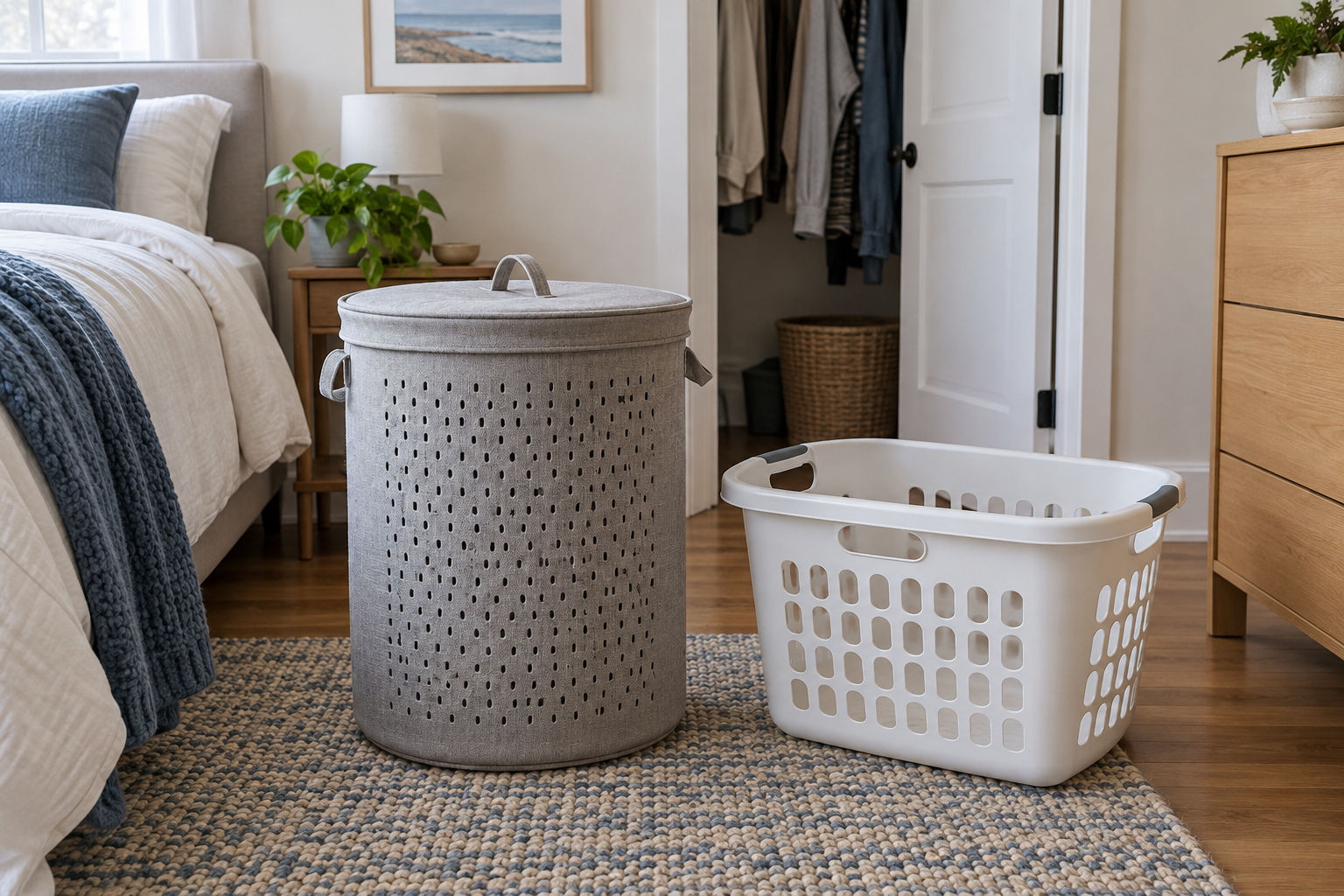
Quick decision before shopping
First measure the available space, identify the setup or surface constraints, and decide who will maintain the item. Skip the category if it blocks access, conflicts with the manufacturer's instructions or lease, or adds more upkeep than the problem justifies.
Measure the parking spot and the complete trip to the washer: These affiliate category links are shopping starting points, not tested winners.
- Browse category: Compare ventilated lidded laundry hampersCheck the full footprint, lid travel, handles, liner, ventilation, floor contact, care instructions, and stated capacity or load basis.
- Browse category: Compare open handled laundry basketsCheck outside dimensions, handle openings, rim shape, ventilation, product weight, nesting or storage, cleaning, and carrying guidance.
This is a product-format comparison, not a ranking. Confirm current manufacturer dimensions, materials, assembly, load guidance, ventilation, cleaning instructions, warnings, and return terms before buying.
Quick Decision
- Pick a lidded hamper when the container is primarily a bedroom collection point, clothes stay there between wash days, and the lid will be easy enough that people actually use it.
- Pick an open basket when carrying is the main job, laundry moves often, and a low rigid shape fits the route better than a tall hamper.
- Use two pieces only when each has a parking place. A stationary hamper plus a separate carry basket can work, but it doubles the empty-container storage problem.
- Skip both temporarily if recurring damp laundry, pests, or unexplained odors point to a room or building problem that should be reported and addressed.
Side-by-Side Tradeoffs
| Decision point | Lidded hamper | Open laundry basket |
|---|---|---|
| Primary job | Stationary collection with visual containment. | Loading and carrying between room and washer. |
| Air movement | Depends on side openings, lid gaps, liner, and placement. | Usually more exposed, but packed textiles can still trap moisture. |
| Floor space | Often taller, but needs clear lid and handle access. | Often wider and lower, with space needed to lift it. |
| Transport | May be awkward if tall, flexible, or fitted with small handles. | Designed around a rigid rim and carrying handles, though fit varies. |
| Cleaning | Lid, frame, liner, seams, and base may need separate care. | Open interiors are visible; molded openings and rims still collect debris. |
| Bedroom noise | Lids and frames can tap or rattle during late use. | Rigid baskets can scrape or knock unless lifted carefully. |
Measure the Space and the Route
Measure the intended bedroom spot at the floor, at the widest part of the container, and at lid height. Include baseboards, closet trim, bed frames, drawer travel, doors, vents, outlets, and the space your hands need. A flip lid requires overhead and rear clearance; a removable lid needs somewhere to go while loading.
Then walk the full laundry route. Note the narrowest doorway, tightest turn, stairs, elevator doors, thresholds, and any point where you need one hand free. Compare the product's outside dimensions and expected loaded weight with that route. Do not carry a pile so high that it blocks your view, and divide the load when needed.
When a Lidded Hamper Fits Better
A lid can calm visual clutter in a bedroom and discourage casual overfilling when the closure remains visible. A tall footprint may use less floor width than a carry basket. Look for deliberate ventilation, a liner that removes without dismantling the frame, handles suited to the actual trip, and a lid that stays under control as directed.
The compromises are extra moving parts and another step every time clothes go in. A lid does not make damp textiles suitable for long storage, seal odors safely, or create ventilation. Skip this format if household members routinely leave clothes on top, if opening it collides with furniture, or if the hamper becomes difficult to carry before wash day.
When an Open Basket Fits Better
An open basket makes the fill level obvious and gives direct access for loading. A rigid rim and two usable handles can make short, frequent laundry trips simpler, especially when the basket also carries folded clothes back. Vent openings and an unobstructed top support air movement, but wet items still need prompt handling.
The tradeoff is permanent visibility and a broad footprint. An open basket can become a general clutter catcher, and piles above the rim can fall or block sight on stairs. Skip it when there is no sensible place to park the empty basket or when the bedroom needs a true collection point between infrequent wash days.
Rental Constraints and Surface Fit
Neither format needs drilling, adhesive, plumbing changes, or electrical setup. That makes both comparatively portable, but not automatically suitable for every rental. Keep the container clear of doors, heaters, radiators, vents, outlets, emergency routes, and landlord-provided equipment. Do not attach it to a wall, closet system, or door without written approval.
Check the base and feet against the actual flooring. Grit trapped beneath a basket can mark a finish when the container is dragged. Lift it for cleaning instead, and use only a floor protector that is compatible with both surfaces and does not create a trip edge.
Ventilation, Damp Items, and Maintenance
Airflow is a system property: side openings, liner material, lid gaps, room placement, how tightly clothes are packed, and how long they sit all matter. Do not treat marketing words such as “breathable” as proof that damp towels or workout clothes can remain enclosed. Hang or process damp textiles promptly when their care instructions allow.
Follow the maker's cleaning directions for every component. A washable liner can simplify upkeep only if it is easy to remove and you will launder and fully dry it. Wipe a rigid basket as directed, cleaning handle recesses and ventilation openings. Inspect lids, hinges, frames, handles, seams, and bases; stop using a container whose structural parts are cracked, loose, or sharp.
Storage, Portability, and Moving
A stationary hamper needs a predictable bedroom home. An open basket also needs an empty parking spot between loads; nesting helps only if you own compatible pieces and can separate them easily. Collapsible formats save stored space but introduce joints or flexible panels, so use the dedicated collapsible-basket guide before treating them as the default.
For a move, empty and clean the container, dry every component, remove a liner or lid if the instructions permit, and protect rigid rims and frames from crushing. Remeasure in the next home. Portable means movable, not guaranteed to fit every bedroom or laundry route.
Who Should Skip Each Option?
- Skip a lidded hamper if the lid adds enough friction that clothes collect beside it, its travel conflicts with furniture, or the full hamper is awkward to carry.
- Skip an open basket if visible laundry is the main problem, the wide footprint blocks circulation, or it has no empty storage location.
- Skip a bedroom collection container if wet items routinely enter it; change the drying and laundry timing first.
- Use smaller loads or seek help when the shared-laundry route includes stairs or a loaded container is hard to control.
- Report the underlying condition if recurring moisture, leaks, pests, or unexplained odors affect the room. A new hamper is not a repair.
Bottom Line
A lidded hamper is the stronger bedroom collection tool when concealment and a narrow stationary footprint matter. An open basket is the stronger transport tool when loads move often and easy access, visibility, and cleaning matter. Measure the product at its widest point, allow for the lid and your hands, walk the complete washer route, and choose the format that removes friction from the routine you already have.