Is a Collapsible Laundry Basket Worth It for a Small Apartment?
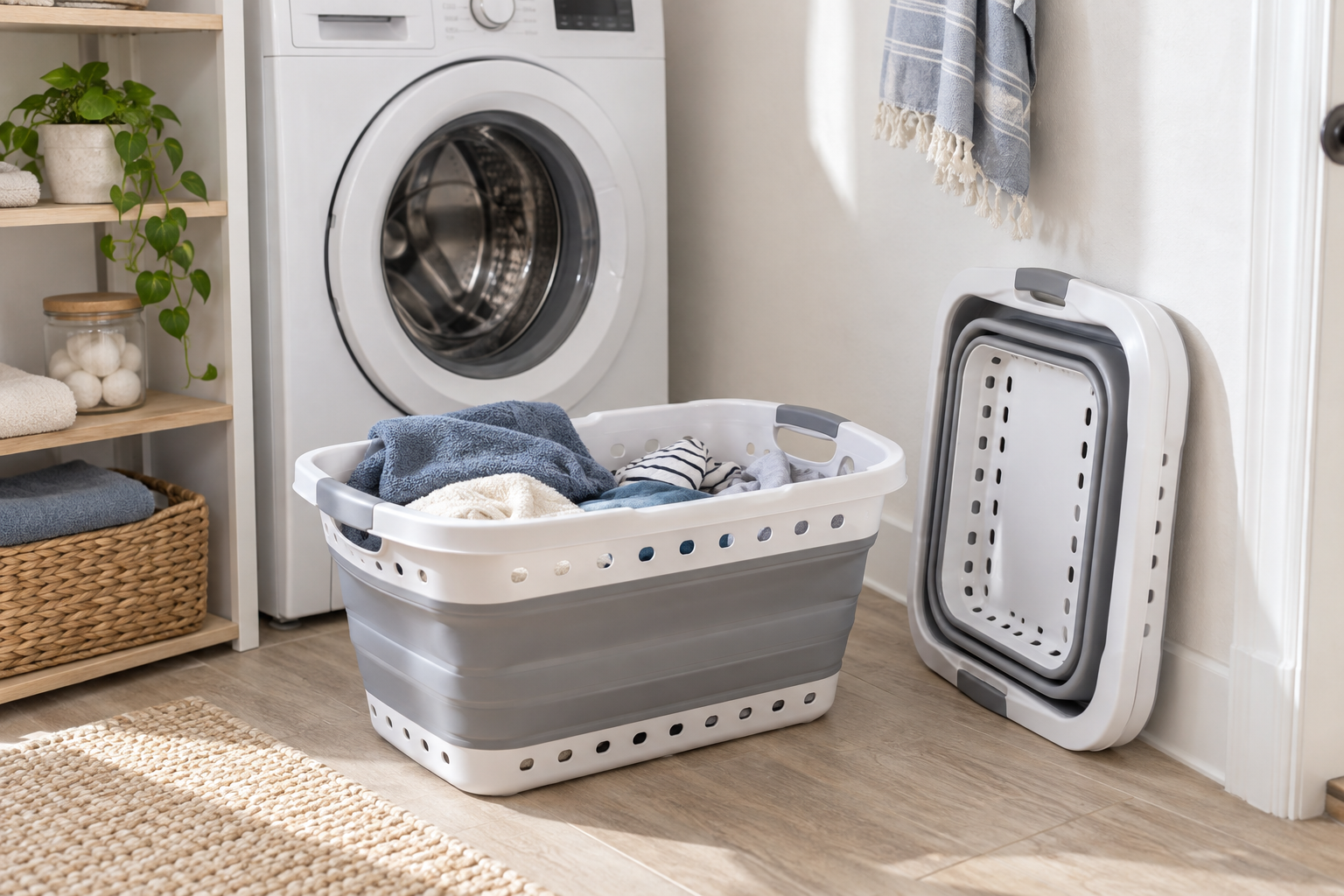
A collapsible laundry basket is worth considering when an empty rigid basket has nowhere sensible to live and your laundry route is short and manageable. It is less useful when you carry heavy loads down stairs, regularly transport damp items, or need a basket that stays open and steady while you load it.
As an Amazon Associate, The Good Home Doc may earn from qualifying purchases.
Quick decision before shopping
First measure the available space, identify the setup or surface constraints, and decide who will maintain the item. Skip the category if it blocks access, conflicts with the manufacturer's instructions or lease, or adds more upkeep than the problem justifies.
Measure the basket and the complete route first: This affiliate category link is a comparison starting point, not a tested winner or a promise about carrying comfort or durability.
- Browse category: Compare collapsible laundry basketsCheck open and folded dimensions, product weight, stated capacity or load, handle construction, materials, ventilation, and cleaning instructions.
Quick answer
Buy one when folded storage solves a real daily-space problem, the open basket fits your typical load, and you can carry it comfortably along a mostly simple route.
Try the mechanism first when you are unsure whether the sides stay open during loading, the handles suit your grip, or the basket is awkward to collapse. A store sample or easy-return option can answer those questions without relying on marketing terms.
Skip it when stairs, a long walk to shared machines, bulky bedding, damp laundry, or one-handed carrying matter more than reclaiming the empty basket's floor space.
Start with the storage problem
A folding basket earns its keep only if you will actually collapse and store it. Measure the intended parking spot with the basket folded, including handles, hinges, rims, and any bulge that remains. Behind a door, beside a washer, or under a bed works only when the folded basket does not obstruct hinges, hoses, vents, doors, or the walking path.
Then measure the basket open. Confirm there is room to set it down, load it, and turn around without creating a recurring obstacle. A design can be thin in storage yet surprisingly wide when deployed.
Map the trip to the washer
Walk the route from the clothes drop zone to the machine. Count doors, narrow turns, thresholds, stairs, elevator trips, and places where you need a free hand. Compare the basket's widest point and loaded weight with that route, not just with the closet where it will be stored.
For stairs or a shared laundry room, a rigid hip-shape basket, backpack-style laundry bag, or cart on an approved level route may be easier to control. Do not overload any basket beyond its maker's instructions, and divide a load when you cannot see the steps or carry it without straining.
How collapsible formats differ
| Format | Useful when | Main tradeoff |
|---|---|---|
| Rigid rim with flexible accordion sides | You want a familiar basket shape that compresses flatter | Flexible sections and joints still need inspection and cleaning |
| Fold-flat framed fabric basket | Low stored thickness and light weight matter most | May need deliberate setup and may not hold its shape when partly loaded |
| Pop-up mesh basket | Very light loads and ventilation are priorities | Less structure, spring tension, and awkward folding can be frustrating |
| Rigid plastic basket | Stable loading, wiping clean, and repeated carrying matter most | Its full footprint remains even when empty |
| Laundry bag | Stairs, shoulder carrying, or very narrow storage dominates | It does not provide a firm sorting or folding surface |
Must-have checks
- Open and folded measurements: Include the rim, base, handles, frame, and closure—not only the flexible body.
- Manufacturer load guidance: Capacity in liters does not tell you how comfortable or appropriate a dense load will be.
- Usable handles: Check opening size, edge shape, attachment points, and whether two-handed or hip carrying fits your route.
- A stable open position: The basket should stay open as directed while clothes are tossed in and should sit level on the intended floor.
- Cleanable materials: Follow the care instructions for flexible joints, fabric panels, base, and rim.
Nice-to-have features
A closure that keeps the basket flat can make narrow storage tidier. Vent holes or breathable fabric may help damp items avoid being sealed in during a short trip, though wet laundry should still be handled promptly. A smooth interior reduces places where socks and straps can catch. None of these extras compensates for uncomfortable handles or a mechanism you dislike using.
Wet laundry needs a stricter plan
Confirm that the manufacturer allows the intended contact with damp items and gives a practical cleaning and drying method. Water can collect in folds, seams, fabric layers, and recessed bases. After carrying wet towels or a damp load, empty the basket and let all permitted washable surfaces dry fully before collapsing it into storage.
A basket is not a long-term holding place for soaked textiles. Address the source of unexpected water, follow garment and appliance instructions, and contact building management or a qualified professional if an appliance leak or recurring moisture is involved.
Setup, fingers, and stability
Open and collapse the product exactly as instructed, keeping fingers away from folding frames, hinges, locking tabs, and spring-loaded sections. Do not let children play with the mechanism. Stop using a basket if a frame, handle, rim, base, seam, or latch is damaged or no longer holds its intended position.
Load heavy pieces low and distribute them rather than balancing a tall pile above the rim. Do not stand or sit on a laundry basket, use it as a step, or assume a stated load makes it suitable for any purpose beyond the maker's intended use.
Who should skip a collapsible basket?
- Anyone who leaves the basket open all week and would never reclaim the storage space.
- Residents who routinely carry large or dense loads on stairs.
- People who need one-handed carrying and cannot confirm the handle design works for them.
- Households that frequently move wet loads but cannot clean and fully dry the folds.
- Anyone who wants a permanent hamper, divided sorter, or stable folding surface rather than a transport basket.
Bottom line
A collapsible basket is a space trade, not an automatic upgrade. It gives back floor or shelf room when empty, but asks you to accept a folding step and potentially less structure. Measure the open basket, folded package, typical load, and entire laundry route. If storage scarcity is the actual bottleneck and the handles and mechanism suit the trip, the trade can be worthwhile; otherwise a rigid basket or carry bag is simpler.