Is an Under-Shelf Basket Worth It for a Rental Kitchen?
An under-shelf basket can be worth it when a sound cabinet shelf has unused height, the basket fits without blocking the doors, and you need a reachable home for lightweight items. It is usually a poor fix for a crowded cabinet, a thin or sagging shelf, heavy dishes, or a layout where the hanging basket makes everything below harder to reach.
As an Amazon Associate, The Good Home Doc may earn from qualifying purchases.
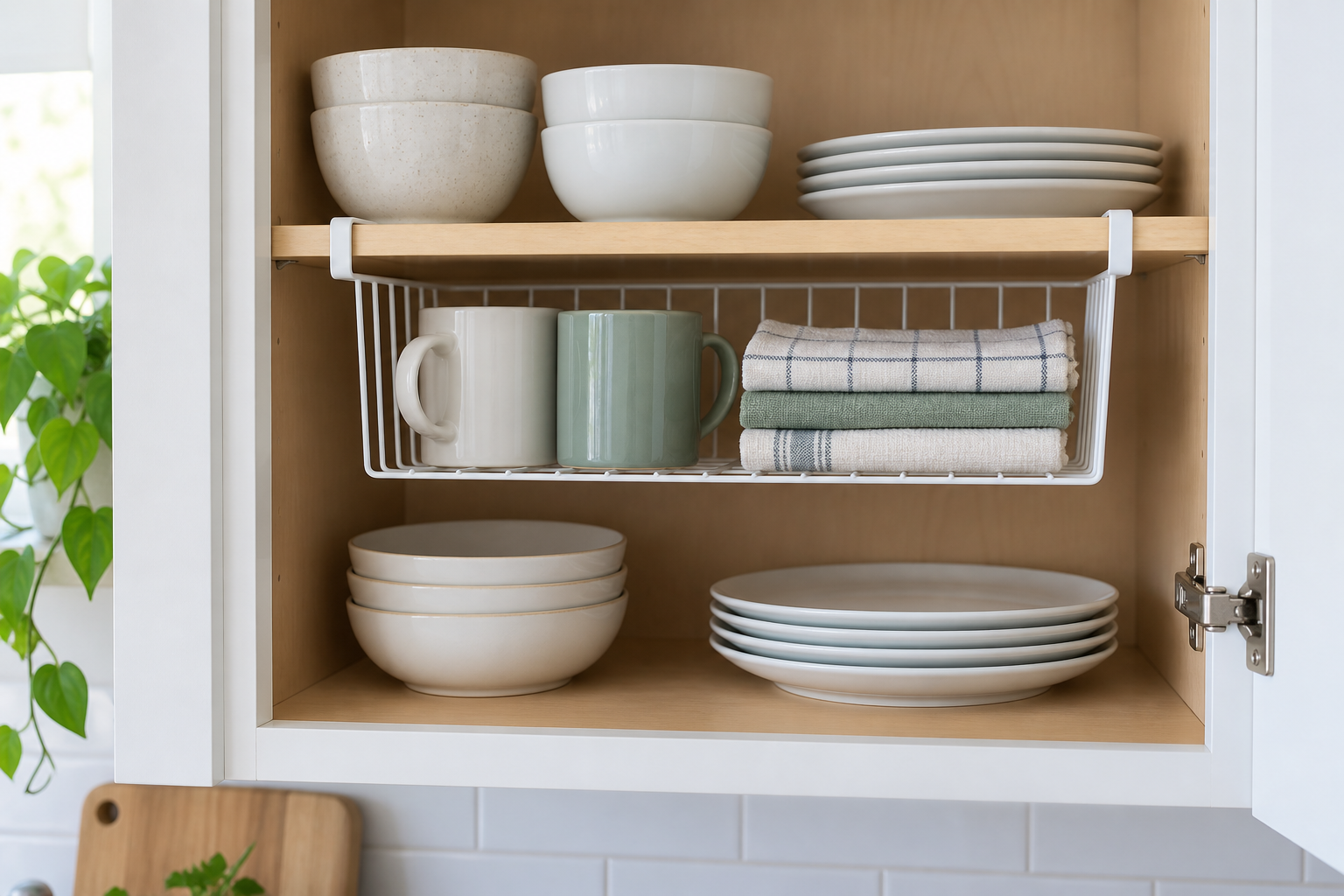
Quick decision before shopping
First measure the available space, identify the setup or surface constraints, and decide who will maintain the item. Skip the category if it blocks access, conflicts with the manufacturer's instructions or lease, or adds more upkeep than the problem justifies.
Start with the cabinet, not the basket: These affiliate category links are comparison starting points, not tested winners.
- Browse category: Compare under-shelf cabinet basketsCheck shelf-thickness range, basket depth, hanger length, stated load, finish, and the complete installed dimensions.
- Browse category: Compare freestanding cabinet shelf risersA riser may fit better when you need a stable upper tier and have usable shelf surface below.
Verify the cabinet, shelf, basket, and lease instructions. Do not exceed a stated load or install on a shelf that is damaged, loose, bowed, or incompatible with the hangers.
Quick decision
| Your cabinet | Better starting point |
|---|---|
| Strong shelf, unused height, and light everyday items | An under-shelf basket may earn its space |
| Heavy plates, appliances, or glass containers | Keep them on the original shelf or use documented suitable storage |
| Useful space above a stable shelf, but no clearance below it | A freestanding shelf riser may fit better |
| Deep cabinet where items disappear at the back | A shallow bin or turntable may solve the real access problem |
| Loose, bowed, damaged, or unusually thin shelf | Skip hanging storage and address the cabinet condition |
Measure the installed shape, not the empty shelf
Measure shelf thickness where the hangers will sit, then compare that measurement with the maker's permitted range. A loose hanger can shift; a hanger that is too tight may not seat fully or could mark a finish. Check whether a face-frame lip, shelf pin, center stile, or door hinge interrupts the hanger path.
Next, measure from the underside of the shelf to the tallest item that must remain below. Subtract the basket's complete hanging depth, including its base and any projecting hardware. Measure cabinet depth and the actual front opening too. A basket can fit inside the box yet collide with the door, hinge, or frame when you try to close it.
Worth it means gaining usable access
The best case is a cabinet with empty vertical space above short items and a small category that needs a consistent home: light linens, packets, wraps, or suitably sized lightweight cups. The basket should make those items easier to see and remove without forcing you to unload the shelf beneath it.
Run a simple paper test before buying. Tape together a lightweight cardboard outline matching the listed width, depth, and hanging height. Hold it in the planned position, close both doors, and practice reaching the items below. This checks geometry only; it is not a substitute for the product's shelf, installation, or load requirements.
Do not use the load limit as a target
A stated basket load does not establish what an existing cabinet shelf can safely support. The shelf already carries its own contents, and the hanging design shifts some force toward a small area near the front edge. Follow both sets of instructions and keep conservative margins. If the shelf bows, rocks on its supports, has water damage, or shows a cracked finish or loose hardware, do not add a hanging basket.
Favor light, non-fragile items that are easy to place without pushing down on the basket. Heavy cookware, small appliances, tall stacks of dishes, and containers that could fall when the cabinet opens are poor candidates. Never stand, pull, or brace on the basket, and do not treat it as child-accessible climbing-resistant storage.
Check the renter and cabinet-finish tradeoffs
No drilling does not automatically mean no damage. Metal hangers can rub a finished shelf, concentrated contact can leave impressions, and liners or pads may affect fit. Use only maker-approved contact protection, because improvised padding can stop a hanger from seating correctly. Check the lease or ask the property manager when cabinet modifications or attached organizers are restricted.
Photograph the cabinet condition before installation and inspect contact points after a short trial. Remove the basket if it shifts, scrapes, prevents normal door operation, or changes the shelf. Keep all parts together so the organizer can leave with you at move-out.
Compare a basket with the simpler alternatives
A shelf riser stands on the original shelf and creates a second level. It uses surface area for its feet but does not hang from the shelf above. A shallow handled bin groups small items and can pull forward, which may be more useful in a deep cabinet. Relocating rarely used items or reducing duplicate supplies may create enough room without adding hardware.
If the issue is mixed categories rather than missing capacity, label one bin or assign each shelf a job. If the issue is poor visibility at the back, adding a hanging layer at the front may make access worse. Match the organizer to the bottleneck: height, depth, grouping, or excess inventory.
Maintenance is small but real
Wire baskets can collect crumbs and dust at intersections. Confirm the finish and cleaning instructions, remove contents, and clean and dry the basket as directed. Check hangers and shelf contact periodically, especially after loading changes. Stop using the organizer if coating chips, metal bends, welds separate, or the basket no longer hangs level.
Store food only in its appropriate packaging or containers; an open organizer does not change food-storage requirements. Keep the basket away from cabinet zones affected by appliance heat, steam, plumbing leaks, or other conditions excluded by the product or cabinet guidance.
Who should skip an under-shelf basket
- Renters whose lease or property manager does not allow the organizer or potential cabinet contact.
- Anyone with a damaged, bowed, loose, glass, unusually thin, or otherwise incompatible shelf.
- Households trying to store heavy, fragile, tall, or frequently overfilled items.
- Cabinets where the basket blocks hinges, doors, the hand path, or useful storage underneath.
- People whose actual problem is deep reach, too many items, or unclear categories rather than unused height.
Bottom line
An under-shelf basket is worth it only when measured unused height becomes easier-to-reach storage without stressing the shelf or compromising the cabinet. Confirm shelf thickness, installed depth, door and hinge clearance, item dimensions, stated loads, surface contact, and lease rules. For heavy items, damaged shelves, or cabinets already difficult to reach, keep the original shelf clear and choose a freestanding or pull-forward alternative instead. If both formats still seem workable, use the direct under-shelf basket versus shelf riser comparison.