Is a Tabletop Ironing Board Worth It for Occasional Use?
A tabletop ironing board is worth it when you occasionally press collars, sleeves, hems, and a few small garments, you have a sturdy table that fits every foot, and the folded board has a real storage spot. Skip it when your work is mostly large garments, the only support surface is unsuitable, or you already have an approved wrinkle-care method that handles the job with less setup.
As an Amazon Associate, The Good Home Doc may earn from qualifying purchases.
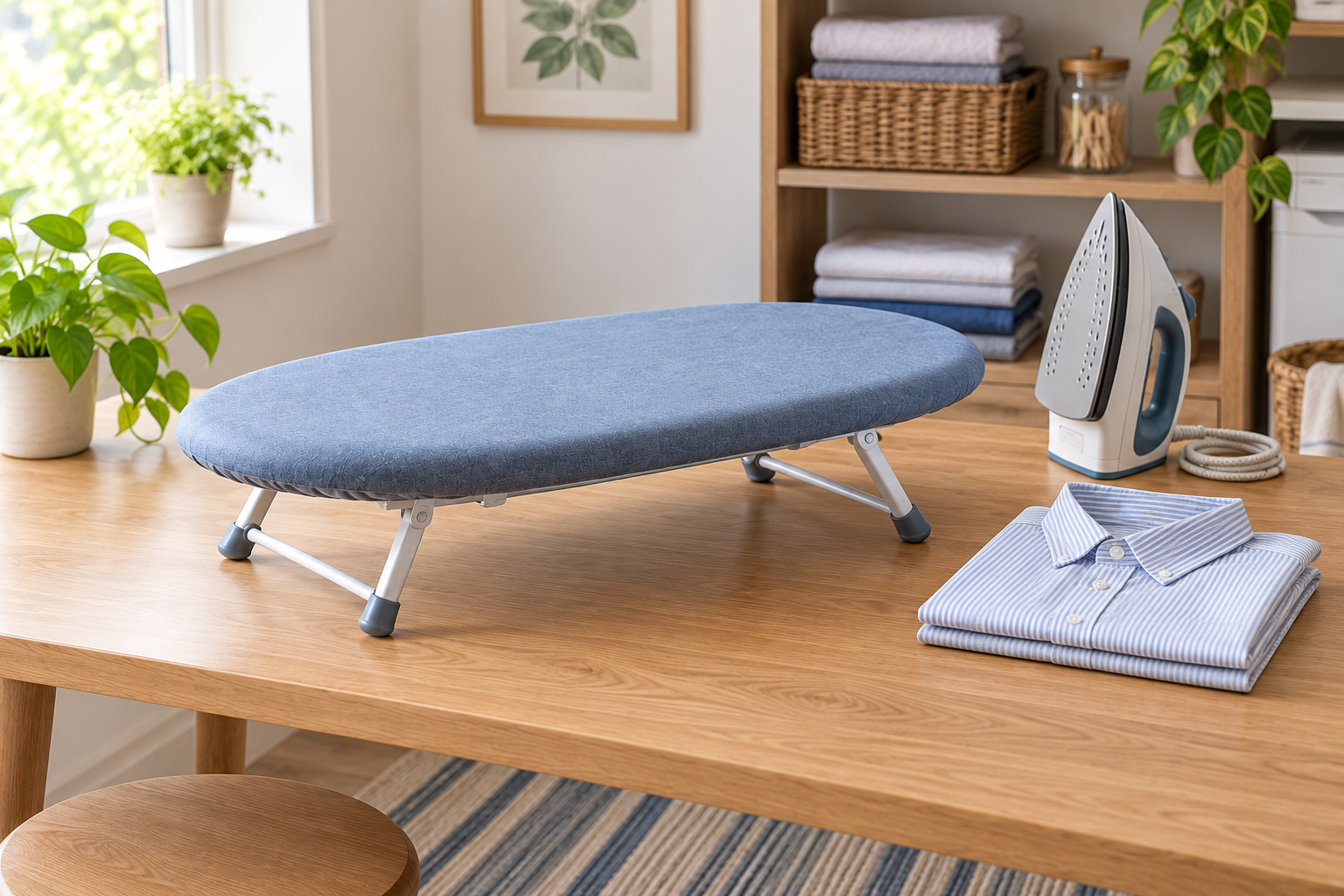
Quick decision before shopping
First measure the available space, identify the setup or surface constraints, and decide who will maintain the item. Skip the category if it blocks access, conflicts with the manufacturer's instructions or lease, or adds more upkeep than the problem justifies.
Shop only after measuring the board in use and in storage: This affiliate category route is a comparison starting point, not a tested winner.
- Browse category: Compare compact tabletop ironing boardsCheck the complete open footprint, usable deck, folded dimensions, legs and locks, feet, cover care, supported base surfaces, and manufacturer heat, steam, cooldown, and storage instructions.
The short decision
- Buy: you press a small number of shaped garment areas often enough to value a firm raised edge, and both the work surface and storage spot fit.
- Delay: you have not measured the board's feet, usable deck, working height, or folded shape against your actual table and closet.
- Choose an alternative: an approved ironing mat may suit flat touch-ups; a full-size or over-door board may better fit long garments or repeated sessions.
- Skip: the product would sit unused, rock on the available table, block a walkway, or require use on a surface that either maker does not approve.
When a compact board earns its space
The useful case is narrow: occasional pressing where a raised, padded edge makes positioning easier. Collars, cuffs, hems, sleeves, and small sections can fit that routine. The board still needs enough deck length for the garment to move without dragging across a crowded or dirty surface.
Frequency matters less than friction. A monthly board can be worthwhile if it opens easily, sits securely, and stores near the iron. A weekly board can be a bad buy if setting it up means clearing a dining table, retrieving it from a difficult shelf, and finding a separate cooldown zone every time.
Measure the whole setup
Measure the table's clear top, then compare it with the board's complete foot pattern—not only the padded deck. Every foot should sit fully on a flat area, away from rounded edges, seams, trays, and overhangs. Leave room for the iron to stand exactly as its instructions require, plus a cord route that will not be pulled or crossed.
Check working height as well. A compact board placed on a tall counter can create an awkward reach; one on a low coffee table can encourage a poor working position. The product's folded width, length, and thickness must also fit its intended shelf or closet without leaning where it can fall.
Stability and setup tradeoffs
A tabletop model adds hinges, folding legs, feet, and sometimes a lock. That hardware creates the raised surface, but it also creates inspection points. Follow the maker's opening sequence, confirm that supports are engaged, and press lightly before bringing over a heated iron. Stop if the board rocks, slides, flexes, or places a foot partly off the table.
Do not improvise height with boxes, books, towels, or loose pads unless the board and support-surface makers specifically permit that setup. A small deck is not automatically a stable deck, and “tabletop” does not mean every table is suitable.
Garment size is the deciding constraint
List what you actually press. A short board can work well for detail areas and isolated touch-ups, but trousers, dresses, bedding, and several shirts may require constant repositioning. If your routine regularly needs long strokes or a broad uninterrupted surface, compact storage is probably the wrong priority.
If you mainly want to soften wrinkles in hanging garments, a garment steamer may look simpler, but it is not a universal substitute. Textile labels, hanging location, water, steam, heat, electrical use, cooldown, and storage instructions still govern that method.
Cost is more than the purchase price
The ongoing costs are usually modest but real: replacement covers or pads when supported, cleaning time, and the closet space occupied by a rigid object. A very cheap board is poor value if the deck is too short for your garments, the feet miss your table, or replacement care items are unavailable.
Pay for fit before extras. A compatible footprint, stable support, readable instructions, maintainable cover, and workable folded size matter more than decorative fabric, accessory hooks, or an iron rest you do not need. Never assume a small attached rest fits every iron; verify its dimensions and permitted use.
Maintenance and cooldown
Follow the cover and pad care label rather than guessing that either is machine washable. Let the board dry completely after steam use. Periodically check for a shifted or damaged cover, loose hardware, bent supports, worn feet, corrosion, or a lock that no longer engages. Stop using damaged load-bearing parts and follow the maker's replacement guidance.
Plan a protected cooldown location before you begin. Unplug the iron after use and let both iron and board cool according to their instructions before folding or storing them. Do not put a warm or damp board against clothing, painted walls, or other stored goods.
Who should skip a tabletop board
- Anyone without a flat, sturdy, manufacturer-compatible support table.
- People who mostly press large garments, bedding, or several items in one session.
- Households without a safe cord route and protected cooldown location.
- Anyone whose storage spot requires the board to balance overhead or block frequently used items.
- Readers expecting the board to protect every table finish from heat or moisture.
Red flags before buying
- The listing gives deck dimensions but not the open foot pattern or folded size.
- Supported surfaces, leg-lock operation, cover care, or heat and steam guidance are unclear.
- The intended table is wobbly, heat-sensitive, damp, crowded, or too narrow for every foot.
- The board rocks in a product demonstration or depends on improvised padding for grip.
- You cannot identify where the hot iron and damp board will cool.
When to choose another route
Choose an approved ironing mat when storage volume is the binding constraint, the work is flat and brief, and you can verify the surface beneath it. Choose a full-size board when garment length, session size, working height, or an uninterrupted deck matters more than stored size. An over-door board is a separate fit decision involving door geometry, closing clearance, stability, and any installation limits.
For the direct compact-format tradeoff, use the tabletop ironing board versus ironing mat comparison. If a larger vertical format seems more realistic, compare over-the-door ironing boards for small apartments before assuming the door will support one.
When to escalate instead of shop
Do not use a new board to work around a damaged iron, plug, cord, outlet, table, leg mechanism, or scorched cover. Stop and follow the relevant manufacturer guidance; use a qualified repair professional or electrician for equipment or electrical concerns rather than improvising a household fix. Renters should report damaged supplied fixtures or outlets to the landlord through the proper maintenance route.
Bottom line
A tabletop ironing board is worth it for a small, repeatable pressing routine—not simply because it is compact. Buy when the deck fits the garments, every foot fits a sturdy approved table, setup feels stable, and storage and cooldown are already solved. Delay until you can verify those details; choose a mat or larger board when the work points elsewhere; skip the category when it would add risk or clutter without improving the routine.