Is a Shower Footrest Worth It in a Rental Bathroom?
A compact shower footrest can be worth it when you want a lower place to rest one foot for routine grooming, the shower has enough standing room, and the exact product is approved for its surface and intended use. Skip it when it crowds the floor, depends on unsuitable tile, or would be treated as a balance aid.
As an Amazon Associate, The Good Home Doc may earn from qualifying purchases.
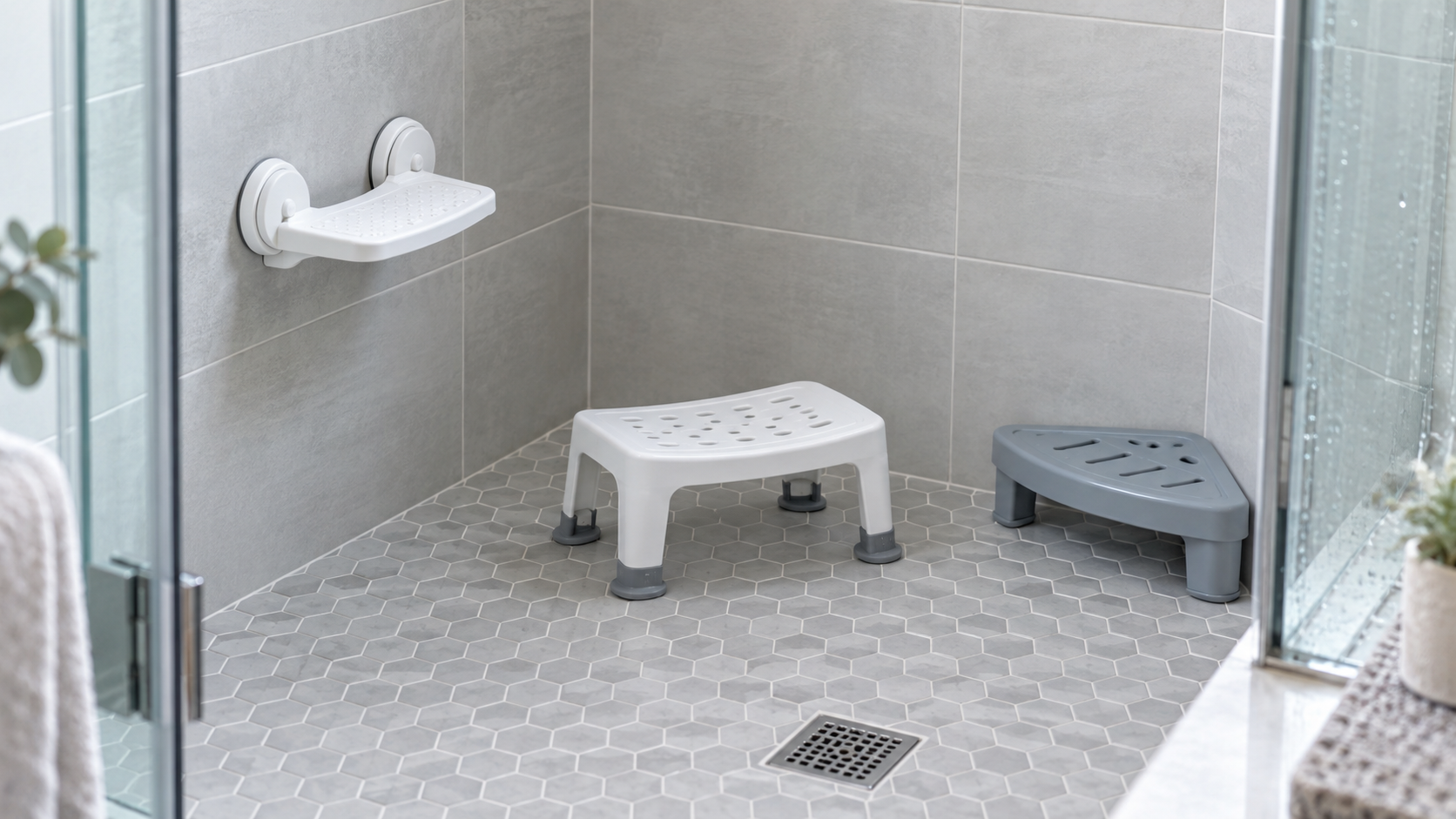
Quick decision before shopping
First measure the available space, identify the setup or surface constraints, and decide who will maintain the item. Skip the category if it blocks access, conflicts with the manufacturer's instructions or lease, or adds more upkeep than the problem justifies.
Compare the format before the model: These are category searches, not tested winners. Confirm the maker's permitted use, dimensions, mounting surface, installation steps, stated limits, and cleaning instructions for the exact item.
- Browse category: Compare suction-mounted shower footrests on AmazonConsider only when the maker allows the exact smooth, nonporous surface and the placement does not cross grout.
- Browse category: Compare freestanding shower footrests on AmazonUseful to compare when portability matters and the shower floor has enough clear footprint.
- Browse category: Compare corner shower footrests on AmazonCheck corner shape, floor contact, drainage, and the space needed to approach it without twisting.
This is a buy-or-skip guide for compact foot placement, not a fall-prevention, accessibility, or medical recommendation. For the broader permission and removal questions, start with the renter-friendly home upgrades guide. If the real problem is shower storage, compare an adhesive shelf with a tension-pole caddy instead.
The short answer
- Consider a suction-mounted ledge only for a maker-approved, smooth, clean surface with enough uninterrupted area for every suction point.
- Consider a freestanding format when you want portability and can spare the floor footprint without blocking entry, drainage, or normal foot placement.
- Consider a corner format when the corner is reachable without turning awkwardly and its feet can sit fully on the floor.
- Skip all three if you need the product to support body weight, steady your balance, or substitute for an appropriately selected seat or installed support.
Which type fits the shower?
| Format | Best fit | Main tradeoff |
|---|---|---|
| Suction-mounted ledge | Smooth, nonporous wall area that matches the product instructions | Surface and grout compatibility are strict; attachment needs routine checking |
| Freestanding footrest | Roomy shower where portability and no wall contact matter | Uses floor space and adds another base to clean around |
| Corner footrest | Open, square corner with a convenient approach | Corner geometry, floor slope, and body position may make access awkward |
A footrest is for resting one foot as the manufacturer permits. A small shower stool is a different category intended for sitting only when its instructions say so. Neither should be assumed to be a step stool, grab point, or universally stable support.
Measure the usable space, not just the product
Mark the proposed footprint or wall position with removable painter's tape outside shower use. Step through your normal entry, turn, and exit motions without putting weight on a mock-up. For a floor model, measure width and depth at the actual floor because curbs, rounded corners, wall slope, and drain position can reduce usable room.
For a wall-mounted format, compare the complete mounting pattern with the tile face. A product that fits across the wall may still fail its instructions if a suction cup overlaps grout, texture, a seam, or a curved panel. Also check whether the placed foot would interfere with controls, doors, curtains, shelves, or the water path.
Surface and rental checks come before attachment
“Removable” does not mean suitable for every rental surface or guaranteed damage-free. Painted walls, textured tile, small mosaic tile, stone, fiberglass, acrylic, and shower panels can have different restrictions. Follow both the shower-surface care guidance and the footrest maker's instructions. Do not sand, drill, glue, or alter the enclosure without written permission.
If the lease or property rules are unclear, ask the landlord or property manager before attaching anything. Stop if the surface is loose, cracked, flexing, or otherwise damaged; a removable accessory should not hide a repair issue.
Setup and routine checks
- Read the exact instructions. Confirm intended use, allowed surfaces, placement, cleaning, reattachment, and any stated load or height limits.
- Clean and dry as directed. Soap film and residue can affect attachment and also make a floor base harder to assess.
- Place it for a neutral approach. Avoid a location that requires a long reach, deep bend, or sharp twist.
- Inspect before each use. Check that suction points, feet, joints, and the surrounding surface look and feel as the instructions require. Remove the product if anything shifts or deteriorates.
- Keep the exit clear. The accessory should not become the object you step around while entering or leaving a wet shower.
Cleaning, storage, and moving
Drainage slots and textured tops collect soap residue, hair, and mineral buildup. Choose a shape you can lift or detach and clean according to its material instructions. A floor model also needs drying and storage space if you plan to remove it between uses. A suction model may need periodic removal and reattachment; do not assume it can be installed once and ignored.
For renters who move often, a freestanding model avoids wall contact but takes more moving-box volume. A compact suction ledge stores more easily, yet its usefulness in the next bathroom depends on the next wall surface and tile layout.
Who should skip a shower footrest?
Skip the category if the shower is already cramped, the only attachment area is textured or interrupted, the floor model would obstruct the drain or doorway, or you dislike removing and cleaning another bathroom item. Also skip it if you need balance support, have difficulty standing on one leg, or expect to put substantial body weight on it. Ask an appropriate healthcare or accessibility professional about a suitable bathing setup rather than treating a grooming footrest as support equipment.
Renters should also skip any option that requires drilling, permanent adhesive, enclosure modification, or installation contrary to the lease or product instructions. If the shower surface, door, floor, or plumbing is damaged, report that condition instead of mounting an accessory over it.
Bottom line
A shower footrest is worth considering when it gives one foot a convenient temporary perch without shrinking the shower's safe usable space. Choose by format first, then verify exact dimensions, permitted use, surface fit, placement, cleaning, removal, and lease rules. If the product would become a balance aid or an obstacle, skip it and choose a more appropriate setup.