Is a Mattress Protector Worth It for Night Sweats and Spills?
A mattress protector is usually worth considering when routine spills, perspiration, pets, or children create a realistic cleanup risk and the chosen protector fits the mattress and your laundry setup. It is less convincing when the extra layer changes the bed feel, is difficult to wash and dry, or promises protection the maker does not clearly document.
As an Amazon Associate, The Good Home Doc may earn from qualifying purchases.
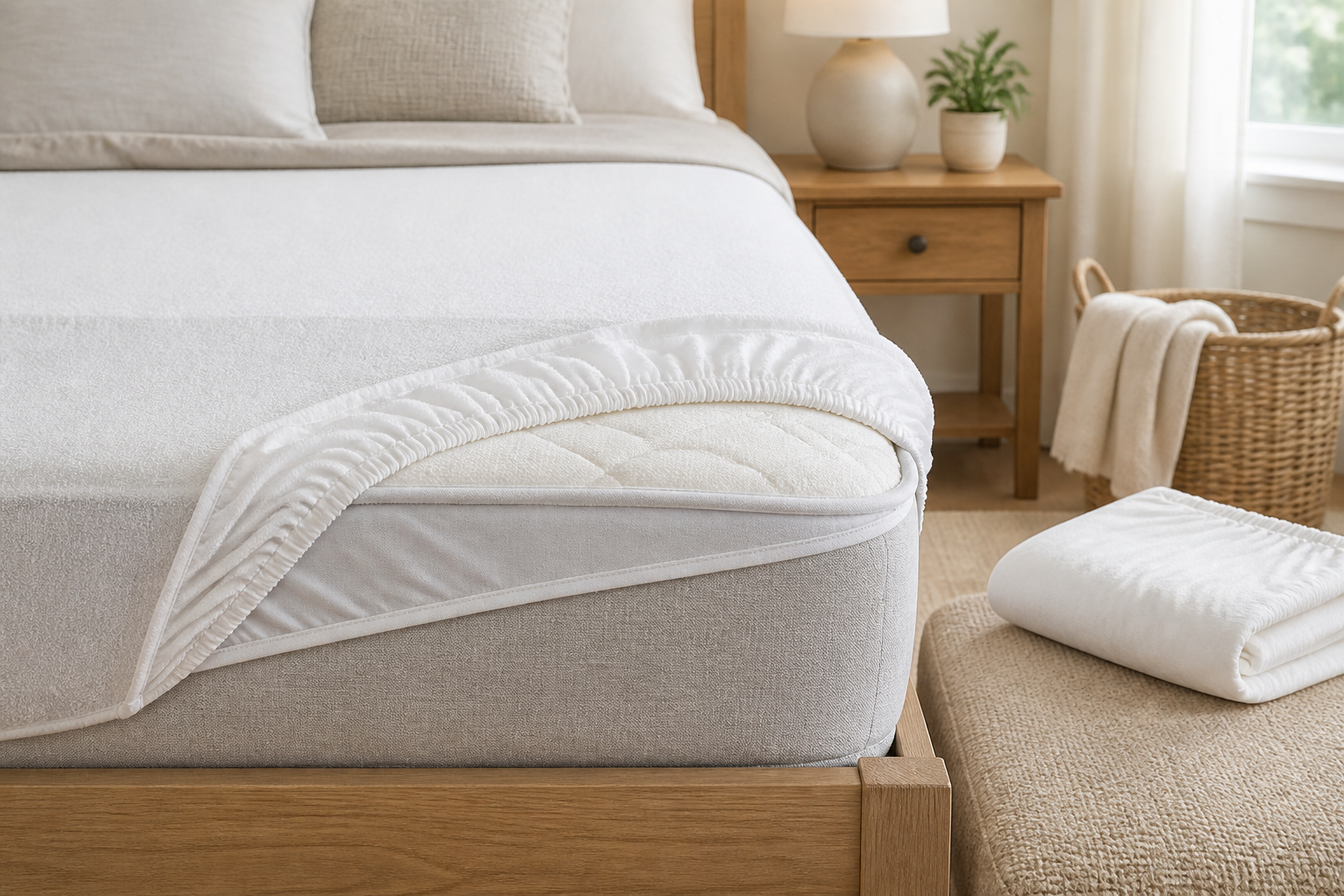
Quick decision before shopping
First measure the available space, identify the setup or surface constraints, and decide who will maintain the item. Skip the category if it blocks access, conflicts with the manufacturer's instructions or lease, or adds more upkeep than the problem justifies.
Shop only after the fit and care check: These affiliate category links are starting points, not tested rankings.
- Browse category: Compare fitted mattress protectorsCheck exact mattress depth, coverage claims, materials, laundering limits, drying method, and return terms.
- Browse category: Compare zippered mattress encasementsConsider full coverage only when the installation effort, zipper design, mattress weight, and care routine fit the job.
This is a category decision guide, not a product test or a promise that a protector will stop every liquid. Protection, breathability, feel, noise, care, and warranty implications vary by product and mattress. Verify the current protector instructions and your mattress maker's care and warranty terms before buying.
Quick Answer
It is probably worth it when a single spill would be difficult to manage, the protector's documented coverage matches that risk, and you can wash and dry it as directed without leaving the bed unprotected for long.
Delay the purchase until you know the mattress height, topper thickness, bed-access limits, washer capacity, dryer settings, and the mattress warranty language that matters to you.
Skip or simplify it when the risk is low and a washable mattress pad already solves the actual problem, or when sensitivity to added warmth, texture, or noise makes another layer a poor trade.
Start With the Problem, Not the Word “Waterproof”
List what regularly reaches the bed: a drink on the nightstand, perspiration, a child's accident, or a pet climbing onto the covers. Then decide which area needs protection. A fitted protector generally covers the sleep surface and sides; a zippered encasement surrounds more of the mattress but takes more work to install and remove. A small washable pad can be easier for a localized, predictable risk.
Read the exact claim and instructions. “Water-resistant,” “waterproof,” and “protective” are not interchangeable promises, and performance can depend on liquid amount, exposure time, seams, condition, and correct laundering. Deal with spills promptly according to both makers' instructions rather than treating a protector as permission to wait.
The Five-Minute Fit and Laundry Check
- Measure total bed depth. Include the mattress and any topper. Compare that measurement with the stated pocket-depth range rather than relying on size labels alone.
- Identify the coverage needed. Choose among top-only, fitted-side, or full encasement coverage based on the actual risk and the installation work you will accept.
- Read both care labels. Confirm wash temperature, detergent restrictions, dryer setting, and whether bleach, softener, ironing, or dry cleaning is prohibited.
- Check laundry capacity. A protector that cannot move freely in your washer or dry completely is not a practical match. Large encasements may be especially awkward.
- Plan the changeover. If drying takes time, decide whether you need a spare or can leave the mattress bare without creating another problem.
Night Sweats Change the Comfort Tradeoff
A barrier-backed protector may help separate perspiration from the mattress, but it does not treat the cause of night sweats or guarantee a cooler bed. Materials, padding, barrier construction, sheets, room temperature, and the rest of the mattress system all affect how the surface feels. Treat “cooling” language cautiously unless the maker explains the specific construction or test behind it.
If persistent or unexplained night sweating is the real concern, a bedding purchase is not a diagnosis. Consider discussing the symptom with a qualified healthcare professional. If the room or bedding system feels warm without unusual sweating, the cooling mattress pad guide explains a different category whose primary job is changing surface feel rather than spill protection.
When a Protector Earns Its Laundry Chore
The value case is strongest when the likely mess is frequent enough that laundering a removable layer is simpler than following the mattress maker's spot-cleaning process. Households with children or pets may also value having a defined washable layer, provided the product is approved for the intended setup and changed promptly after a mess.
Check whether routine washing gradually changes the barrier or fit, and follow the stated replacement guidance. Inspect seams, elastic, zipper areas, and the sleep surface during changes. A torn, delaminated, stretched, or persistently odorous protector should not be assumed to perform like a new one.
Warranty Language Deserves a Direct Read
A protector can support a cleaner mattress-care routine, but it does not automatically preserve a warranty. Mattress warranties differ in what they require, exclude, or define as an unsanitary condition. Read the actual terms for your mattress instead of relying on a protector listing or a general rule. Keep receipts and follow care instructions if warranty documentation matters to the purchase.
Must-Haves Versus Nice-to-Haves
Must-haves: correct finished-bed depth, documented coverage that matches the risk, compatible laundering and drying instructions, a secure fit without severe bunching, and clear material information.
Nice-to-haves: a spare for laundry day, a quieter or less textured surface, labels that simplify orientation, and an installation style one person can manage. Deep pockets are not automatically better when excess fabric shifts beneath the sheet.
If a sound occasional-use bed needs a different surface feel rather than spill coverage, compare memory foam and fiber toppers for guest beds before adding another protective layer.
Who Should Skip a Mattress Protector?
- People whose main goal is changing mattress softness or support; a protector is not a topper or a repair for a worn mattress.
- Anyone expecting a protector to treat night sweats, cool the whole bed, or guarantee stain or warranty outcomes.
- Households that cannot wash and dry the chosen size according to its label.
- Sleepers who find the specific layer noisy, warm, slippery, or visibly bunched during a return-window check.
- People with a very low mess risk who would be better served by ordinary washable bedding or a smaller washable pad.
- Owners of mattresses or toppers whose maker restricts the proposed covering or care routine.
Cheaper and Simpler Alternatives
A washable absorbent pad can target one predictable area and may be quicker to rotate. A spare fitted sheet helps with fast changes but does not provide the same documented barrier. Keeping drinks away from the bed, setting a washable pet blanket over an allowed area, or improving the room's temperature and airflow may address the actual trigger without adding a full protector.
Alternatives still need prompt cleanup and correct mattress care. Never trap a damp layer against the mattress; dry every component as its maker directs before remaking the bed.
Bottom Line
A mattress protector is worth it when a real spill or perspiration risk justifies a removable layer and the product's fit, documented coverage, feel, and wash routine work in your home. Buy the narrowest coverage that solves the problem, verify rather than assume the claim, and skip the category when it adds more discomfort or upkeep than protection.
Once the yes-or-no decision is clear, compare fitted, quilted, and encasement formats in the mattress protector buying guide.