How to Choose Mattress Protectors for Night Sweats and Spills
A mattress protector should create a practical, washable barrier without turning the bed into a noisy, poorly fitted layer stack. For perspiration and routine spills, start with coverage, mattress depth, barrier construction, and laundry limits—not broad cooling, allergy, or waterproof promises.
If you are not yet sure the extra layer is useful, start with the upstream guide to decide whether a mattress protector is worth it for your spill risk, sleep feel, and laundry routine.
As an Amazon Associate, The Good Home Doc may earn from qualifying purchases.
Quick decision before shopping
First measure the available space, identify the setup or surface constraints, and decide who will maintain the item. Skip the category if it blocks access, conflicts with the manufacturer's instructions or lease, or adds more upkeep than the problem justifies.
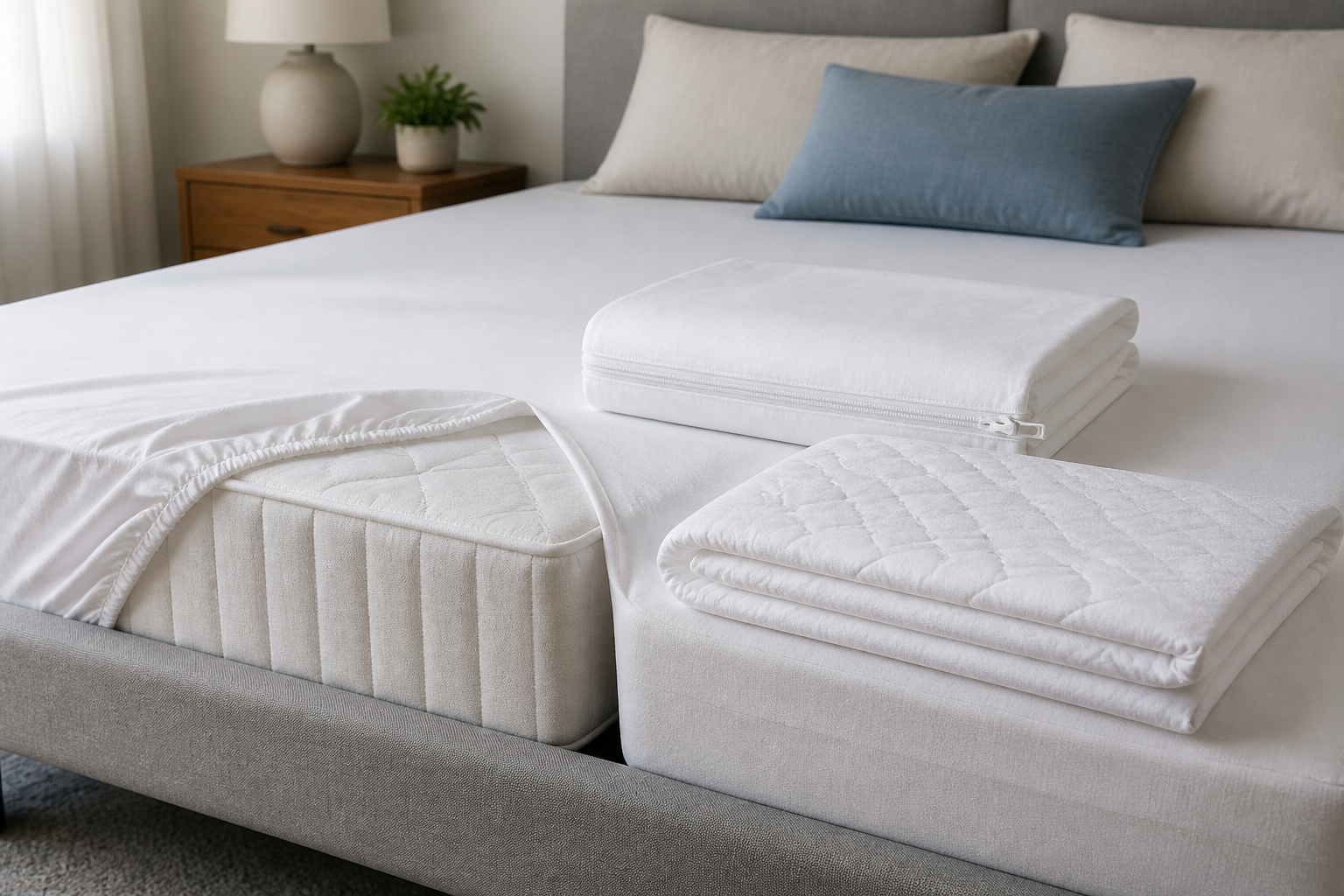
Compare the coverage style that fits your mattress and laundry routine:
- Browse category: Compare fitted mattress protectorsA straightforward starting point when top-surface protection and easy removal matter most.
- Browse category: Compare zippered mattress encasementsCompare full coverage, zipper design, mattress-depth range, and the work required to remove and wash one.
- Browse category: Compare quilted barrier protectorsUseful when surface feel matters, but extra loft can change fit and laundering needs.
These are category searches, not tested rankings. Verify current materials, coverage, dimensions, pocket depth, barrier claims, wash and dryer limits, warranty care, and return terms before buying.
This guide compares protector formats rather than named winners. It does not claim hands-on testing, medical benefits, bed-bug control, allergy relief, absolute waterproofing, or cooling performance. Persistent or unexplained night sweats are not a bedding-shopping problem; discuss them with a qualified clinician.
Quick Best-Fit Guide
- Best simple starting point: a fitted top protector with complete materials, depth range, and care instructions.
- Best for full mattress coverage: a zippered encasement that matches the mattress dimensions and can be removed without damaging its zipper or seams.
- Best for a softer surface: a lightly quilted protector whose added loft still works beneath the fitted sheet.
- Best for frequent washing: the least bulky option your washer and dryer can handle within the maker's care limits.
- Best when sleep heat is the main concern: skip a protection-first purchase and compare the whole bedding and room setup.
Measure the Entire Bed Stack
Measure the mattress length, width, and depth at the deepest point. Include a topper if it will sit beneath the protector. Compare that total with the stated fit range; a skirt stretched to its limit can pull off corners, bunch beneath the sheet, or strain seams.
For an encasement, use the maker's full dimensional guidance rather than size labels alone. Confirm that you can lift or position the mattress safely enough to install and later remove it. If the mattress is heavy, adjustable, or difficult to access, a fitted protector may be the more maintainable choice.
Comparison Framework
Fitted Top Protectors
These cover the sleep surface and use an elastic skirt around the sides. They are usually simpler to remove than an encasement, but side coverage varies and the skirt itself may not contain moisture.
Choose this format when: routine top-surface spills and perspiration are the priority, and frequent laundering matters more than six-sided coverage.
Zippered Encasements
An encasement surrounds the mattress and closes with a zipper. Full coverage adds installation work, and the zipper, seams, fabric stretch, and stated depth range all affect fit. Do not assume a generic encasement supports pest or medical claims.
Choose this format when: you specifically need coverage on every side and can realistically install, remove, wash, dry, and replace it.
Quilted and Pad-Style Protectors
A quilted top can soften the feel of a thin barrier, but fill increases bulk and may hold more wash water. Read the fiber breakdown because “cotton top” does not mean the fill, backing, and skirt are cotton.
Choose this format when: surface feel matters and the allowed wash cycle, dryer setting, and pocket depth suit the complete bed stack.
Must-Have Buying Checks
- Coverage: Confirm whether protection applies to the top, sides, or all six surfaces.
- Barrier details: Read the actual materials and maker's claim language; do not treat water-resistant and waterproof as interchangeable.
- Fit: Match finished dimensions and pocket depth to the mattress, topper, and other layers.
- Washability: Check machine capacity, water temperature, detergent limits, and whether low heat or air drying is required.
- Surface tradeoffs: Consider rustling, stiffness, loft, sheet grip, and whether the protector changes the mattress feel.
- Construction: Inspect elastic, seams, zipper placement, pull size, and any protective zipper flap.
Nice-to-Have Features
- Clear care labeling: Useful when instructions remain attached and readable after repeated washes.
- A spare protector: Practical for frequent washing if storage space and budget permit.
- Low-profile seams: Helpful when the fitted sheet is already close to its depth limit.
- Replaceable rather than integrated padding: A simpler layer can be easier to wash than a thick all-in-one design.
What to Avoid
Avoid buying from “cooling,” “silent,” or “100% waterproof” language alone. Construction, fit, care history, and wear all matter, and retail terms are not a substitute for current material and warranty details. Skip products without enough information to verify dimensions and laundering limits.
Do not use a protector to conceal an already damp, stained, damaged, or contaminated mattress. Address the source first and follow mattress-maker, landlord, restoration, or qualified professional guidance where appropriate.
Who Should Skip a Mattress Protector
- Skip a thick quilted style if it compromises sheet fit or changes a mattress feel you already like.
- Skip an encasement if safe installation and regular removal are unrealistic.
- Skip barrier-heavy designs when rustling, stiffness, or heat retention would undermine the main comfort goal.
- Skip any model your washer or dryer cannot handle within its care instructions.
- Skip shopping as the response to persistent unexplained night sweats, recurring dampness, or an active mattress problem that needs professional guidance.
Buying Checklist
- Decide whether you need top-only or full encasement coverage.
- Measure the mattress and every layer beneath the protector.
- Compare barrier materials and the exact scope of moisture claims.
- Check noise, feel, seams, elastic, zipper, and sheet clearance.
- Confirm washer capacity, wash temperature, drying method, and spare-bed plan.
- Read warranty exclusions related to heat, bleach, fabric softener, and normal wear.
- Choose the simplest protector that performs the protection job you actually need.
Bottom Line
A fitted protector is the practical default for routine top-surface protection, an encasement fits a deliberate full-coverage need, and a quilted style trades easier surface feel for more bulk. The useful choice fits the entire mattress stack, states its materials and care clearly, and can be washed often enough to remain useful.