Is a Laundry Folding Board Worth It?
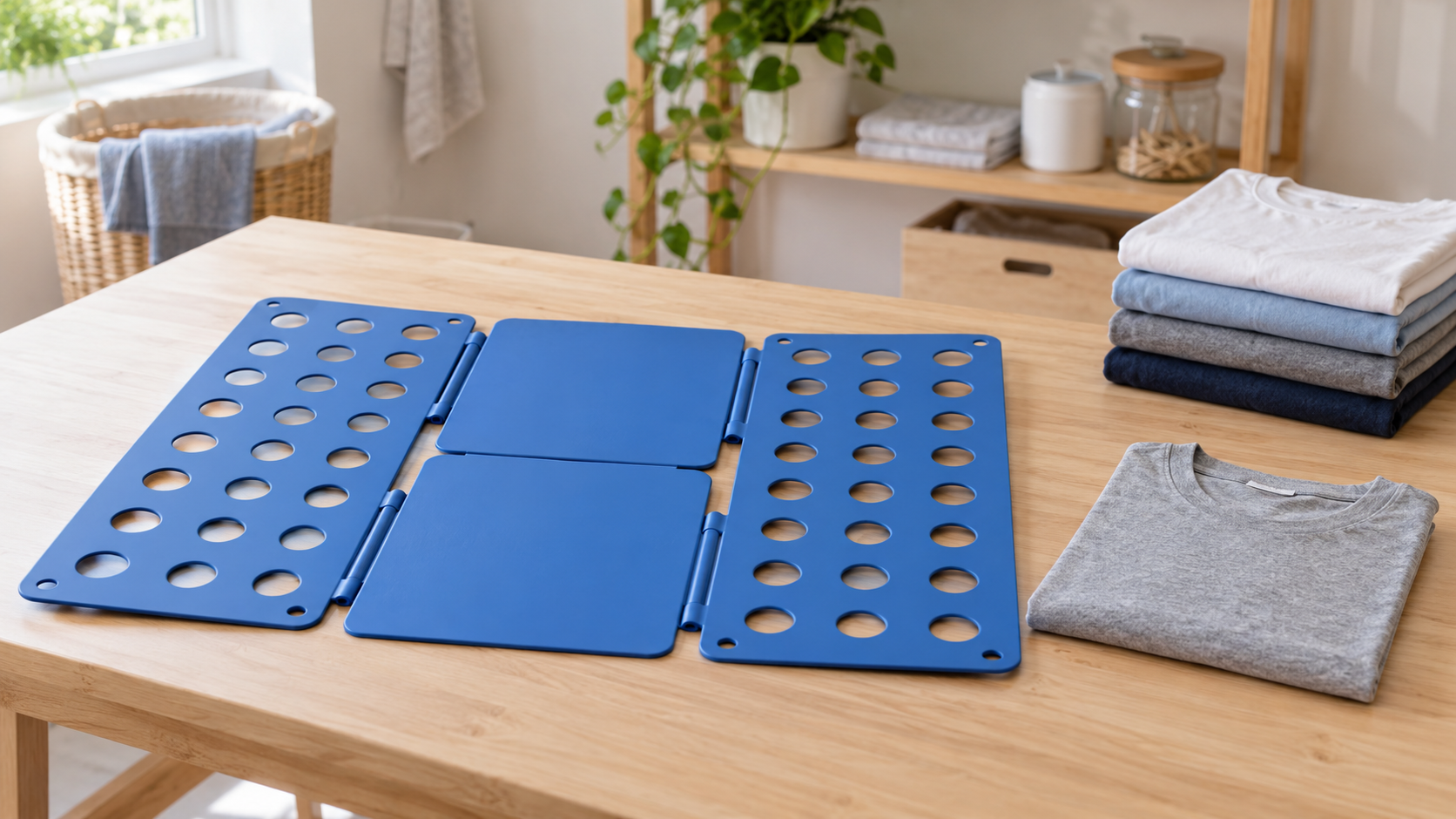
A laundry folding board can be worth it when several people fold lots of similar shirts, consistent stack width makes a real shelf or drawer easier to use, and there is a comfortable table plus a sensible place to store the board. Skip it when you fold small loads, own many bulky or irregular garments, or already fold neatly enough by hand.
As an Amazon Associate, The Good Home Doc may earn from qualifying purchases.
Quick decision before shopping
First measure the available space, identify the setup or surface constraints, and decide who will maintain the item. Skip the category if it blocks access, conflicts with the manufacturer's instructions or lease, or adds more upkeep than the problem justifies.
Shop only after measuring your storage and folding area: this is a product-category route, not a tested winner.
- Browse category: Compare laundry folding boards for shirtsVerify the open and folded dimensions, panel layout, intended garment sizes, hinge design, materials, care instructions, and return terms.
This page helps decide whether the category fits your routine. It does not rank models or promise faster folding, wrinkle removal, accessibility benefits, or identical results across fabrics and garment sizes. Follow each garment label and the board maker's current instructions.
Quick answer
Buy one when shirts make up a large share of repeated laundry, uniform stack width will improve the exact shelf or drawer you use, and the open board fits a table at a comfortable working height.
Delay until you measure the destination, try a simple cardboard folding template, or observe whether inconsistent folds are actually causing the storage problem.
Choose an alternative when drawer dividers, shelf dividers, bins, a larger folding surface, or a simpler hand-folding routine would address the bottleneck with less equipment.
Skip it when laundry loads are small, garments vary widely, the board would live buried in a closet, or repeated panel motions make the task less comfortable.
Start with the outcome, not the gadget
A folding board standardizes the outline of some garments. That can help stacks line up and make it easier for different household members to produce a similar result. It cannot make an overfilled drawer larger, keep unstable stacks upright, remove wrinkles, or solve a laundry routine that stalls before clothes reach the folding surface.
Look at the current failure point. If shirts fit poorly because their folded width varies, a board may help. If there is simply too much clothing for the available storage, edit the inventory or change the storage system before adding another tool.
Measure the final stack first
Measure the usable width, depth, and height of the drawer, shelf, basket, or cube where folded clothing goes. Allow for drawer sides, tracks, shelf supports, doors, and enough hand clearance to lift a stack without dragging it forward. Decide whether clothes will lie flat, stand vertically, or sit in short stacks.
Then compare the board's stated finished-fold dimensions with that destination and with the garment sizes you fold most. A tidy fold is not useful if the result is too wide for two stacks, too deep for the drawer, or so tall that the drawer catches it.
Check the complete working setup
Use the board's full open dimensions, not its compact stored size. It needs a flat, stable work surface with enough room to position the garment and swing every panel without hitting a wall, basket, appliance, or nearby stack. A bed or deep floor position may look convenient but can create an awkward reach for repeated folding.
Walk through the whole routine: bring clean clothes to the surface, place and align each garment, operate the panels, move the fold to storage, and put the board away. If the board adds setup and teardown to a very small load, hand folding may remain quicker in practice.
Garment fit matters
Basic T-shirts, undershirts, light sweaters, and similarly shaped children's tops are the most obvious candidates, provided their size matches the board instructions. Thick sweatshirts, dresses, fitted tops, long tunics, delicate decorations, stiff collars, and irregular shapes may need manual adjustment or a different fold.
Do not force thick fabric into a hinge or pull a panel against buttons, zippers, appliqués, cords, or fragile trim. Follow the garment care label, and stop if the process catches or strains the fabric.
Cost, setup, and maintenance tradeoffs
| Factor | When the board helps | When it becomes friction |
|---|---|---|
| Purchase cost | One shared tool supports frequent, repeatable shirt folding | A free hand-folding method already produces usable stacks |
| Setup | A clear table is already part of laundry day | The table must be cleared or the board retrieved for every load |
| Storage | The folded board has a nearby vertical or flat home | Its stored package blocks shelves or gets buried |
| Garment range | Most loads contain similarly sized tops | Loads are dominated by bedding, towels, bulky knits, or irregular clothing |
| Maintenance | Smooth panels wipe clean and hinges remain aligned | Lint catches in rough edges or stressed hinges begin to split |
Plastic panels still need inspection and cleaning. Use only the maker's cleaning method, dry the board before storage, and keep it away from heat or loading that could warp the panels. Retire it if a crack, sharp edge, loose pin, or failing hinge could snag clothing or hands.
Try a low-cost test before buying
For one or two laundry cycles, use a measured cardboard rectangle as a visual folding template. It will not copy the hinged action, but it can show whether a consistent finished width improves your actual drawer or shelf. Also time the entire routine loosely, including setup and putting the tool away—not just the panel flips.
If consistent folds solve the problem and the repeated motion feels reasonable, a purpose-made board may be easier to handle and maintain. If the stacks still collapse or the drawer remains crowded, spend the budget on the storage bottleneck instead.
Red flags
- The listing gives only a vague “universal” claim and no open, folded, or finished-fold dimensions.
- The panel sequence or supported garment types are not explained.
- Edges, holes, hinge pins, or seams look rough enough to catch fabric or fingers.
- The board must be flexed beyond its normal hinge travel to close over the garment.
- The stored board has no assigned home near the folding area.
- The product is marketed as solving wrinkles, mobility limitations, or every clothing size without useful documentation.
Who should skip a laundry folding board?
- People who fold only a few items at a time or are satisfied with their current method.
- Households whose laundry is mostly towels, bedding, thick knitwear, or unusually shaped clothing.
- Anyone without a stable, comfortably positioned surface large enough for the fully open board.
- People whose real problem is overfilled storage rather than inconsistent folds.
- Anyone who finds the repeated reaching, panel lifting, or garment positioning uncomfortable.
- Households that cannot store the board where it will remain easy to retrieve and inspect.
When to ask for help or choose another setup
A folding board is an organization tool, not assistive or therapeutic equipment. If pain, limited reach, grip difficulty, fatigue, or another physical concern makes laundry hard, stop forcing the motion and seek appropriate guidance about a safer work height, task method, or adaptive equipment. If a child helps with laundry, supervise according to the product instructions and keep fingers clear of hinges and openings.
Bottom line
A laundry folding board is worth it when a high volume of similar tops needs to fit a measured storage space and the household will keep the board accessible beside a proper work surface. Delay the purchase until a template proves that consistent width improves the destination. Skip it if the tool adds more setup and storage friction than it removes, or if dividers, decluttering, or a better folding surface would solve the real problem.