Is a Label Maker Worth It for Home Organization?
A label maker is worth considering when your household repeatedly labels and relabels bins, pantry containers, cables, school supplies, or shared storage—and people will actually use the same system. For a few temporary labels, a marker plus removable tape or reusable tags is usually cheaper, easier to replace, and less equipment to store.
As an Amazon Associate, The Good Home Doc may earn from qualifying purchases.
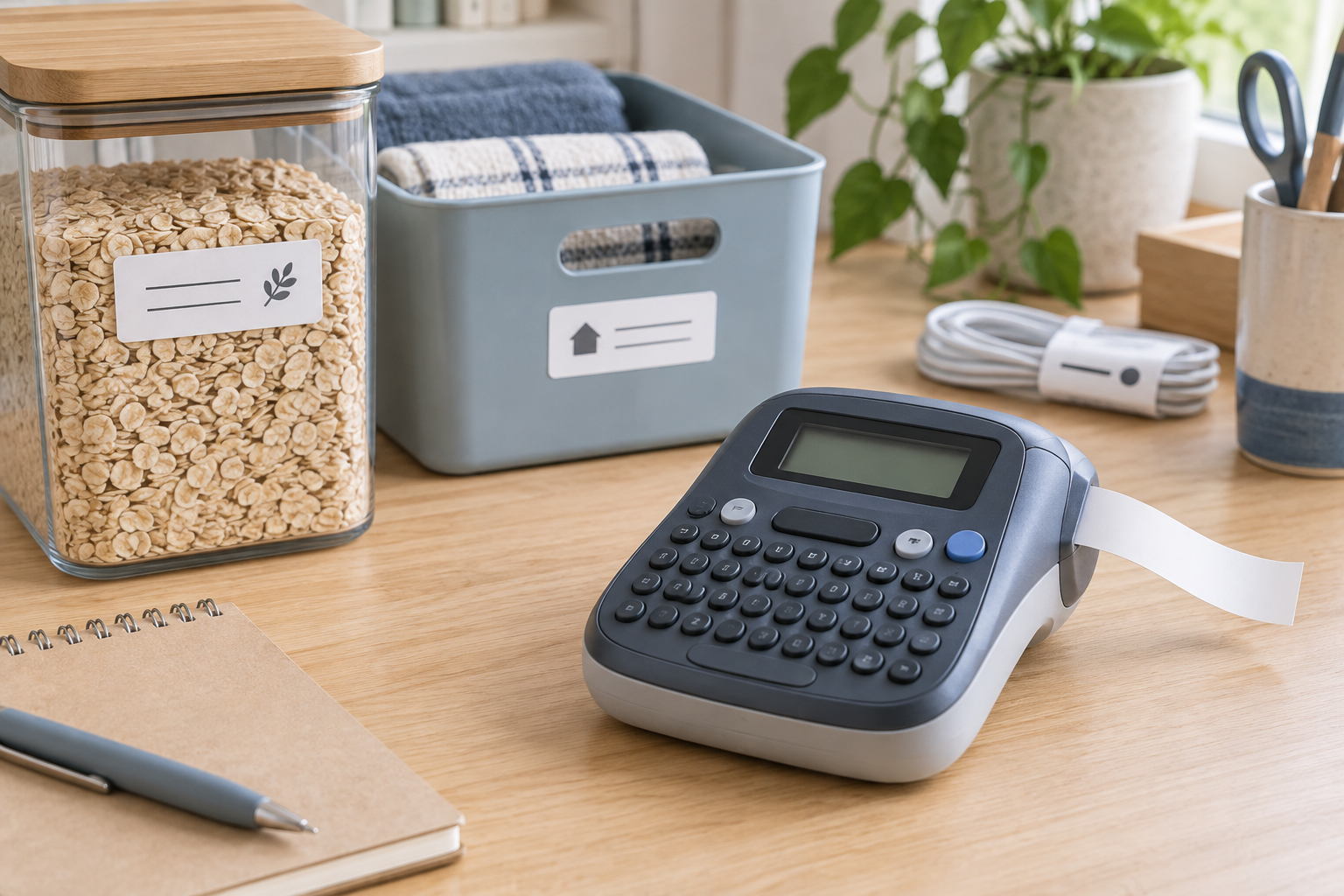
Quick decision before shopping
First measure the available space, identify the setup or surface constraints, and decide who will maintain the item. Skip the category if it blocks access, conflicts with the manufacturer's instructions or lease, or adds more upkeep than the problem justifies.
Compare the system, not just the device: These affiliate category links are starting points, not tested winners.
- Browse category: Compare household label makersCheck tape family, supported widths, controls, power, cutter, refill supply, and storage size.
- Browse category: Compare reusable and removable labelsA simpler fit for changing contents, occasional projects, or households that do not need a printer.
Verify current device, tape, surface, temperature, application, removal, app, account, privacy, power, and care instructions before buying or applying a label.
Quick decision
| Your routine | Best starting point |
|---|---|
| Many recurring labels across shared storage | A dedicated label maker may repay its setup and refill burden |
| A few short, temporary labels | Removable tape and a marker |
| Contents change often | Reusable tags or erasable labels, if suitable for the surface |
| Repeated batches from a spreadsheet or template | A printable sheet-label workflow may be simpler |
| Demanding heat, cold, moisture, or outdoor use | Choose only from documented compatible label materials |
Count the real labeling jobs first
Write down the labels you expect to make during the next three months. Good recurring jobs might include pantry refill bins, storage totes, charging cables, school supplies, craft drawers, tool cases, or shelves shared by several people. Then mark which labels will stay put and which will change.
If the list has only six static labels, a dedicated device is hard to justify. If you regularly set up new bins, rotate seasonal storage, relabel shared spaces, or replace worn labels, a consistent printer can reduce handwriting differences and make repeat jobs faster. Frequency matters more than the number of rooms you could theoretically label.
A label maker is worth it when the workflow repeats
The category fits best when labels solve a recurring identification problem. That may mean telling similar pantry bins apart, returning cables to the right equipment, or helping several household members use one storage system. A device can keep text size and format consistent, and some models can save repeated layouts.
Consistency is useful only if the machine is accessible. A standalone keyboard model may be easier for a shared household. An app-connected printer may suit batches and varied layouts, but it can introduce phone compatibility, permissions, account, software-support, and privacy questions. A manual embossing tool avoids batteries and apps but is slower and asks more of the user's grip.
Skip it when simpler labels already work
A marker on removable painter-style tape can be enough for short-lived labels when the surface maker permits the adhesive. Reusable hang tags can move between baskets. Sheet labels from an existing printer may suit planned batches. A plain paper inventory inside a transparent bin can avoid adhesive entirely.
Skip a dedicated device if you dislike keeping proprietary refills, if only one person's phone can operate it, or if the labels will become another layer on top of clutter that has not been sorted. Labels make categories visible; they do not create storage capacity or decide what belongs in a space.
The tape system is the ongoing commitment
The machine price is only the entry point. Check the exact cartridge family, supported widths, roll length, available colors and materials, and whether refills are realistically obtainable. Look at how much blank tape the device feeds before and after text. Frequent large margins can turn a modest label habit into a steady consumables expense.
Do not treat generic terms such as waterproof, freezer-safe, removable, or permanent as universal promises. Use the label-material maker's current instructions and the container, appliance, furniture, cable, or wall-surface guidance. Temperature, moisture, texture, plastic type, finish condition, cleaning products, and dwell time can all change adhesion and removal.
Check every surface before building the system
Measure the flat application area on the smallest jar, shelf edge, bin lip, cable flag, or drawer front you intend to label. A wider print head has little value if the finished label does not fit. Curved, flexible, dusty, textured, cold, damp, painted, paper, fabric, or soft-plastic surfaces may need different materials—or may be poor candidates altogether.
Test a permitted label in an inconspicuous place and follow the documented application and removal process. Stop if a finish, paper layer, coating, or plastic surface lifts or changes. Keep labels outside food-contact areas unless the exact material is documented for that use; a label attached to the outside of a food container does not establish food-contact approval.
Compare the complete routine
A useful device must be ready when the organizing work happens. Check power source, batteries or charging, keyboard and screen readability, app requirements, cutter, tape loading, label backing, print preview, and the space needed to store the machine plus refills. Confirm what comes in the package instead of assuming a power adapter, batteries, or full cartridge is included.
For a shared system, decide where the device lives, who can use it, how replacement tape is identified, and which format the household will follow. A machine hidden in a difficult cabinet or dependent on a forgotten app login is less useful than a marker stored beside the bins.
Estimate value without guessing at prices
Compare the device cost, expected refill use, batteries or charging, and time spent learning the workflow with the alternatives you already own. Divide that burden across realistic recurring jobs, not an imagined whole-home makeover. The value may be better consistency and easier shared use rather than direct financial savings.
A small trial is sensible: organize one shelf or one cable box with an inexpensive removable method. If the categories remain useful and relabeling becomes frequent, that is stronger evidence for buying a device than a wish to make every container match.
Who should skip a label maker
- People with only occasional or one-time labeling needs.
- Households that will not keep the correct refill tape available.
- Anyone who needs demanding environmental performance but cannot verify a compatible label material.
- Shared homes where the chosen device depends on one person's phone, account, or willingness to print.
- People trying to solve excess inventory, unclear categories, or inadequate storage with labels alone.
Bottom line
A label maker is worth it when you can name several recurring jobs, the surfaces accept an appropriate tape, refills are manageable, and everyone who needs it can repeat the workflow. For a handful of changing labels, start with removable tape, reusable tags, or an existing printer. Prove that the organization system works first; then decide whether a dedicated device will make it easier to maintain.