Is a Heated Throw Worth It for a Drafty Living Room?
A heated throw can be worth it when one seated person wants close-range warmth and the room is otherwise functional. It is a poor substitute for a heating failure, a damaged window, water intrusion, or a cord route that cannot stay clear.
As an Amazon Associate, The Good Home Doc may earn from qualifying purchases.
Quick decision before shopping
First measure the available space, identify the setup or surface constraints, and decide who will maintain the item. Skip the category if it blocks access, conflicts with the manufacturer's instructions or lease, or adds more upkeep than the problem justifies.
If the buy decision already fits:
- Browse category: Compare heated throws with documented automatic shutoffVerify the current manual, dimensions, complete cord layout, controller, care directions, and user restrictions before choosing one.
This is a category shopping route, not a tested ranking. The instructions supplied with the product govern use, inspection, washing, drying, storage, and replacement.
Quick Verdict
Buy one when the discomfort is limited to a reading chair or sofa, one adult wants personal warmth, the supplied cord reaches a suitable wall outlet without crossing a walkway, and the care routine is realistic.
Delay the purchase until you have measured the seat, throw coverage, controller reach, and full cord route, and read the current instructions for the exact product.
Skip it when the room has a heating, window, moisture, outlet, or building-maintenance problem; the user may not reliably sense heat or operate the controls; or the throw would be folded, pinned, wet, unattended, or connected through an unapproved setup.
What Problem Will the Throw Actually Solve?
A heated throw warms the person under it; it does not repair the draft or heat the room like a functioning heating system. That can be a sensible tradeoff for a person who sits in one place while reading or watching television and does not need the whole room changed.
First identify whether cold air is coming from a visible door gap, a window that will not close, an exterior-wall leak, or a heating system that is not maintaining the home. Renters should document damaged windows, persistent cold, water entry, or heating concerns and contact the landlord or property manager. Homeowners may need an HVAC, window, or building-envelope professional. Do not cover up warning signs with another appliance.
Check the Seat and Power Route Before Buying
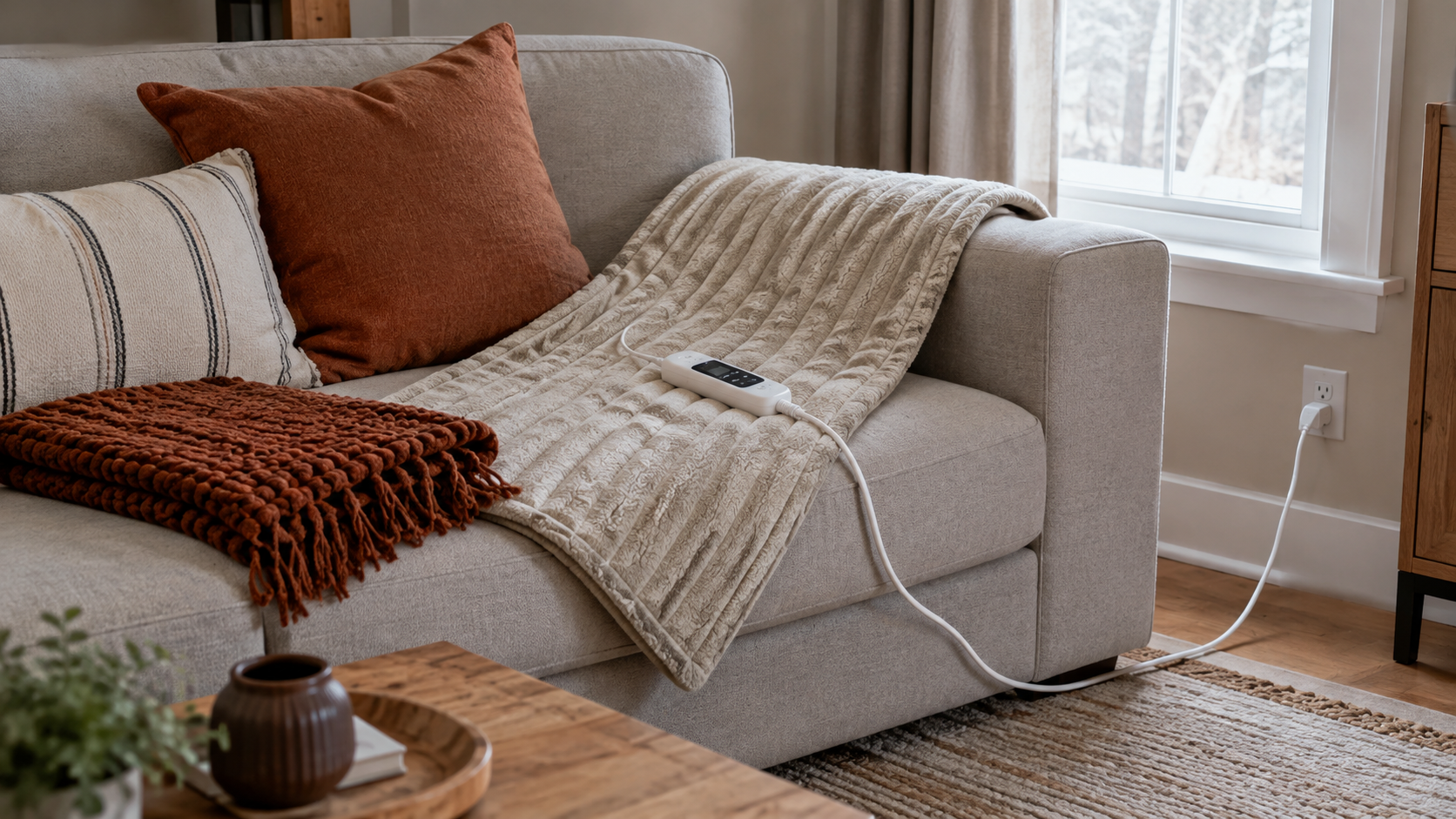
Measure from the user's lap or shoulders to the feet and compare that span with the listed throw dimensions. Then trace the supplied controller lead and power cord from the blanket connection to the wall outlet. The route should stay visible and clear of walking paths, cushions, recliner hardware, doorways, and places where a child or pet could pull it.
Do not assume an extension cord, power strip, smart plug, or external timer is acceptable. Use only a setup the current manufacturer instructions permit. If the supplied cord cannot reach without improvisation, a conventional blanket or a different seat is the better choice.
When the Cost Can Make Sense
- The comfort need is local and repeatable: one person regularly feels cold in one seat while the rest of the home is reasonably comfortable.
- A passive layer is not enough: a normal washable throw has already been tried and does not meet the comfort goal.
- The setup stays simple: the controller is easy to reach and the supplied cord reaches a suitable outlet directly.
- The upkeep fits: the user can disconnect, wash, dry, inspect, and store the throw exactly as instructed.
- Replacement is affordable: the purchase still makes sense if a worn or damaged throw must be retired rather than repaired.
When a Conventional Throw Is Better
A non-electric blanket has no controller or power route, is usually easier to move between seats, and may be simpler to wash and store. Start there when the room is only mildly cool, multiple people share the throw, pets regularly knead or chew blankets, or the intended seat moves often.
A conventional layer is also the clearer choice when someone tends to fall asleep on the sofa. Product restrictions vary, so never assume a heated throw is approved for sleeping, tucking, folding, layering, or use under the body.
Controls and Shutoff Are Backups, Not Permission to Ignore It
Look for a controller the intended user can read, reach, and operate without leaning into a walkway. Confirm the automatic-shutoff behavior in the current manual rather than relying on packaging shorthand. Shutoff does not make it appropriate to leave the throw running unattended or use it in a way the instructions prohibit.
Before each use, inspect the fabric, blanket connector, controller, plug, and cord. Stop using it if you notice fraying, exposed or shifted wiring, scorch marks, discoloration, a cracked controller, a loose connection, unusual odor, uneven heating, or operation that differs from the instructions. Do not attempt an electrical repair; follow the manufacturer's replacement or service direction.
Care and Storage Decide Whether It Stays Useful
Read the complete wash and dry directions before the return window closes. Confirm that every required electrical part disconnects and that your washer, dryer, and drying space can meet the stated method. Reconnect only after the throw is fully dry as directed.
Store it according to the manual, without tight folds, sharp pressure, heavy items on top, or a cord wrapped around the controller. If that storage routine will not fit your home, choose an ordinary blanket.
Who Should Skip a Heated Throw?
- Anyone who may not reliably feel excessive heat, move the throw, or operate the controller; ask an appropriate clinician or caregiver about suitable comfort options.
- Anyone planning unsupervised use by children or use as pet bedding. Follow the exact age, supervision, and animal restrictions in the instructions.
- Homes where the intended outlet, plug, wiring, or breaker shows heat, discoloration, looseness, buzzing, sparking, or repeated trips. Stop and contact the property manager or a qualified electrician.
- Seats where fabric or cords could enter recliner hardware, become trapped beneath cushions, or cross a required walking or exit route.
- Anyone expecting the throw to resolve serious drafts, a failed heating system, moisture, or a window or door that needs repair.
If the need is warmth while sleeping rather than seated comfort, do not assume the same product belongs in bed. Use the separate heated mattress pad decision guide to check mattress compatibility, user restrictions, cord routing, controls, and care.
Bottom Line
A heated throw is worth it for a narrow job: warming one alert, seated user when the product fits the seat, reaches a wall outlet directly, and can be inspected and cared for as instructed. Choose a normal blanket when simplicity matters more than powered warmth. Address the room itself when the draft, temperature, moisture, window, or heating system points to a maintenance problem.