Is a Heated Mattress Pad Worth It for a Cold Bedroom?
A heated mattress pad can make sense when one adult wants steady warmth in bed and the exact pad, mattress, bedding, outlet, and user all meet the manufacturer’s instructions. It is a poor shortcut for a damaged heating system, a serious draft or dampness problem, an incompatible bed, or a user who cannot reliably feel, adjust, or switch off the heat.
As an Amazon Associate, The Good Home Doc may earn from qualifying purchases.
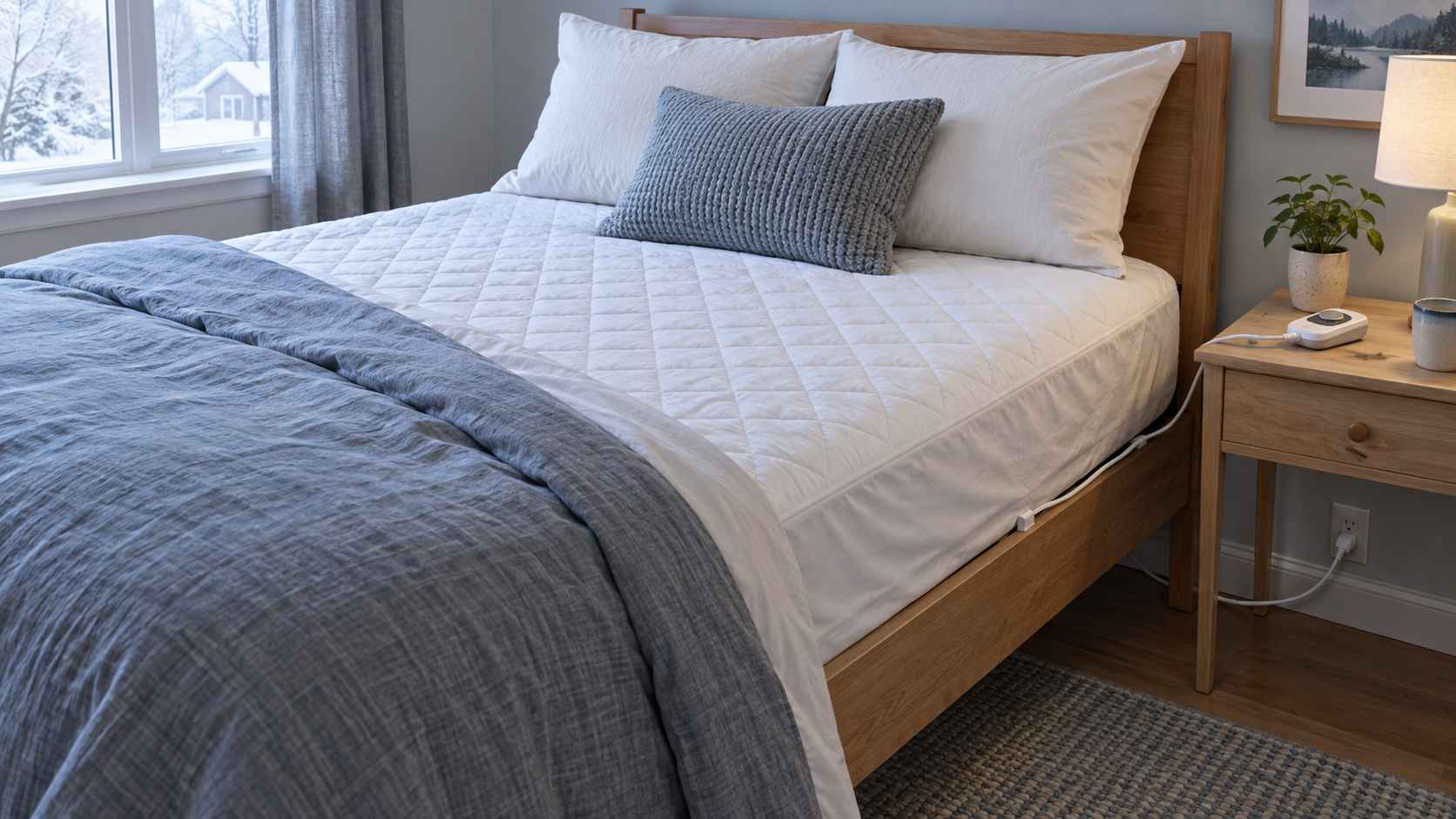
Quick decision before shopping
First measure the available space, identify the setup or surface constraints, and decide who will maintain the item. Skip the category if it blocks access, conflicts with the manufacturer's instructions or lease, or adds more upkeep than the problem justifies.
Check compatibility before comparing features: This affiliate category link is a shopping starting point, not a tested ranking or a statement that every pad fits every bed or user.
- Browse category: Compare heated mattress padsRead the current instructions for mattress type, size, controller, cord placement, automatic shutoff, washing, inspection, storage, and user restrictions before buying.
This guide is a shopping framework, not medical, electrical, fire-safety, or home-heating advice. Product instructions control. Do not use a pad that is damaged, wet, incorrectly fitted, modified, folded, or used against its directions. If the room has an electrical problem, burning smell, repeated breaker trip, water intrusion, unsafe indoor temperature, or failed fixed heating, stop and contact the appropriate qualified professional or property manager.
Quick Answer
It may be worth it when the bed is compatible, the pad lies flat and fits securely, one adult can operate the controller and recognize excess heat, and the cord reaches an approved outlet without crossing a walking route.
Delay the purchase until you have checked the mattress maker’s rules, the heated pad’s user restrictions, the full cord and controller layout, and the laundering routine.
Skip it when the product instructions exclude the bed or user, the pad would bunch or be compressed by the setup, the cord cannot be routed as directed, or passive bedding already solves the problem with less upkeep.
First Decide Whether the Bed or the Room Is Cold
A pad warms the sleeping surface; it does not repair the source of a cold room. Note whether discomfort is limited to getting into bed, lasts all night, affects the whole room, or arrives with a noticeable draft. Close and latch windows, use existing window coverings correctly, and ask a landlord or qualified professional to address damaged seals or fixed-heating problems rather than trying to cover them with bedding.
Try ordinary layers first if they fit the sleeper: warmer sheets, a suitable blanket, sleepwear, or a nonpowered mattress layer. These options have no controller or electrical cord and may be enough when the issue is brief initial chill. Avoid piling extra layers over or under a heated product unless its instructions expressly permit that arrangement.
Confirm Mattress and Bedding Compatibility
Do not assume that “queen” or “king” is the only fit question. Check both products’ current instructions for mattress construction, adjustable bases, split beds, toppers, protectors, air beds, water beds, hospital-style beds, and any other special setup. A thick topper can change fit and heat behavior; a moving base can change how a cord or connector is stressed.
Measure the mattress length, width, and depth, then compare the pad’s stated fit range. The skirt should hold the pad smoothly without pulling connectors into an awkward position. Identify where every plug and controller will sit before purchase. Nothing should be pinched between the mattress and frame, run under a rug, or create a trip or snag point.
Check the User Restrictions Before Features
The correct question is not just “Does it have low heat?” Read the complete user restrictions for the exact model. Heated bedding may be inappropriate for someone who cannot notice excess warmth, operate the controls, understand the directions, or leave the bed without assistance. Age, health, sensory, mobility, pregnancy, implanted-device, medication, or pet-related questions should be directed to the product maker and an appropriate clinician rather than guessed from a retailer listing.
Do not treat dual controls as proof that a pad suits two sleepers. Both people still need to meet the instructions, agree on the setup, and keep each controller on the intended side. Keep controllers and cords inaccessible to anyone who may play with, chew, pull, or damage them.
Must-Haves Versus Nice-to-Haves
Must-haves: documented compatibility with the entire bed setup; the right size and pocket depth; reachable, understandable controls; a workable cord layout; clearly stated shutoff behavior; complete washing and drying directions; and a seller with accessible model-specific documentation and sensible returns.
Nice-to-haves: separate zones for compatible shared beds, a display that can dim, easy-to-find buttons, detachable cords where the instructions support laundering, or a preheat setting. Feature names vary, so compare what each control actually does rather than assuming two similarly labeled settings behave alike.
Plan the Controller, Outlet, and Nighttime Routine
Sketch the setup from pad connector to controller to wall outlet using only the arrangement permitted by the instructions. The controller needs a stable, dry location where it will not fall, become covered by bedding, or require reaching behind furniture. The cord should not pass through a doorway or walking lane, wrap around the frame, or sit where a vacuum or adjustable bed can catch it.
Decide who will switch the pad on, select the setting, and confirm it is off. Verify the model’s documented automatic shutoff duration instead of assuming all products are the same. Automatic shutoff is a convenience feature, not a reason to ignore damage, excess heat, incorrect placement, or the rest of the directions.
Laundering and Inspection Are Part of Ownership
Read the care label before buying. Confirm which electrical parts detach, what wash cycle and water temperature are permitted, whether machine drying is allowed, and how the pad must be dried before reconnection. Never energize damp heated bedding or improvise a cleaning method.
Inspect the pad, connector, controller, and cord as the maker directs, including after washing and before seasonal reuse. Stop using it if you find damage, a loose connection, unusual discoloration, a hard or shifted area, erratic control behavior, or any other condition the instructions identify. Replacement and repair rules come from the manufacturer; do not patch or modify electrical bedding.
Who Should Skip a Heated Mattress Pad?
- Anyone excluded by the exact product’s user or bed-compatibility instructions.
- A household that cannot keep the pad flat, dry, correctly connected, and protected from damage.
- A room where the only available cord route crosses a doorway, walkway, rug, or pinch point.
- People who want to fix failed heating, persistent drafts, moisture, or another building problem with a bed product.
- Anyone unwilling or unable to follow the washing, drying, inspection, and seasonal-storage routine.
- A sleeper who is already comfortable with passive bedding and would gain little from another powered item.
Run a Three-Night No-Buy Check
For three nights, record the room temperature or simply whether the discomfort happens at bedtime, overnight, or near morning. Try one suitable passive layer and check whether drafts or an uncovered window are the real issue. Measure the mattress and trace a hypothetical cord route in daylight. If those steps solve the discomfort or expose a compatibility problem, skip the pad.
If the bed remains uncomfortably cold, the building is functioning normally, passive layers are not a good fit, and every compatibility and user check passes, a heated mattress pad may be a reasonable category to compare. Keep the final choice grounded in instructions and setup—not maximum heat, promotional claims, or feature count.
Bottom Line
A heated mattress pad is worth considering only when targeted bed warmth is the narrow problem and the exact bed, sleeper, outlet, cord route, controls, and care routine all fit the manufacturer’s rules. It is less compelling when ordinary bedding works, the room itself needs repair, or any user or compatibility question remains unresolved. Verify the full setup first; then compare fit, control usability, shutoff behavior, care, and return terms.