Is a Freestanding Pantry Cabinet Worth It for a Small Kitchen?
A freestanding pantry cabinet can be worth it when your kitchen lacks closed storage, one measured wall can support a cabinet without choking the walkway, and you are prepared to assemble and secure the exact unit as its maker directs. It is usually a poor trade when a few shelf inserts would solve the problem, the doors cannot open fully, or the cabinet must remain unrestrained where restraint is required.
As an Amazon Associate, The Good Home Doc may earn from qualifying purchases.
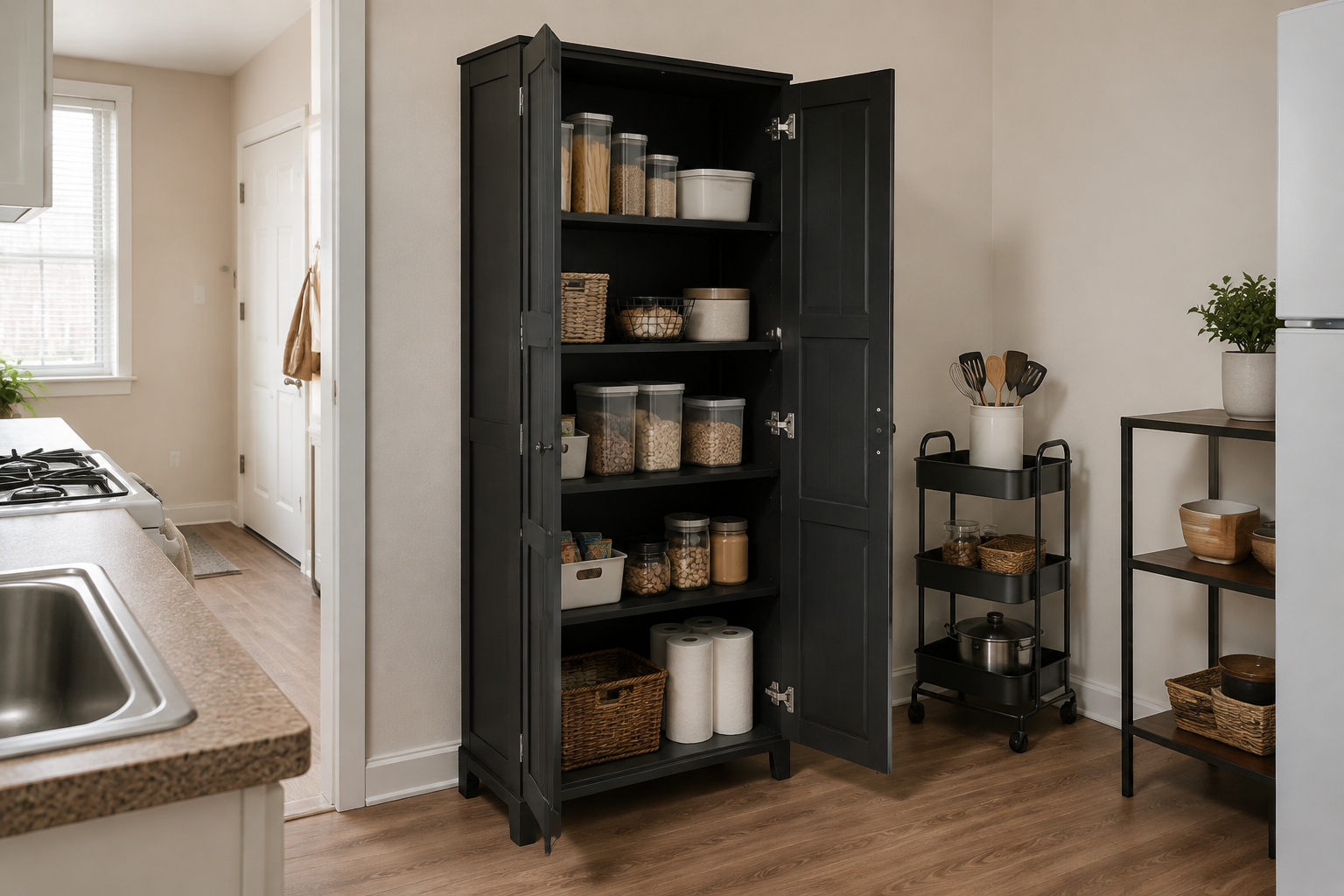
Quick decision before shopping
First measure the available space, identify the setup or surface constraints, and decide who will maintain the item. Skip the category if it blocks access, conflicts with the manufacturer's instructions or lease, or adds more upkeep than the problem justifies.
Prove the cabinet fits before comparing finishes: This affiliate category link is a shopping starting point, not a tested product ranking.
- Browse category: Compare freestanding pantry cabinets for small kitchensCheck assembled dimensions, open-door footprint, shelf dimensions and stated loads, restraint instructions, delivery pieces, and cleaning guidance.
This is a category decision framework, not a product test. Cabinet dimensions, materials, shelf loads, hardware, assembly, wall-restraint requirements, and care vary. Follow the instructions for the exact unit and wall system; if required restraint cannot be installed safely or your lease forbids it, skip that cabinet.
Quick Answer
It is probably worth it when you need meaningful closed capacity, can assign the shelves before buying, and have a clear wall plus working room for doors, assembly, cleaning, and any required restraint.
Delay the purchase until you measure baseboards, outlets, switches, trim, door and appliance swing, ceiling height, the delivery route, and the cabinet with its own doors fully open.
Skip it when the kitchen loses a useful walkway, the cabinet would cover access or ventilation, a lighter organizer fixes the real bottleneck, or assembly and secure placement do not fit the home.
Run the Full-Footprint Test
- Mark the closed footprint. Tape the advertised assembled width and depth on the floor, accounting for baseboards and any projecting trim or hardware.
- Add the doors. Mark the space each door needs to open far enough for shelves, drawers, or interior baskets to work.
- Open the room. Test the refrigerator, oven, dishwasher, drawers, nearby doors, and the main walking route with the outline in place.
- Look up and behind. Check ceiling height, outlets, switches, vents, wall material, and the restraint location specified by the manufacturer.
- Walk the delivery path. Confirm packages and assembled sections can pass stairs, elevators, halls, and doorways, and that the room has enough floor area for assembly.
Capacity Only Counts When the Shelves Fit
List what the cabinet will hold and measure the tallest, widest, and deepest items. A large exterior can still waste space if fixed shelves split cereal boxes, appliances, or bins at awkward heights. Adjustable shelves add flexibility, but only within the maker's hole pattern and stated limits.
Plan heavy items low and do not infer capacity from a styled photo. Check both per-shelf and total-load guidance. If the cabinet will mostly hold small packets and cans, shallow baskets or an existing-cabinet organizer may use space more efficiently.
Assembly and Restraint Are Part of the Purchase
Tall storage furniture may require wall restraint or other installation steps. Treat those instructions as part of the product—not an optional upgrade. Check the wall type, included versus required hardware, tool list, and whether your lease or building rules permit the work before ordering.
Do not substitute improvised fasteners or guess about a wall. If you cannot identify a suitable installation method, ask the landlord or a qualified installer. Homes with children, pets, uneven floors, or frequent bumps need especially conservative placement and strict attention to the maker's stability instructions.
Must-Haves Versus Nice-to-Haves
Must-haves: a fully measured footprint, useful shelf dimensions, documented loads, doors that clear the room, suitable assembly and restraint instructions, cleanable surfaces, and access to the wall and floor behind the unit.
Nice-to-haves: adjustable shelves, removable interior bins, soft-close hardware, leveling features approved for the cabinet, and doors that hide visual clutter. Decorative trim and extra interior gadgets matter only after the cabinet fits and can be used as directed.
Who Should Skip a Pantry Cabinet?
- Renters who cannot complete required restraint or other installation under their lease.
- Kitchens where the open doors interfere with cooking, appliance access, an exit, or the only comfortable walkway.
- Households whose clutter is mostly duplicates, expired goods, or items better stored near another work zone.
- Anyone unable to assemble the unit according to instructions or arrange qualified help.
- Frequent movers who cannot justify the weight, disassembly, and risk of lost or damaged hardware.
- Rooms with unresolved moisture, wall damage, floor instability, or access problems that need landlord or professional attention first.
Smaller Alternatives May Solve the Actual Problem
Shelf risers can reclaim vertical gaps inside existing cabinets. Drawer organizers help when utensils—not pantry volume—are the bottleneck. A rolling cart trades closed capacity for mobility and easier cleaning access. Open shelves can use less visual mass but still require stable placement and whatever restraint their maker specifies. Decluttering and assigning food zones cost less floor space than adding furniture.
Bottom Line
A freestanding pantry cabinet is worth considering when the need is genuinely more closed capacity and the full cabinet—doors, shelves, assembly, restraint, and cleaning access—fits the room. Tape the complete operating footprint, assign the contents, and confirm installation before shopping by style. If a smaller organizer fixes the bottleneck, keep the floor space.
After the cabinet passes those gates, compare door layouts, shelf geometry, materials, and upkeep in the freestanding pantry cabinet buying guide.