Is a Bread Box Worth It for a Small Kitchen Counter?
A bread box is worth considering when bread is a regular purchase, loose packages create clutter, and one measured spot can hold the box without taking over prep space. It is usually not worth it when bread turns over slowly, the only available spot is warm or damp, or an existing cabinet or basket already keeps packages contained.
As an Amazon Associate, The Good Home Doc may earn from qualifying purchases.
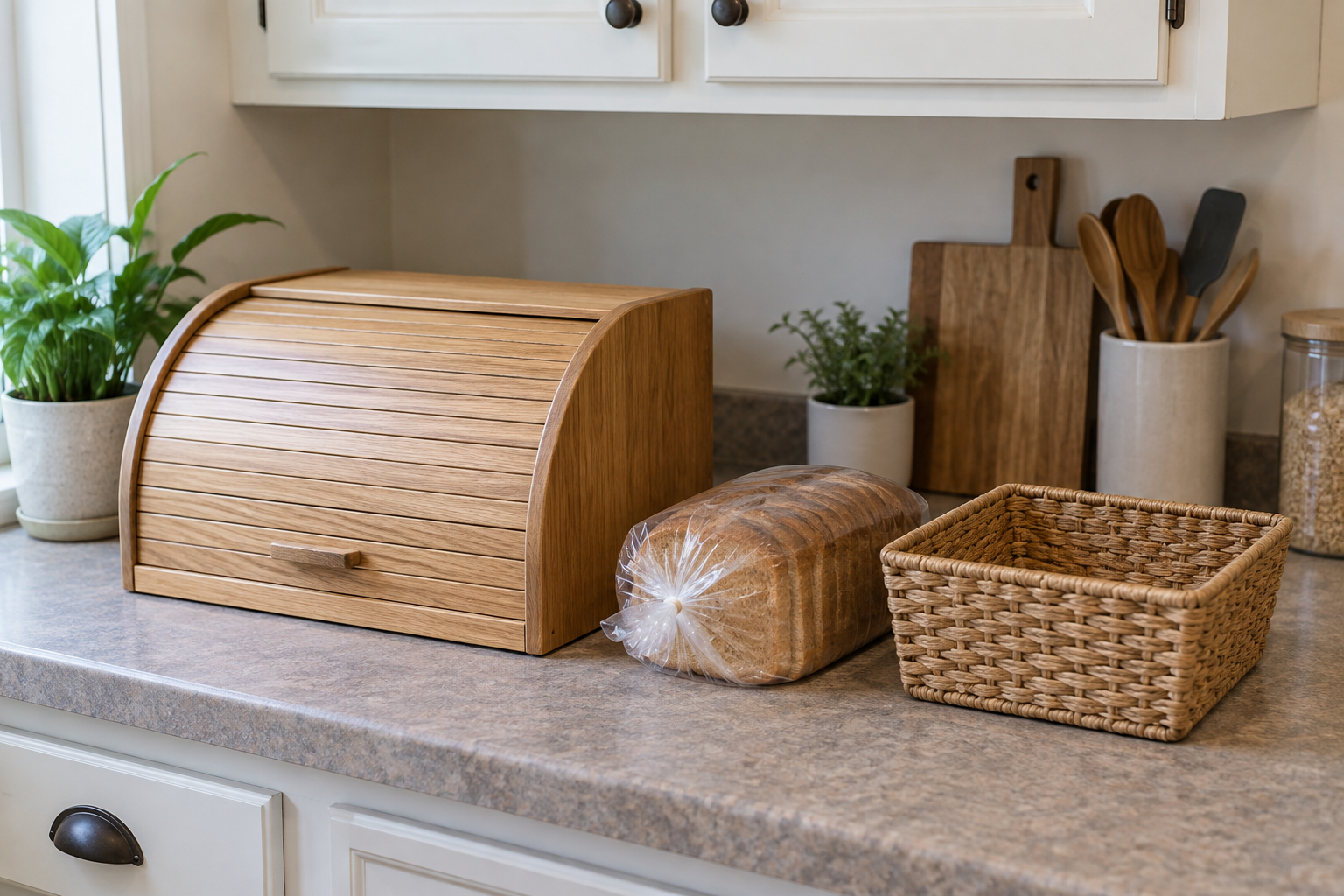
Quick decision before shopping
First measure the available space, identify the setup or surface constraints, and decide who will maintain the item. Skip the category if it blocks access, conflicts with the manufacturer's instructions or lease, or adds more upkeep than the problem justifies.
Shop only after the counter-space check: This affiliate category link is a starting point, not a tested ranking.
- Browse category: Compare compact bread boxes for small countersConfirm exterior and usable interior dimensions, full door travel, ventilation design, materials, cleaning instructions, and return terms.
This guide helps decide whether to buy the category; it does not rank products or promise that a box will keep bread fresh for a set number of days. Bread type, packaging, recipe, room conditions, storage directions, and the specific box all matter. Follow the bread producer's or recipe author's storage directions and discard food when its condition is in doubt.
Quick Answer
It is probably worth it when your household keeps one or more bread packages on the counter most weeks, wants one defined storage zone, and can give the box enough room to open and be cleaned.
Delay the purchase until you measure your usual loaves, the proposed counter spot, upper-cabinet clearance, and the box with its door fully open.
Skip it when it would replace useful prep space, sit beside heat or persistent moisture, or duplicate a suitable cabinet shelf, drawer, or basket you already own.
Start With the Bread Routine
Look at a normal week rather than an unusually large grocery trip. Count the loaves, rolls, tortillas, or bakery bags that are usually present at the same time. Note whether they arrive in packaging that should remain closed and whether anyone needs quick visual access to remember what is available.
A dedicated box is most useful when it contains a recurring group of packages and reduces visual clutter without hiding food until it is forgotten. If bread is purchased only occasionally or usually goes directly to another storage location according to its instructions, an empty box becomes permanent counter clutter.
Run the Counter-Footprint Test
- Measure the proposed zone. Record width, depth, and height beneath the upper cabinets.
- Protect the working path. Leave room to prepare food and to open nearby cabinets, drawers, and appliances.
- Include the opening motion. A drop-front panel needs clear space in front, a lift lid needs height, and a side-hinged door needs swing clearance.
- Check the contents. Compare the maker's stated interior dimensions with the bread packages you actually buy.
- Try the footprint first. Mark the exterior dimensions with removable tape or place a similarly sized box there for several days.
If the mock footprint becomes an obstacle before it holds anything, the real product will not improve the kitchen. The small-home organization systems guide can help find another zone instead of forcing storage onto the counter.
What a Bread Box Can and Cannot Do
A bread box can gather packages, reduce visual clutter, and create a repeatable location. Some designs describe ventilation or closure features, but those details should be evaluated from the current maker's documentation rather than converted into a universal freshness promise.
It cannot reverse staling, make spoiled or damp bread safe, or override storage directions. Do not assume that tighter closure is always better, and do not place warm bread into an enclosed container unless the recipe or producer directs that storage method. Crumbs, residue, or moisture still require prompt cleaning and complete drying.
The Upkeep Is Small but Real
Look inside the proposed design. Tracks, hinges, shelves, tight corners, and unfinished materials can make crumb removal slower. A simple interior that can be fully reached may be more useful than a feature-heavy box that the household avoids cleaning.
Check whether shelves or trays are removable, which parts may be washed, and how wood, coatings, or mixed materials should be dried. If the normal routine involves moving the entire box, its loaded weight and grip points matter too. A basket or washable tray may be the better tool when frequent shake-out cleaning is the priority.
When the Box Earns Its Space
- The household buys bread often enough that packages otherwise remain visible most days.
- The measured interior fits the normal mix without crushing or unloading everything.
- The closed and open footprints preserve useful preparation space.
- The location stays clear of direct sink spray, cooking heat, grease, and appliance exhaust.
- Everyone can open the box, see the contents, and close it without moving other items.
- The cleaning instructions fit the household's routine.
Who Should Skip a Bread Box?
- Households that buy bread rarely or already use an appropriate, easy-to-reach storage location.
- Small kitchens where the box would occupy the only practical chopping or unloading zone.
- Anyone expecting a guaranteed freshness period, food-safety outcome, or airtight performance without exact documentation.
- People whose available spot is exposed to regular water spray, steam, heat, grease, or direct sun.
- Households whose usual loaves will not fit the stated interior dimensions and opening.
- Anyone who will not regularly remove crumbs and let cleaned surfaces dry as directed.
Cheaper and Simpler Alternatives
An existing cabinet shelf costs nothing if it has enough clearance, stays suitable for the packaged food, and does not make bread disappear behind other items. A shallow basket or tray creates a visual boundary and can be easier to lift and clean, although it does not provide the same enclosure. A drawer can preserve counter space when its dimensions, cleanliness, and household routine fit.
Original packaging may already be the simplest system. The goal is not to repackage food for appearance; it is to give regularly used items a sensible location while following their storage directions. If several food categories are competing for the same surface, compare countertop produce storage before assigning the space twice.
Bottom Line
A bread box is worth it when it contains bread you buy regularly, fits both the packages and the full opening motion, and leaves enough counter for actual kitchen work. It is an organizer, not a freshness guarantee. Test the footprint, read the care instructions, and choose an existing shelf, drawer, or basket when dedicated enclosure would add more bulk than benefit.
If the answer is yes, the bread-box format guide compares roll-top, drop-front, vertical, and lift-lid designs by usable capacity, access, and cleaning.