How to Choose Bread Boxes for Small Counters
A bread box earns its counter space when it fits the bread you actually buy, opens without colliding with a cabinet or appliance, and is easy to empty and wipe. If you are still deciding whether dedicated storage deserves any counter space, start with the bread-box buy-or-skip guide. For a small kitchen, the best format is usually the one with the smallest usable footprint—not simply the smallest exterior dimensions.
As an Amazon Associate, The Good Home Doc may earn from qualifying purchases.
Quick decision before shopping
First measure the available space, identify the setup or surface constraints, and decide who will maintain the item. Skip the category if it blocks access, conflicts with the manufacturer's instructions or lease, or adds more upkeep than the problem justifies.
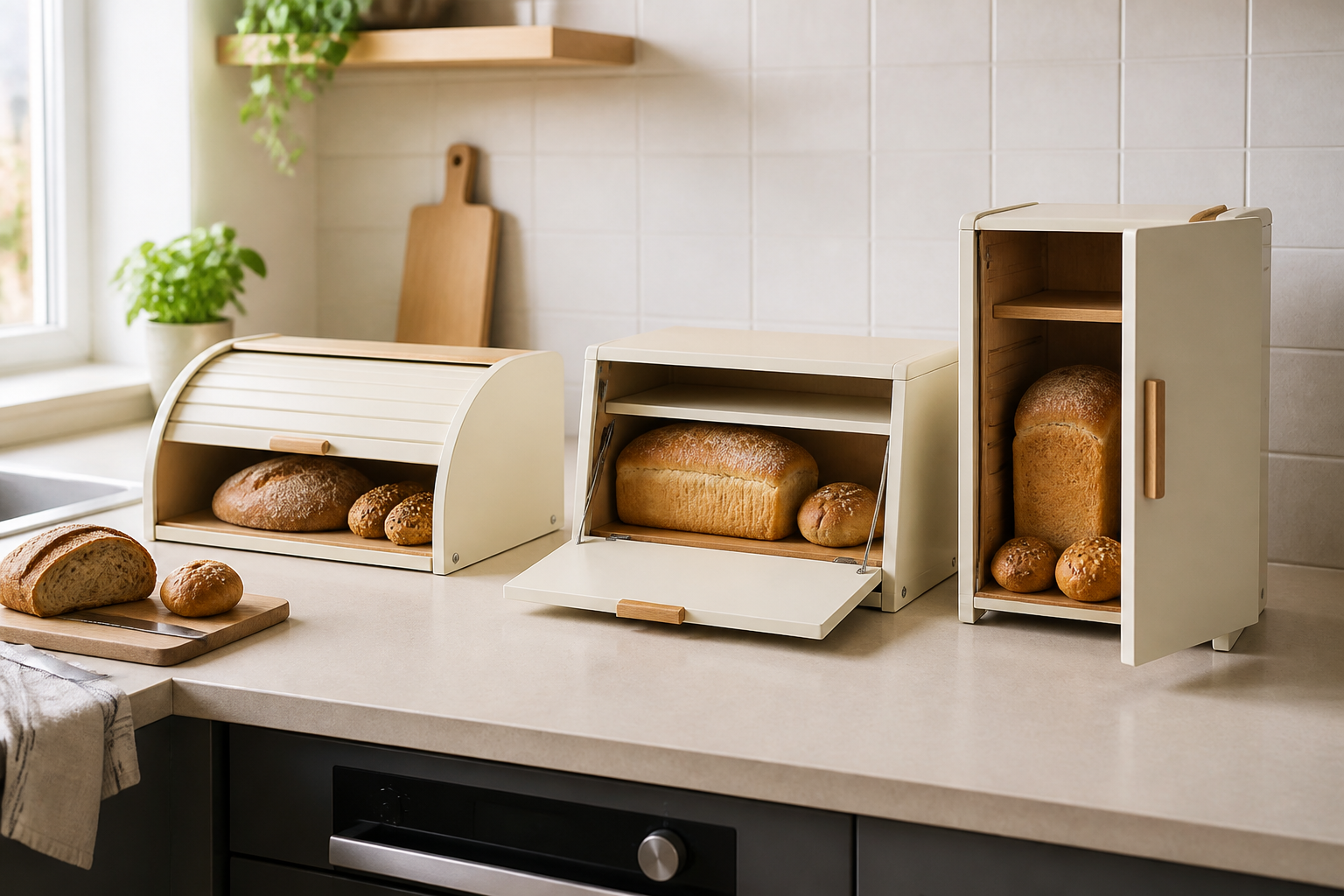
Compare the opening style that fits your counter:
- Browse category: Compare compact roll-top bread boxesThe door stays within the cabinet body, which helps where space in front is tight.
- Browse category: Compare drop-front bread boxesA wide opening makes access easy, but the open panel needs clear counter depth.
- Browse category: Compare vertical bread boxesA taller format can reduce width, provided shelves and overhead clearance fit your loaves.
These are category searches, not tested rankings. Confirm current exterior and interior dimensions, door travel, materials, ventilation, care instructions, assembly, and return terms before buying.
This guide compares bread-box formats rather than named products. It does not promise a specific freshness period: bread type, recipe, packaging, room conditions, and the box design all affect results. Follow storage directions for the bread you buy or bake.
Quick Best-Fit Guide
- Best when front clearance is tight: a roll-top box whose door retracts fully without narrowing the useful opening.
- Best for broad, easy access: a drop-front box with enough clear counter depth for the panel to lower completely.
- Best when counter width is scarce: a vertical box with interior shelf spacing that fits your usual loaves and rolls.
- Best for flexible placement: a simple lift-lid box, but only where there is room above to raise and hold the lid.
- Best when every inch of prep space matters: skip the category and use an appropriate pantry shelf, drawer, or existing storage zone.
Measure the Space the Box Uses in Real Life
Record the maximum exterior width, depth, and height, including handles, hinges, feet, and any curved door housing. Mark that rectangle on the counter with removable tape. Then open the nearby cabinet doors, drawers, dishwasher, and small appliances to make sure the box does not interrupt the normal kitchen workflow.
Door travel is part of the footprint. A drop-front panel may project most of the box depth toward you. A lift lid needs open air above. A roll-top door usually stays contained, but its tracks and rolled door can reduce interior height. Measure to the cabinet above and keep the box away from sink spray, cooktop heat, steam, and appliance exhaust.
Check Usable Loaf Capacity, Not Advertised Capacity
Measure the bread packages, homemade loaves, buns, or tortillas you normally keep at once. Compare those measurements with the box's stated interior dimensions. Curved walls, door tracks, shelves, hinges, and ventilation panels can make the usable cavity smaller than the outside suggests.
Plan enough room to remove one item without crushing or unloading everything else. A tall box with a fixed shelf may work well for two short items but fail with a large unsliced loaf. A wide, low box may fit a standard loaf yet consume more prep width than it saves.
Comparison Framework
Roll-Top Bread Boxes
A slatted or single-piece door retracts along the curved top, keeping the opening motion inside the box's envelope. This format suits a counter where there is little spare room in front.
Choose one when: contained door travel matters and the opening remains tall enough for your hand and usual bread.
Watch for: tracks that collect crumbs, a door that steals interior height, and handles that project into the work area.
Drop-Front Bread Boxes
The front panel lowers to expose most of the interior at once. Access is clear, and some closed boxes offer a flat top for lightweight items if the manufacturer permits it.
Choose one when: you have enough counter depth in front and want to see or rearrange the contents easily.
Watch for: a panel that hits a faucet, appliance, or counter-edge object, plus hinges and corners that are awkward to wipe.
Vertical Bread Boxes
A taller cabinet uses height to reduce counter width. Shelves can separate loaves and rolls, but only if their spacing matches the food and does not create cramped, hidden zones.
Choose one when: overhead clearance is generous and a narrow footprint matters more than one wide opening.
Watch for: unstable proportions, a top shelf that is hard to reach, fixed shelves that waste space, and doors that need side clearance.
Lift-Lid Boxes
A hinged or removable top keeps the front clear and can have simple interior geometry. It needs unobstructed height and usually cannot serve as a reliable storage surface.
Choose one when: the counter is open above and you can lift the lid without moving other items.
Watch for: low upper cabinets, a lid that will not stay open, and the temptation to stack objects on top.
Must-Have Buying Checks
- Interior dimensions: Compare the usable cavity with the bread and packaging you actually store.
- Complete opening clearance: Include front, top, or side door travel in the taped counter test.
- Practical ventilation: Look for a clearly described ventilation design, while recognizing that more openings are not automatically better in every room.
- Full cleaning access: You should be able to remove crumbs and wipe corners, tracks, shelves, and door edges.
- Stable base: The box should sit flat and remain settled while the door is opened and bread is removed.
- Appropriate material care: Check the maker's directions for washing, drying, coatings, unfinished wood, and food contact.
- Safe placement: Keep it clear of heat, persistent moisture, direct spray, and the edge of the counter.
Material Tradeoffs
Powder-coated metal: often provides a rigid shell and wipeable surfaces, but seams, scratches, dents, and non-removable interiors can complicate upkeep. Dry it after cleaning and follow the coating-care instructions.
Wood or bamboo: can suit a warm kitchen and may feel less cold or industrial, but joints and unfinished areas need careful drying. Do not soak wood components unless the maker specifically allows it.
Plastic: is light and can be easy to move, though thin panels, hinges, and surface scratching vary. Check cleaning-temperature limits and whether parts are actually removable.
Mixed materials: may combine a metal body with a wood lid or shelf. Confirm that every material can be cleaned using the same routine—or that parts separate easily.
Nice-to-Have Features
- Removable crumb tray or shelf: Useful only when it lifts out without spilling debris into tracks or seams.
- Flat, approved top surface: Can hold very light items if the maker permits it and they do not block the door or vents.
- Adjustable shelf: Helps a vertical format adapt to different bread sizes without crushing packages.
- Quiet stops or bumpers: Reduce door clatter, provided they stay attached and do not trap crumbs.
- Simple handles: Easy to grip and wipe, without adding unnecessary projection.
What a Bread Box Cannot Fix
A box cannot reverse staling, make damp bread safe, or compensate for unsuitable storage. Do not put warm baked bread into an enclosed box before it has cooled as directed, and do not keep bread with visible spoilage. Clean and fully dry the interior when crumbs, moisture, or residue collect.
Do not assume an airtight box is universally better. The useful balance between containment and ventilation depends on the bread and room. If the packaging includes storage directions, follow them rather than relying on a generic freshness claim.
Who Should Skip a Bread Box
- Skip one if it occupies the only practical prep surface or blocks an appliance, drawer, or cabinet.
- Skip countertop placement if the available spot receives sink spray, cooking grease, direct sun, or heat.
- Skip a roll-top model if its tracks and narrow corners are more maintenance than your routine allows.
- Skip a drop-front model if there is not enough clear depth to open the door completely.
- Skip a vertical model if upper cabinets leave little clearance or the tall body could be bumped.
- Skip the category if you buy little bread and already have suitable, easy-to-clean storage elsewhere.
Buying Checklist
- List and measure the bread packages and loaves you store in a normal week.
- Measure exterior counter width, depth, and overhead clearance.
- Map the full path of the door, lid, drawers, and nearby appliances.
- Compare stated interior dimensions, including shelf and track intrusions.
- Check how ventilation is described without relying on freshness guarantees.
- Confirm every interior surface can be reached, wiped, and dried.
- Choose the opening style that preserves the kitchen workflow—or skip the box.
Bottom Line
A roll-top bread box is the practical starting point where front clearance is scarce, a drop-front design works when broad access matters and counter depth is available, and a vertical box trades height for width when its shelves fit your bread. Measure the food, interior cavity, and open-door footprint before buying; a compact-looking box is not useful if it crowds the counter or crushes the loaf.