Is an Air Circulator Worth It for a Stuffy Room?
An air circulator can make a room feel less stagnant when the basic problem is uneven or weak air movement. It cannot bring in fresh outdoor air, remove a pollutant source, dehumidify the room, or lower its actual temperature like air conditioning. Diagnose “stuffy” before buying so a fan does not merely move the same uncomfortable air around.
As an Amazon Associate, The Good Home Doc may earn from qualifying purchases.
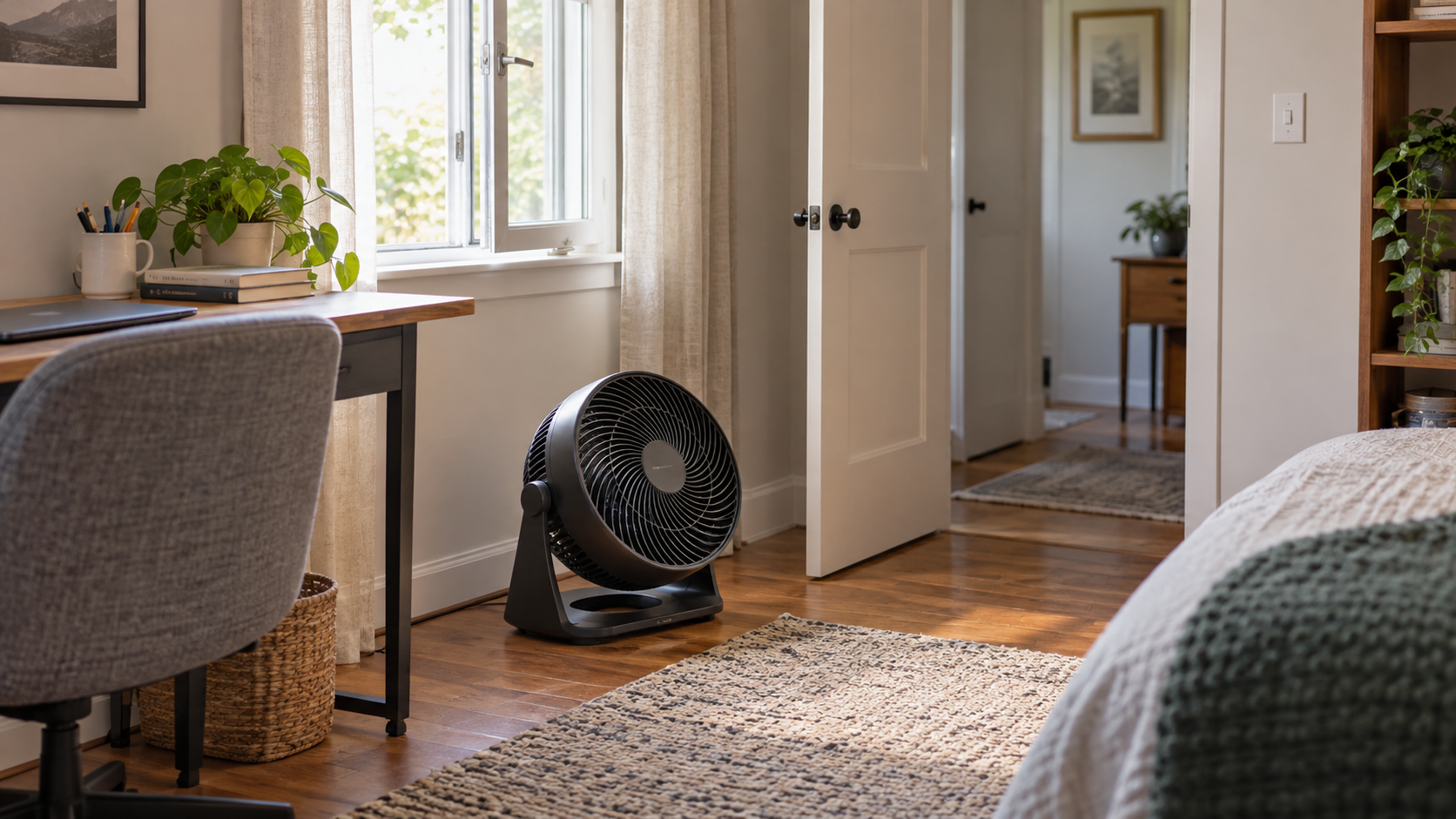
Quick decision before shopping
First measure the available space, identify the setup or surface constraints, and decide who will maintain the item. Skip the category if it blocks access, conflicts with the manufacturer's instructions or lease, or adds more upkeep than the problem justifies.
Confirm that circulation is the job first: This affiliate category link is a shopping starting point, not a tested product ranking.
- Browse category: Compare compact air circulator fansCheck dimensions, stable placement, speed controls, documented noise conditions, grille access, cord length, electrical instructions, and return terms.
This is a buy-or-skip framework, not a ventilation, indoor-air-quality, or safety assessment. Follow the exact fan instructions. Leave the room and contact the appropriate emergency service or qualified professional for a combustion alarm, gas or burning odor, smoke, breathing symptoms, persistent dampness, visible mold-like growth, unusual heat, or another urgent condition.
Quick Answer
It may be worth it when the air is comfortable in temperature and humidity but feels stagnant, a doorway or window provides a useful air path, and you have a stable spot with a safe cord route.
Delay the purchase when you cannot yet tell whether the complaint is heat, humidity, an odor source, dirty equipment, poor ventilation, or simply still air.
Skip it when you expect a fan to remove contaminants, solve a moisture problem, cool an empty room, or make poor outdoor air suitable to bring inside.
First, Define What “Stuffy” Means
Spend a day noting when and where the room feels wrong. Is it warmer than nearby rooms? Does it feel damp? Is there a localized odor, condensation, or a closed-door period after which the discomfort starts? Does opening an interior door help? The answers point to different fixes.
A circulator addresses air movement. Heat may require shading, reducing heat sources, appropriate cooling, or building maintenance. High humidity calls for source control and, where appropriate, ventilation or dehumidification. Odors require finding and dealing with the source. A fan can spread an odor or airborne material beyond the original area, so do not use movement as proof that the underlying issue is resolved.
What an Air Circulator Actually Changes
Compared with a small personal fan, an air circulator usually sends a more focused stream across a longer path. Pointing it toward an open doorway, across the room, or upward can help mix air that otherwise sits in separate warm and cool zones. The useful direction depends on the layout; “more power” is not automatically better.
It does not create fresh air in a closed room. A window can support ventilation only when outdoor temperature, air quality, security, weather, and the building setup make opening it sensible. Never aim a fan to move smoke, strong chemical fumes, suspected combustion gases, or contaminated air through the home.
Test the Air Path Before Shopping
Try the room with the interior door open, where practical, and remove furniture or curtains that block existing vents without covering or modifying equipment. If a safe window-opening routine is appropriate, note whether it changes the complaint. These checks can show whether air exchange or distribution matters without buying anything.
Then sketch a route for a circulator. A stable floor, table, or shelf position needs clear intake and outlet space according to the manufacturer. Keep fingers, hair, loose fabric, pets, and small objects away from the grille. The fan should not narrow a doorway, sit where it can be knocked over, or send its cord across a walking path.
Must-Haves Versus Nice-to-Haves
Must-haves: a footprint that fits the stable placement you measured, several usable speeds, controls you can reach, a cord that reaches the intended outlet without an unsafe workaround, a protective grille, clear electrical and cleaning instructions, and access to remove dust as directed.
Nice-to-haves: adjustable tilt, oscillation when the room layout benefits, a timer, remote control, or a low setting documented under conditions relevant to your room. Feature counts matter less than a steady low speed you will tolerate and a grille you can keep clean.
Noise, Cleaning, and Running Routine
Published noise numbers are useful only with their test distance, speed, and room conditions. A low motor hum, grille tone, or control beep can matter more in a bedroom or office than a single headline number. Buy from a route with clear specifications and workable returns if sound sensitivity is central.
Dust buildup can reduce performance and put loose material back into motion. Before purchase, read how the grille and blades are accessed, whether tools are needed, and which parts may be wiped or removed. Unplug the unit and follow its instructions before cleaning. Inspect the cord and housing, and stop using damaged equipment.
Who Should Skip an Air Circulator?
- Anyone trying to correct a suspected gas, smoke, mold, moisture, combustion, or electrical problem with airflow.
- Rooms with no stable placement or no outlet that permits a clear cord route.
- Households where the accessible grille, controls, or cord conflict with child or pet safety needs.
- People whose real goal is filtration, dehumidification, outdoor-air exchange, or active cooling.
- Light sleepers or sound-sensitive workers who cannot verify a tolerable returnable setup.
- Anyone who cannot clean the intended design as often as its environment and instructions require.
Run a No-Cost Trial
Use an existing portable fan for one or two days if you already own one. Try a safe position aimed across the room rather than directly at your face, and note comfort at low and medium speed, noise, door movement, cord placement, and whether opening the interior door matters. Do not leave the fan unattended or operate it contrary to its instructions.
If movement clearly improves comfort and the route stays practical, a compact circulator may justify its footprint. If nothing changes, or the problem tracks heat, humidity, odors, or a closed building system, spend the next step on diagnosis rather than a stronger fan.
Compare the Two Fan Formats
If circulation is the right job but the format is unclear, compare an air circulator with a tower fan by directional airflow, oscillating coverage, footprint, placement, sound, cleaning, and storage.
Bottom Line
An air circulator is worth considering when still, uneven room air is the narrow problem and the layout provides a clear, stable, maintainable airflow path. It is not a substitute for fresh-air ventilation, source control, cooling, dehumidification, filtration, or qualified investigation. Define the complaint, test the route with what you own, and only then compare dimensions, low-speed sound, placement, cleaning, and controls.