Air Circulator vs Tower Fan for a Stuffy Room
Choose a compact air circulator when you need a focused stream that can be aimed along a useful room path. Choose a tower fan when a narrow floor footprint and sweeping oscillation fit the furniture better. Neither format brings in fresh air, removes a pollutant source, reduces humidity, or lowers room temperature like air conditioning.
As an Amazon Associate, The Good Home Doc may earn from qualifying purchases.
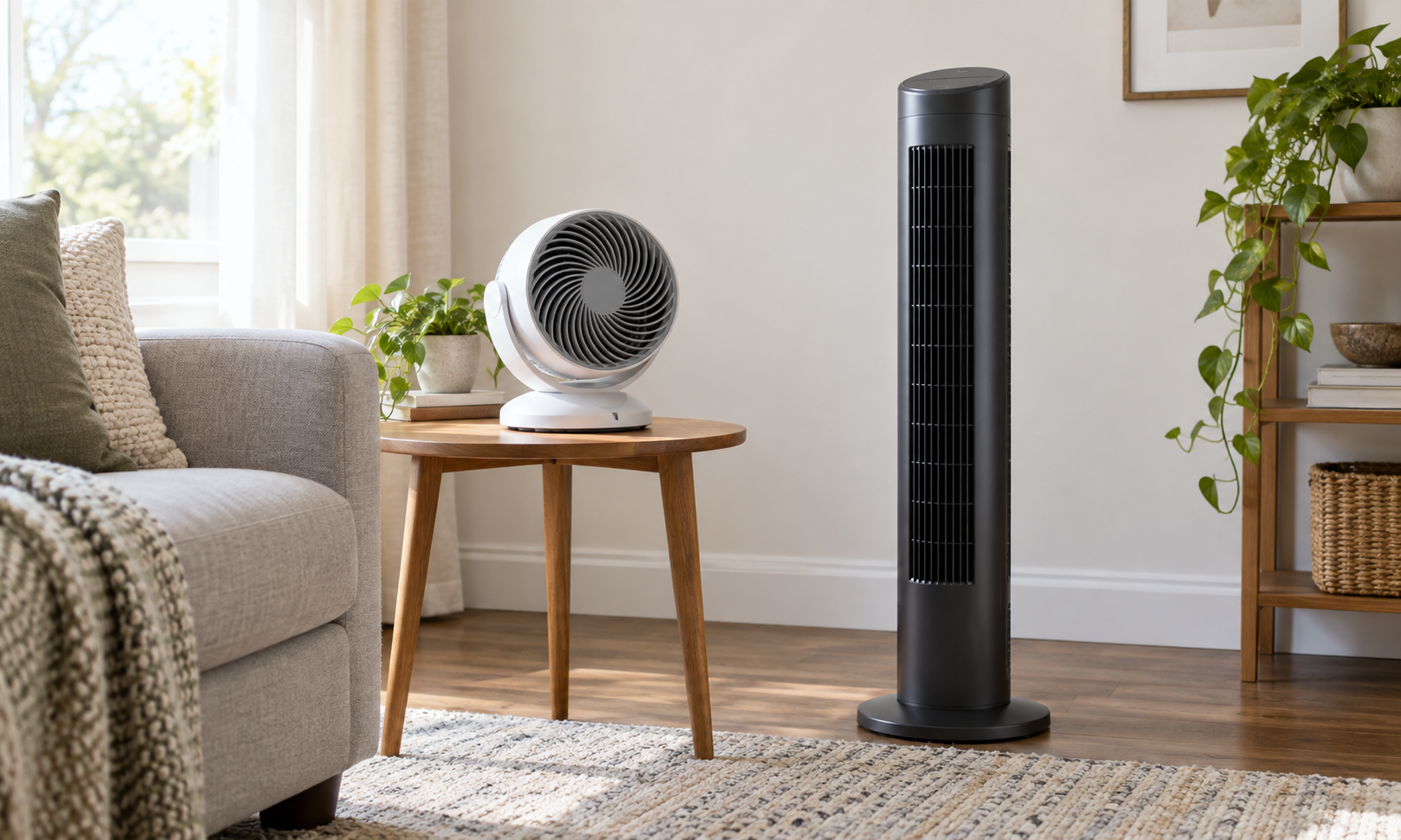
Quick decision before shopping
First measure the available space, identify the setup or surface constraints, and decide who will maintain the item. Skip the category if it blocks access, conflicts with the manufacturer's instructions or lease, or adds more upkeep than the problem justifies.
Compare the format after mapping the room: These affiliate category links are shopping starting points, not tested winners.
- Browse category: Compare compact air circulator fansCheck full dimensions, tilt range, stable placement, speed controls, cord length, grille access, and cleaning instructions.
- Browse category: Compare oscillating tower fansCheck base footprint, height, oscillation controls, display and sound behavior, tip stability, cord route, and cleaning access.
Category results change. Verify current manufacturer specifications, permitted placement, electrical instructions, return terms, and cleaning procedure before ordering.
This comparison is about portable fan geometry, not an indoor-air-quality or ventilation assessment. If “stuffy” means smoke, a gas or burning odor, breathing symptoms, persistent dampness, visible mold-like growth, unusual heat, or a combustion alarm, leave the area when appropriate and contact the relevant emergency service, property manager, or qualified professional.
Quick Decision
Choose an air circulator when a stable table, shelf, or floor position lets you direct air across the room, toward an open interior doorway, or upward to mix uneven air. Its shorter body can be easier to aim, but it may use more horizontal surface space.
Choose a tower fan when you have a narrow, clear floor location and want air spread across a seated area or changing positions. Its tall outlet and oscillation can distribute airflow broadly, but the base, height, and floor cord route still need room.
Choose neither until you know whether the real issue is high temperature, humidity, odors, dirty equipment, poor outdoor-air exchange, blocked building ventilation, or another source problem.
How the Formats Move Air
A compact circulator typically sends a more concentrated stream from a round grille. Adjustable tilt can make it useful for a defined route: across a room, from a cooler adjacent space, or upward to reduce obvious temperature layering. It fits readers who can deliberately place and aim the fan.
A tower fan usually moves air through a tall vertical outlet and often oscillates through part of the room. That can feel more even across a sofa or desk zone where people change position. Oscillation does not prove better whole-room circulation, and a tall outlet is not a substitute for a useful path around furniture.
Footprint and Placement
Measure the entire circulator body at its intended tilt, not only its base. On a table or shelf, allow the clearances in the manual and make sure the surface is stable, level, and deep enough. A floor placement should not expose the fan to kicks, loose textiles, pet contact, or a walking-path cord.
For a tower fan, record base width and depth, overall height, and the space needed for oscillation and controls. A slim body can fit beside furniture, but the base may be wider than product photos suggest. Do not put either fan where it blocks a door, vent, window operation, emergency route, or appliance clearance.
Noise and Controls
Do not compare headline decibel figures unless the speed, distance, and test conditions are stated on the same basis. A circulator's focused airflow may sound different as you change its aim. A tower fan may add oscillation motor noise, display light, button tones, or remote-control routines.
Prioritize a low setting you can tolerate, reachable controls, and a return route that gives you time to assess the fan in the actual room. Timers and remotes are convenient when the fan sits out of reach; they matter less than stable placement, a safe cord route, and controls you will actually use.
Cleaning and Maintenance
Both formats collect dust, and inaccessible buildup can make a fan unpleasant to live with. Before buying, read the manual or manufacturer care page. Check whether the front grille, rear intake, and blades can be reached; whether tools are required; and which parts can be removed or only vacuumed or wiped.
Compact circulators may provide more direct grille access, but designs vary. Tower fans can have long narrow intakes or internal paths that are harder to reach. Unplug either fan before permitted cleaning, follow the instructions, and stop using equipment with a damaged cord, plug, housing, base, or grille.
Setup and Daily Routine
An air circulator works best when you are willing to aim it for the room's current job. That may mean changing the tilt or moving it between a shelf and floor position. A tower fan generally asks less aiming once its floor position and oscillation range are set, but it occupies that position continuously and may be awkward to carry between rooms.
Neither fan needs complicated installation, but both need an appropriate outlet without an unsafe extension setup. Keep the intake and outlet clear as directed. Do not operate a portable fan in a wet location or open window unless the manufacturer expressly permits that use and the weather, security, and building conditions are suitable.
Who Each Format Fits
- Air circulator: readers with a defined airflow path, a stable elevated or floor spot, limited vertical clearance, and a preference for adjustable direction.
- Tower fan: readers with a narrow clear floor zone, several seats within an oscillation arc, and a routine that benefits from tall distributed airflow.
- Small bedroom or office: either can fit, but measured footprint, low-speed sound, lights, cord route, and cleanability should decide—not the category name.
- Homes with children or pets: favor the format and placement that keep the unit stable, controls and cord manageable, and grilles inaccessible according to the household's needs and product instructions.
When to Skip Each Option
Skip the circulator if there is no safe aiming position, the body overwhelms the available table or shelf, the concentrated stream feels uncomfortable, or regular repositioning will make it go unused.
Skip the tower fan if the base narrows the walkway, the tall unit can be bumped, the intake is difficult for you to clean, oscillation would hit curtains or loose objects, or you need a fan that stores easily on a shelf.
Skip both if you expect a fan to filter air, correct dampness, remove an odor source, ventilate a closed room, or cool the room when nobody is in the airflow. Address the underlying issue first.
Buying Checklist
- Define whether the complaint is still air, heat, humidity, odor, or inadequate ventilation.
- Measure the full body, base, tilt or oscillation clearance, outlet distance, and storage space.
- Map a stable position, clear intake and outlet, and cord route outside the walking path.
- Check all speed, timer, remote, light, and tone behavior that matters in the room.
- Read the exact cleaning procedure and confirm that you can access the dust-prone areas.
- Verify current electrical, placement, supervision, and window-use instructions.
Next Steps
If focused circulation looks right, use the air-circulator buy-or-skip guide to test whether movement is really the missing piece. If you are comparing other bedroom formats, the tower fan versus box fan guide covers tall oscillating airflow against a broader square fan. For outdoor-air exchange, compare a window fan with a pedestal fan only after checking the window and outdoor conditions.
Bottom Line
An air circulator is the stronger fit for a deliberate, directional airflow path and flexible aiming. A tower fan is the stronger fit for narrow floor placement and oscillating coverage across an occupied zone. Buy by measured placement, acceptable low-speed sound, cleaning access, and the routine you will maintain—not by a universal claim that one fan format cools or ventilates a room better.