Cotton vs Microfiber Bath Mat for a Small Bathroom
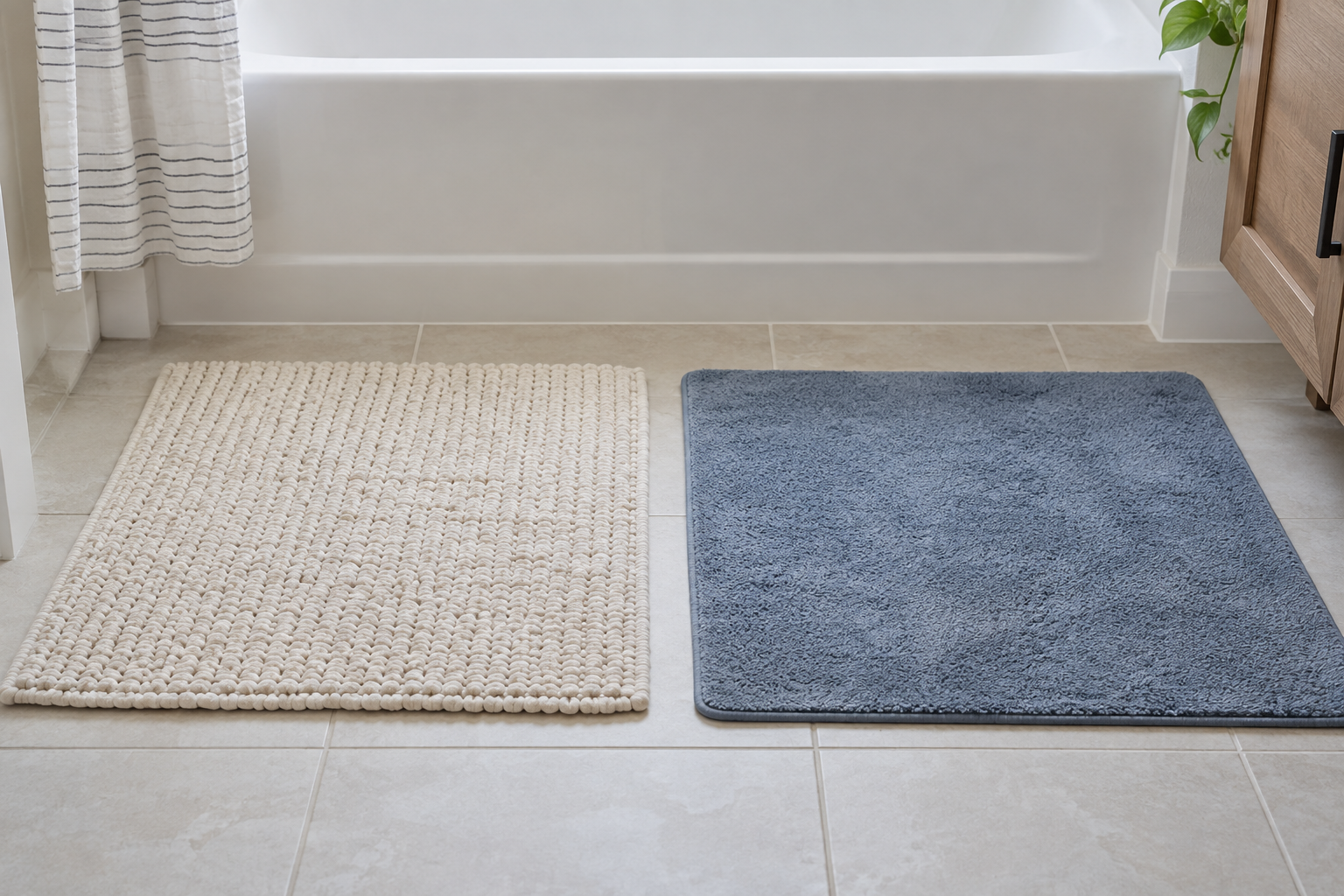
A washable cotton bath mat is the simpler choice when you want towel-like construction, clear laundry care, and no attached synthetic backing. A microfiber mat can feel plusher and may be sold with an integrated backing, but that extra construction makes floor compatibility, drying, and wash instructions more important. In a small bathroom, the right answer depends less on softness than on door clearance, where the wet mat can dry, and whether every layer suits the floor and laundry routine.
As an Amazon Associate, The Good Home Doc may earn from qualifying purchases.
Quick decision before shopping
First measure the available space, identify the setup or surface constraints, and decide who will maintain the item. Skip the category if it blocks access, conflicts with the manufacturer's instructions or lease, or adds more upkeep than the problem justifies.
Compare the construction, not just the color:
- Browse category: Washable cotton bath matsStart here when straightforward laundering and a towel-like mat fit the routine.
- Browse category: Low-pile microfiber bath matsCompare these when cushion and an integrated backing are useful and the complete care instructions fit.
These are category shopping routes, not tested winners. Confirm complete dimensions, pile height, fiber and backing materials, floor compatibility, wash and dry instructions, placement warnings, and return terms.
Quick answer
- Choose cotton when a towel-like mat with simple construction, frequent laundering, and off-floor drying fits your household.
- Choose microfiber when you want a denser or plusher surface and have verified the backing, floor, washer, dryer, and drying routine are compatible.
- Skip both when any mat would catch a door, cover a vent or damaged floor, remain damp between uses, or create an unstable transition. Fix active leaks and flooring problems instead of hiding them.
Side-by-side comparison
| Decision point | Cotton bath mat | Microfiber bath mat |
|---|---|---|
| Typical construction | Woven or tufted cotton; some are reversible or unbacked. | Synthetic pile, often combined with a separate backing layer. |
| Everyday feel | More like a heavy towel, depending on weave and pile. | Often softer or denser underfoot, depending on pile. |
| Floor grip | An unbacked mat may need a separately approved rug pad or a different placement. | An attached backing may add grip, but only on floors the maker permits and while clean and intact. |
| Laundry | Care can be straightforward, but shrinkage, lint, and drying limits still vary. | Pile and backing can have different heat, detergent, and drying restrictions. |
| Best fit | Households willing to hang the mat and launder it like a bath textile. | Households that value cushion and can maintain the complete layered construction. |
Who cotton fits
Cotton is a practical default when you prefer fewer layers and want to wash the mat with compatible bath textiles. Look for a size that fits the landing zone without folding, a pile low enough to clear the door, finished edges that lie flat, and care instructions your washer and drying setup can follow.
Unbacked does not mean unsuitable, but it does mean you must evaluate movement on the actual clean, dry floor. Do not improvise with a random liner underneath. If the maker allows a separate rug pad, verify that pad against both the mat and the flooring manufacturer’s instructions.
Who microfiber fits
Microfiber can suit someone who prioritizes a soft, dense surface and wants an integrated backing rather than a loose textile. Compare full thickness—not pile height alone—against the door sweep and nearby cabinet doors. Inspect how the pile meets the border and backing, because those layers determine care and drying.
Do not treat “non-slip” as a permanent condition or a universal safety guarantee. Backing performance changes with the product, floor finish, soil, moisture, wear, and care. Follow both the mat and floor instructions, place it only on an allowed clean surface, and stop using it if it curls, slides, cracks, sheds, or leaves residue.
Measure the whole bathroom setup
- Landing zone: Measure the usable dry-floor area outside the tub or shower, not the room wall to wall.
- Door sweep: Measure clearance along the complete door arc. Test cabinet and shower doors too.
- Edges and transitions: Keep corners out of walking pinch points and avoid stacking a mat over another rug.
- Drying location: Identify a permitted bar, rack, or open area where air reaches both sides after use.
- Laundry fit: Check washer capacity and the exact drying method before buying a thick or backed mat.
Setup and daily use
Begin with a clean, fully dry floor and follow the flooring maker’s guidance on backed textiles. Lay the mat flat in its intended position, then operate every nearby door. If it bunches, rocks, or requires stepping around an edge, choose a smaller or lower-profile format rather than forcing the fit.
A bath mat should catch ordinary drips from a person leaving the tub or shower; it is not a fix for water escaping an enclosure, a plumbing leak, persistent condensation, damaged grout, or a wet floor. Report rental problems and use a qualified professional for repairs when needed.
Cleaning, drying, and maintenance
Read the sewn-in label before the first wash. Confirm permitted water temperature, detergent, bleach restrictions, wash cycle, load pairing, and whether the mat may be machine dried. High heat can affect some fibers, bindings, adhesives, or backing compounds, so “machine washable” does not automatically mean unrestricted dryer use.
Between washes, hang or position the mat as directed so both sides can dry. Clean the floor on its normal schedule and let it dry before replacing the mat. Inspect pile, seams, border, and backing after washing. Retire a mat that stays curled, develops tears or loose pieces, no longer lies predictably, or conflicts with the floor-care instructions.
Who should skip each option?
Skip cotton if an unbacked textile will not stay predictably placed in the allowed setup, you cannot provide an approved pad where needed, or the household will not hang and launder it often enough for the bathroom conditions.
Skip microfiber if the backing material is undocumented or incompatible with the floor, the pile blocks a door, the layered mat dries too slowly in the available space, or its care limits do not match your laundry equipment.
Skip any loose bath mat when a user needs a professionally assessed accessibility setup, when mobility equipment must cross the area, or when the only position obstructs a route. A consumer bath mat is not an accessibility device. Seek qualified guidance for individualized fall-risk or mobility concerns.
Bottom line
Choose cotton for simpler textile construction and a towel-like wash-and-dry routine. Choose microfiber for a plusher layered mat only after checking backing, floor, heat, and drying compatibility. In either case, exact size, flat edges, complete door clearance, and a realistic drying routine matter more than a material label by itself.