Over-the-Toilet Storage vs Slim Rolling Cart for a Small Bathroom
Choose over-the-toilet storage when the wall above the tank is your best unused zone and the unit can clear the toilet, plumbing, and required anchoring. Choose a slim rolling cart when you have a measurable floor gap and want supplies to move out for cleaning. The better format is the one that fits without making toilet access or the walking path worse.
As an Amazon Associate, The Good Home Doc may earn from qualifying purchases.
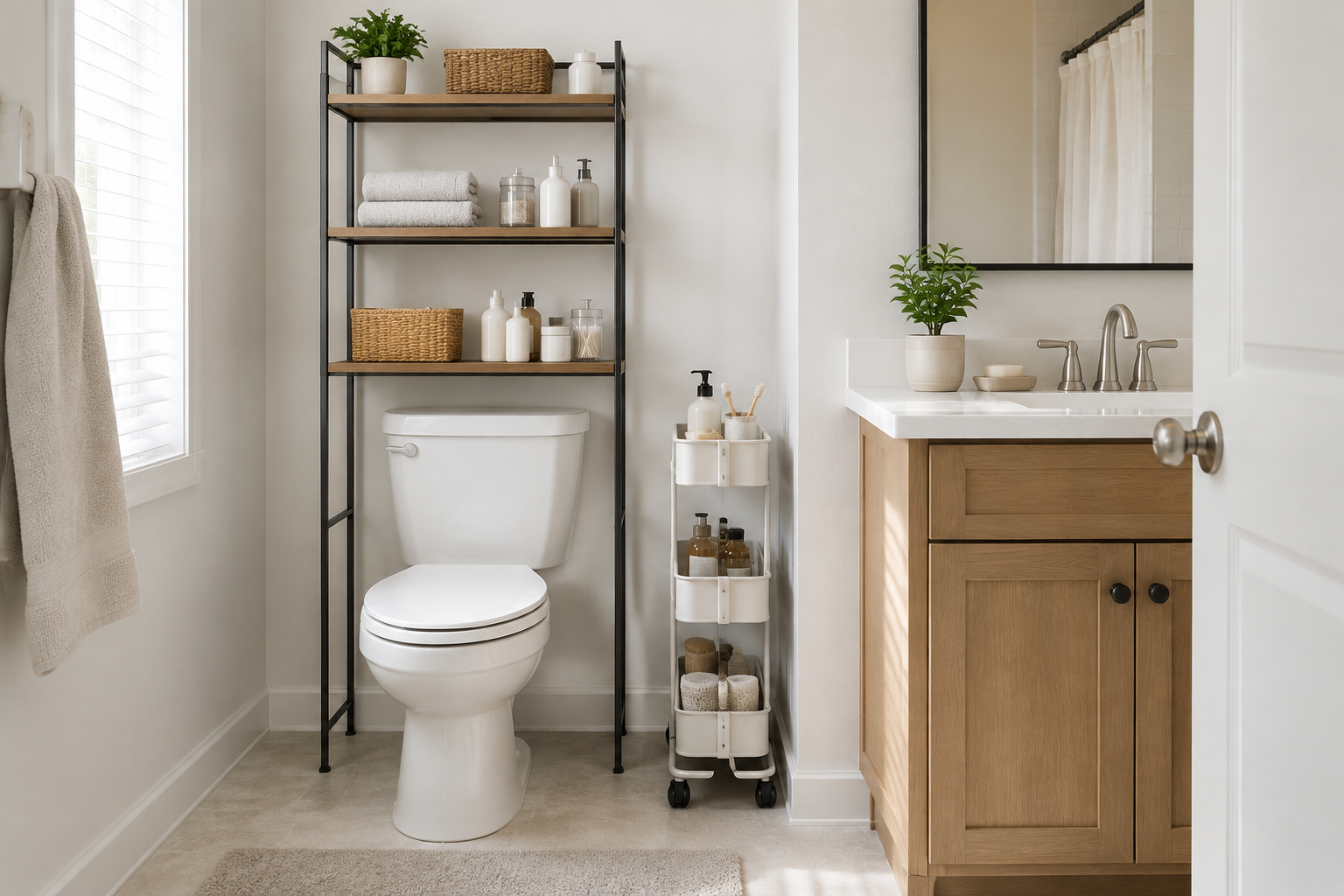
Quick decision before shopping
First measure the available space, identify the setup or surface constraints, and decide who will maintain the item. Skip the category if it blocks access, conflicts with the manufacturer's instructions or lease, or adds more upkeep than the problem justifies.
Compare the two formats: Measure first, then use these category links to compare size and setup details. They are shopping starting points, not tested winners.
- Browse category: Shop freestanding over-the-toilet storage on AmazonCheck tank height, toilet width, shelf clearance, full depth, leveling, anchoring instructions, and wipe-clean materials.
- Browse category: Shop slim bathroom rolling carts on AmazonCheck the narrowest gap width, caster clearance, handle width, shelf height, stated load, moisture care, and pull-out room.
This guide owns the decision between vertical space above the toilet and a narrow floor gap. For choices within either format, continue to the over-the-toilet storage guide or the slim rolling cart guide. The broader small-home organization systems guide helps decide what should be stored in the bathroom at all.
The short answer
- Pick over-the-toilet storage when floor gaps are scarce, the toilet zone has usable height, and a stable setup can preserve tank-lid and plumbing access.
- Pick a slim rolling cart when a true narrow gap exists beside a vanity or wall and the cart can roll fully out without hitting a door, toilet, rug, or baseboard.
- Skip both when either product narrows the walking path, blocks a shutoff or outlet, cannot be secured as its instructions require, or would hold more damp-room clutter than the household can maintain.
Side-by-side decision table
| Decision point | Over-the-toilet unit | Slim rolling cart |
|---|---|---|
| Space used | Vertical wall and floor space around the toilet | A narrow floor gap plus room to pull the cart out |
| Best access | Spare towels, paper goods, and lighter supplies used less often | Everyday bottles and supplies that benefit from pull-out access |
| Main measurement | Tank height and width, unit depth, first-shelf height, ceiling clearance | Narrowest gap width, cart width at handles or bolts, depth, caster height |
| Stability issue | Tall furniture may require leveling and wall anchoring | A very narrow cart can tip or bind when pulled unevenly or overloaded |
| Cleaning | Legs and toilet clearance can make floor and tank cleaning awkward | Moves out for cleaning if wheels work on the actual floor |
| Renter fit | Only when required anchoring and placement are allowed | Usually more reversible, but still needs safe clearance and stable loading |
Measure the room, not the listing photo
For over-the-toilet storage
Measure from the floor to the top of the toilet tank, then measure the tank at its widest point. Check how far the toilet and supply line project from the wall, where the shutoff sits, and how much room you need to lift the tank lid. Compare those numbers with the space between the unit's legs, its first-shelf height, full depth, and any rear crossbars. Include baseboards, sloped ceilings, window trim, towel bars, and the toilet-paper holder.
Do not assume “freestanding” means anchoring is optional. Tall, narrow furniture can be unstable. Follow the product's assembly and anchoring instructions, and choose another format if the required setup is not allowed or cannot be completed safely.
For a slim rolling cart
Measure the opening at the floor, middle, and top because walls, trim, and vanity sides may not be parallel. Use the narrowest measurement. Compare it with the cart's widest assembled point, including handles, bolt heads, hooks, or flared baskets—not just the advertised shelf width. Leave clearance for rolling rather than buying a cart that barely squeezes in.
Also measure depth and the open path in front of the gap. A cart is not useful if it cannot clear the bathroom door, toilet, bath mat, vanity handle, or a person's standing space. Small casters may struggle on thick rugs, deep grout lines, thresholds, or uneven tile.
Choose by what you need to store
Over-the-toilet shelves work best for lightweight supplies that can sit above splash level and do not need constant handling: folded hand towels, reserve paper goods, and closed bins of occasional items. Keep heavy, breakable, or leak-prone items low and elsewhere. Open shelving is easy to scan but collects dust; doors hide visual clutter but add depth and swing clearance.
A rolling cart suits smaller everyday categories such as hair products, washcloths, or cleaning cloths when every bottle fits below the shelf above it. Raised edges help contain items during movement, but they do not make a top-heavy cart safe. Put heavier, non-breakable supplies on the lowest shelf and stay within the maker's load instructions.
Moisture and cleaning change the answer
Bathrooms expose furniture to humidity, splashes, and frequent floor cleaning. Compare the maker's wet-area care instructions rather than assuming a painted metal, engineered-wood, bamboo, or plastic product will tolerate every bathroom. Wipe splashes promptly, allow air to circulate around stored linens, and avoid packing shelves so tightly that damp items cannot dry.
A cart usually wins for floor access because it can move—provided it rolls smoothly when loaded. An over-toilet unit may win when the only alternative is crowding a wet floor corner, but its legs and lower rails can complicate cleaning around the toilet. Persistent moisture, leaks, musty odors, or damaged finishes are home problems to address, not storage problems to cover up.
Renter and safety checks
- Check the lease or ask property management before drilling or anchoring into a wall, tile, vanity, or cabinet.
- Do not block the toilet shutoff, tank lid, outlet, vent, medicine cabinet, door swing, or normal access for cleaning and maintenance.
- Keep electrical products and cords out of storage zones where the manufacturer does not permit them, especially near water.
- Follow assembly, leveling, load, anti-tip, and anchoring instructions. If required anchoring is unavailable, choose a shorter, more stable alternative.
- Keep medicines, cleaners, razors, and other hazardous items secured appropriately for the household rather than relying on shelf height alone.
Who should skip each format?
Skip over-the-toilet storage if the tank is unusually tall or wide, plumbing access is tight, the room has a low window or sloped ceiling, required anchoring is prohibited, or reaching above the toilet is uncomfortable. A low cabinet elsewhere may be easier to use and clean.
Skip a slim rolling cart if there is no room to pull it out, the floor prevents reliable rolling, the cart would intrude into the walking path, or household members are likely to lean on it. Fixed vanity organizers or a stable freestanding cabinet may fit better.
Bottom line
Use over-the-toilet storage to claim verified vertical clearance; use a slim rolling cart to claim a verified narrow floor gap. Measure every obstruction, preserve plumbing and cleaning access, and treat required stability measures as must-haves. If neither format fits without compromise, storing fewer bathroom items is a better result than forcing in another organizer.