How to Choose Slim Side Tables with Storage for Small Living Rooms
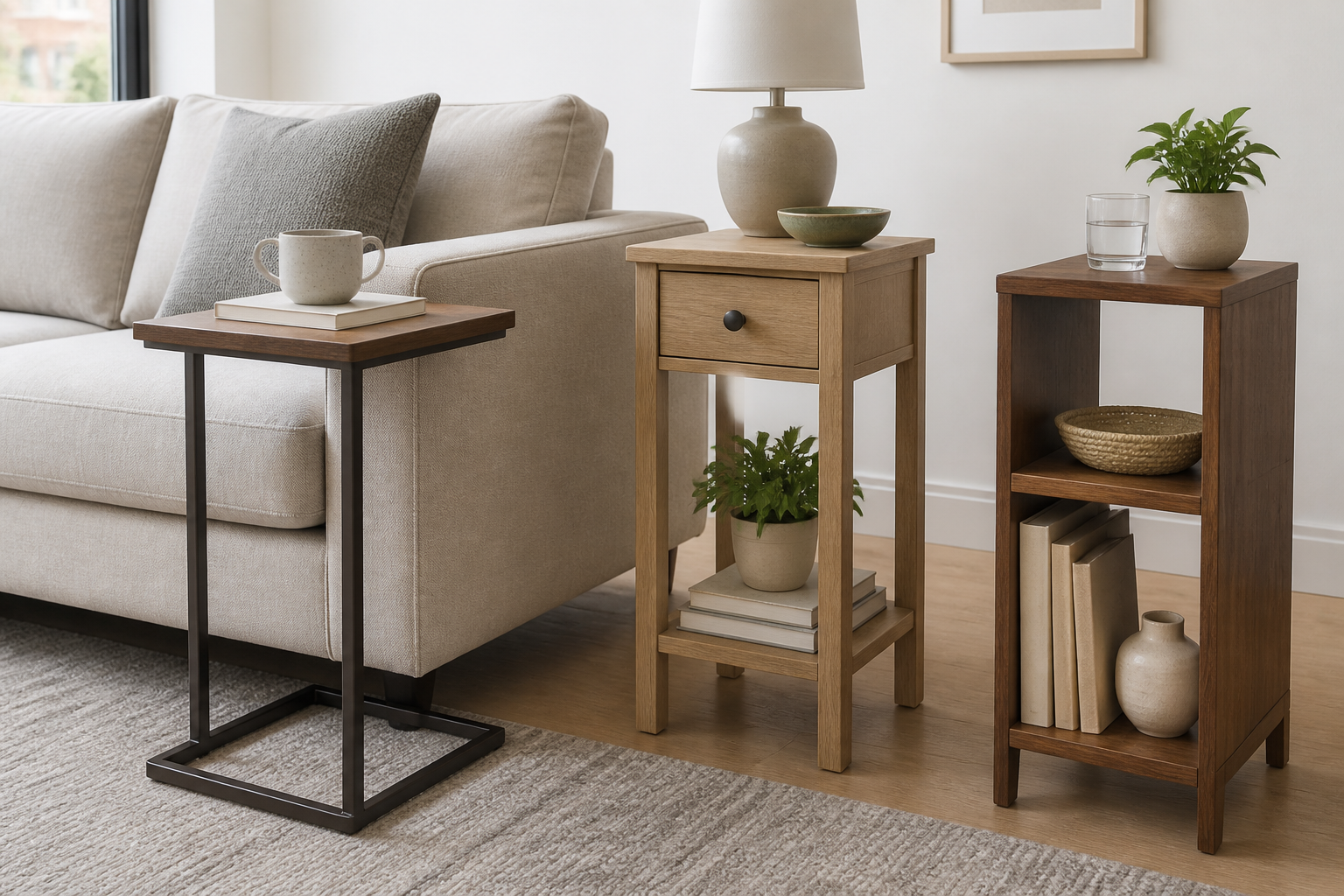
A slim side table is useful only if it puts a drink, book, or remote within reach without pinching the walking path. Measure the sofa, floor, and storage opening before comparing finishes: a C-table, drawer table, and shelf table can share a narrow width while fitting the room very differently.
As an Amazon Associate, The Good Home Doc may earn from qualifying purchases.
Quick decision before shopping
First measure the available space, identify the setup or surface constraints, and decide who will maintain the item. Skip the category if it blocks access, conflicts with the manufacturer's instructions or lease, or adds more upkeep than the problem justifies.
Compare the format around your sofa and storage needs:
- Browse category: Compare slim C-shaped side tablesBring a surface closer to the seat when the base can clear the sofa and floor.
- Browse category: Compare narrow side tables with drawersHide small items, but allow enough room to open the drawer from the seated position.
- Browse category: Compare slim side tables with shelvesKeep books or baskets visible when open storage will not crowd the walkway.
These are category searches, not tested rankings. Confirm current assembled dimensions, usable storage dimensions, manufacturer-stated load guidance, materials, floor-contact parts, assembly instructions, and return terms on the listing.
This category comparison does not name winners or claim hands-on testing. Dimensions and stated loads vary by listing, and appearance cannot prove stability. Verify current maker specifications and instructions for the exact table you consider.
Quick Best-Fit Guide
- Best for bringing the top over a sofa cushion: a C-shaped table whose base and upright clear the sofa frame.
- Best for hiding remotes and chargers: a narrow drawer table with comfortable pull clearance.
- Best for books and a small basket: an open-shelf table with usable shelf height and easy cleaning access.
- Best for a lamp: a stable four-leg or panel-sided table with cord space and maker-listed capacity for the intended setup.
- Best when the walkway is already tight: skip added furniture and use existing wall, sofa, or under-sofa storage.
Measure the Sofa and the Route Around It
Record the available floor width and depth, then mark the proposed footprint with removable tape. Keep the normal path between the sofa, doorway, and other furniture open. Measure sofa-arm and seat height so the top is reachable without awkward leaning.
For a C-table, measure from the floor to the lowest sofa frame, fabric edge, or reclining hardware. Also measure how far the base can slide before it meets a leg or crossbar. A thick rug can reduce clearance and make a narrow base wobble.
Comparison Framework
C-Shaped Tables
A C-table uses a low base and offset support so the top can reach over part of the seat. It provides little enclosed storage, though some versions add a slim pocket or rack.
Choose one when: reach is the main problem and the base fits beneath the sofa without touching upholstery or moving parts. Watch for a base that catches on a rug, an upright that blocks standing, or a top that flexes.
Narrow Drawer Tables
A drawer keeps remotes, cables, and small items out of sight. The tradeoff is moving clearance: the drawer needs room to open, and a knob adds to the real width.
Choose one when: concealed storage matters and you can operate the drawer without moving the table. Watch for shallow interiors, drawers without stops, and top-heavy proportions.
Open-Shelf Side Tables
Open shelves make books and baskets easy to retrieve. They also show clutter and collect dust, so usable shelf spacing and cleaning access matter more than the shelf count.
Choose one when: you want flexible storage and can define what belongs on each shelf. Check whether supports reduce usable width or baskets project into the walkway.
Must-Have Buying Checks
- Complete assembled dimensions: Include the top, feet, drawer pull, base, and projecting hardware.
- Usable storage dimensions: Compare openings with the exact remotes, books, or basket you plan to store.
- Appropriate height: Match the top to seated reach and the sofa arm, not appearance alone.
- Stable construction: Review the base, leg spread, fasteners, assembly sequence, and maker placement instructions.
- Stated load guidance: Verify the current maker limit for the top and each shelf; do not infer capacity from photos.
- Floor compatibility: Check feet or glides against hard flooring and rugs.
Nice-to-Have Features
- A drawer stop: Helps prevent the drawer from pulling completely free.
- An open back or cord notch: Useful for a small lamp or charger when the cord stays unpinched.
- Adjustable feet: Can help on a slightly uneven hard floor when included in the design.
- A removable shelf: Adds flexibility if the maker supports both configurations.
Setup and Maintenance
Assemble the table on a protected, level surface and follow the supplied sequence. Do not substitute hardware or omit braces to gain storage room. Test ordinary access with the sofa occupied: open the drawer, retrieve shelf items, and walk the route without pulling on the table.
Follow material-care directions, lift rather than drag the table for cleaning, and recheck fasteners if it develops wobble. Stop using it if joints, feet, or the top are damaged.
Who Should Skip a Slim Side Table
- Skip one if the taped footprint narrows a doorway or main walking path.
- Skip a C-table if its base cannot clear the sofa frame, reclining mechanism, or rug edge.
- Skip a drawer design if opening it requires pulling the table into the walkway.
- Skip open shelves if visible clutter or frequent dusting will add more work than value.
- Skip a narrow tall table where routine bumps make the placement unsuitable under maker instructions.
- Skip the category if a sofa pocket, wall shelf, storage ottoman, or under-sofa bin solves the same problem with less floor use.
Buying Checklist
- Measure the floor footprint, walking path, sofa-arm height, and seated reach.
- For a C-table, measure under-sofa height, insertion depth, legs, crossbars, and moving hardware.
- Compare usable drawer or shelf openings with the intended contents.
- Verify assembled dimensions, stated loads, floor-contact parts, and care instructions.
- Check drawer travel, cord routing, cleaning access, and assembly complexity.
- Choose the smallest format that performs one defined job without becoming an obstacle.
Bottom Line
A C-table fits when close reach and verified sofa clearance matter most. A drawer table controls small-item clutter, while an open-shelf table makes books and baskets easier to access. The best slim side table fits the entire route—not merely the gap beside the sofa—and provides useful storage without sacrificing everyday movement.