Removable rental-kitchen gap control
How to Choose Silicone Stove Gap Covers for Rental Kitchens
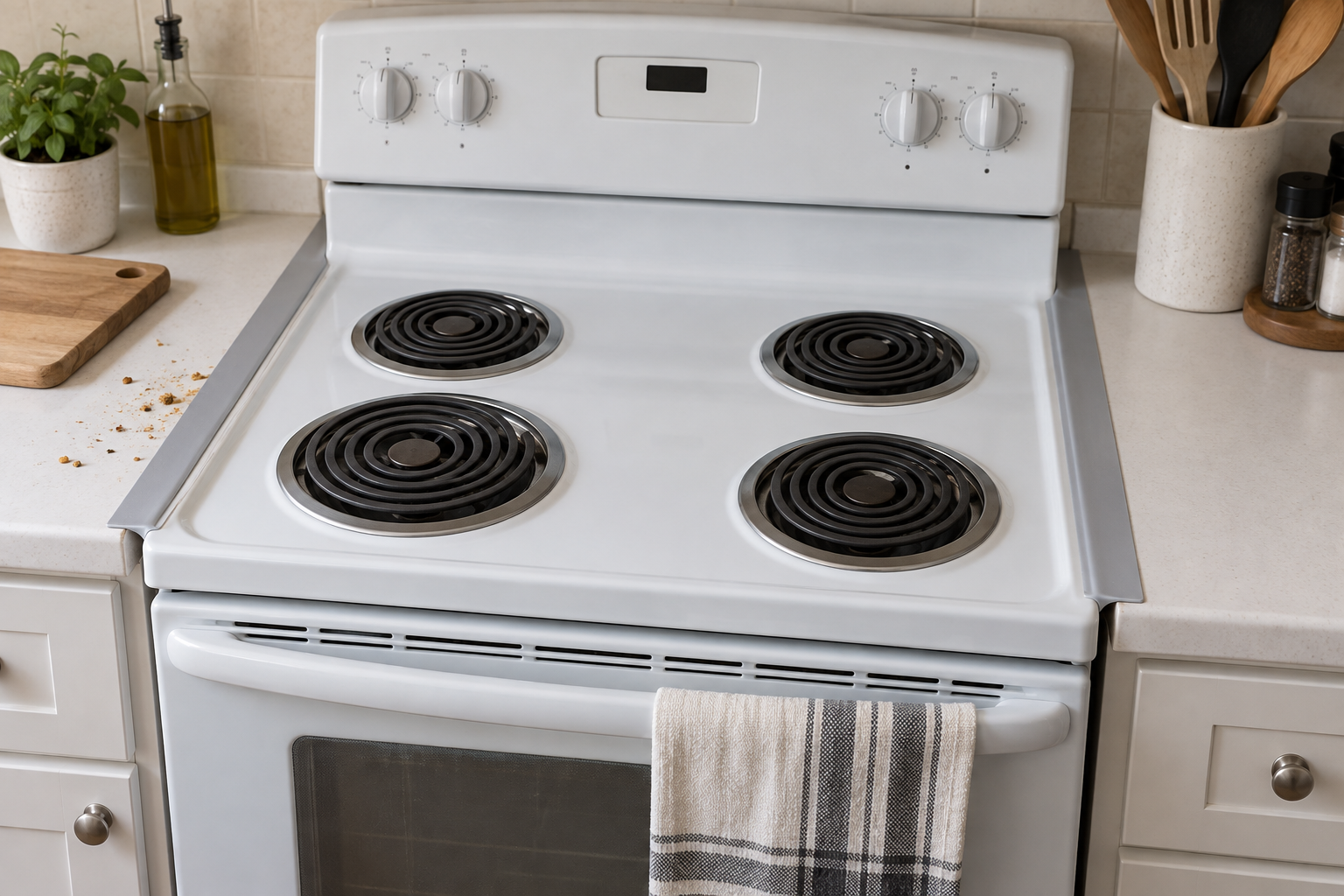
A silicone gap cover can keep crumbs and drips from dropping into a narrow seam beside a freestanding range, without caulk or a permanent counter change. The right type is a removable T-profile strip that fits the measured seam, lies flat without entering the cooking area, and is permitted by the appliance and product instructions.

As an Amazon Associate, The Good Home Doc may earn from qualifying purchases.
Shop the removable category by fit
- Browse category: T-shaped trim-to-fit silicone stove gap coversCompare documented dimensions, center-tab depth, trimming, appliance guidance, and cleaning directions.
- Browse category: Wider silicone counter-to-stove gap coversConsider a wider flange only after measuring and confirming it stays clear of the cooktop and controls.
These category searches are not tested winners. Confirm current dimensions, material and temperature-use documentation, appliance compatibility, care instructions, and return terms.
Quick answer: start with a plain T-profile strip
For a straight, narrow seam between a freestanding range and a similar-height counter, start by comparing soft T-profile silicone strips. The center tab locates the strip in the gap while the top flange bridges the opening. Favor complete measurements, clear trimming directions, documented use limits, and care instructions—not a vague “universal fit” claim.
Skip the category when the range overlaps the counter, the surfaces differ sharply in height, the seam is too wide or irregular, or the strip would approach a burner, vent, control, or hot-air path. Never use a cover to alter a clearance required by the appliance maker, landlord, installer, or building rules.
Measure the full seam before shopping
- Gap width: measure near the front, middle, and back with the appliance in its normal position.
- Height difference: compare the counter edge with the adjacent appliance edge. A pronounced step can make a strip curl or intrude onto the range.
- Usable length: measure only the straight run clear of the backsplash, rear controls, front trim, handles, and vents.
- Center-tab depth: verify that the tab can enter without contacting hidden brackets or side trim.
- Top-flange width: ensure it bridges the seam without entering a cooking zone or covering controls, labels, ventilation, or service access.
Measure both sides separately because ranges can sit off-center and cabinets are not always parallel. If the appliance appears loose, damaged, or incorrectly installed, report it through the rental's maintenance process instead of hiding the condition.
Must-have features
Documented material and use limits
“Silicone” alone does not establish safe placement. Look for product-specific instructions covering heat exposure, cleaning, trimming, and excluded appliance configurations. Do not infer that a strip is fireproof or suitable beside every range.
A trimmable, low-profile shape
Trim-to-fit length is useful because backsplash depth and front trim vary. Check whether cutting is permitted and how the cut end should be oriented. A strip that must be sharply folded around a control or raised trim is the wrong shape.
Easy cleaning without adhesive
A plain surface is easier to lift, wash, dry, and reinstall. Geometry should hold the strip in place; glue adds finish, residue, heat, and move-out questions. If a listing requires tape, caulk, screws, magnets, or appliance modification, treat it as a different installation and get permission where needed.
Rental and appliance constraints
Check the lease or ask the landlord or property manager if accessories around the range are restricted. Follow the appliance manual and product instructions. Never block airflow, cover a warning label, interfere with a control, bridge onto a hot element, or change a required gap. A removable strip is a cleanup accessory, not an appliance repair or installation part.
Do not pull out or disconnect an electric or gas range just to install or retrieve a cover unless the property owner authorizes the work and a qualified person handles anything beyond ordinary user access. Gas odor, sparking, damaged cords, unusual heat, instability, or burning signs need prompt escalation through the appropriate emergency or property-maintenance channel.
Setup and maintenance
- With the range off and cool, inspect the visible seam from above. Do not reach around hidden wiring, connections, sharp edges, or hot surfaces.
- Clean only accessible counter and appliance edges by their finish-care guidance, then let them dry.
- Compare the uncut strip with the usable length. If trimming is allowed, mark and cut it away from the appliance.
- Place it without stretching. Confirm it stays outside burners, cooktop zones, controls, vents, doors, and moving parts.
- Remove it if it shifts, curls, discolors, smells unusual, softens, or conflicts with appliance instructions.
Lift the strip only when nearby surfaces are cool. Remove crumbs, wash it by the documented method, and dry it fully before reinstalling. Inspect for cuts, deformation, tackiness, discoloration, or loss of fit. At move-out, clean and pack it flat or loosely rolled as directed, then remeasure at the next home.
Who should skip silicone gap covers
Skip them if instructions do not allow the placement, the seam is wide or uneven, the range is notably higher than the counter, the cover approaches active heat or ventilation, or you cannot inspect and clean the area safely. Also skip them when the appliance needs repair, realignment, anti-tip attention, or professional installation work.
If the gap is incompatible, a narrow crevice brush or compatible vacuum tool may fit routine cleaning. The under-appliance cleaning-tool guide explains clearance and reach while keeping appliance movement out of the casual cleaning plan.
Bottom line
The best silicone stove gap cover for a rental kitchen is a removable T-profile strip whose documented dimensions match each seam and whose instructions fit the exact appliance setup. Measure three points, preserve every required clearance, avoid adhesives, and favor easy cleaning. When compatibility or heat exposure is unclear, skip it and ask the landlord, appliance maker, or a qualified professional.