How to Choose Plant Saucers for Protecting Indoor Floors
A plant saucer should fit the pot, catch routine drainage, lift cleanly for inspection, and avoid creating a damp contact point on the surface below. The best format depends less on decoration than on inside diameter, usable depth, pot weight, floor finish, and how promptly you empty it.
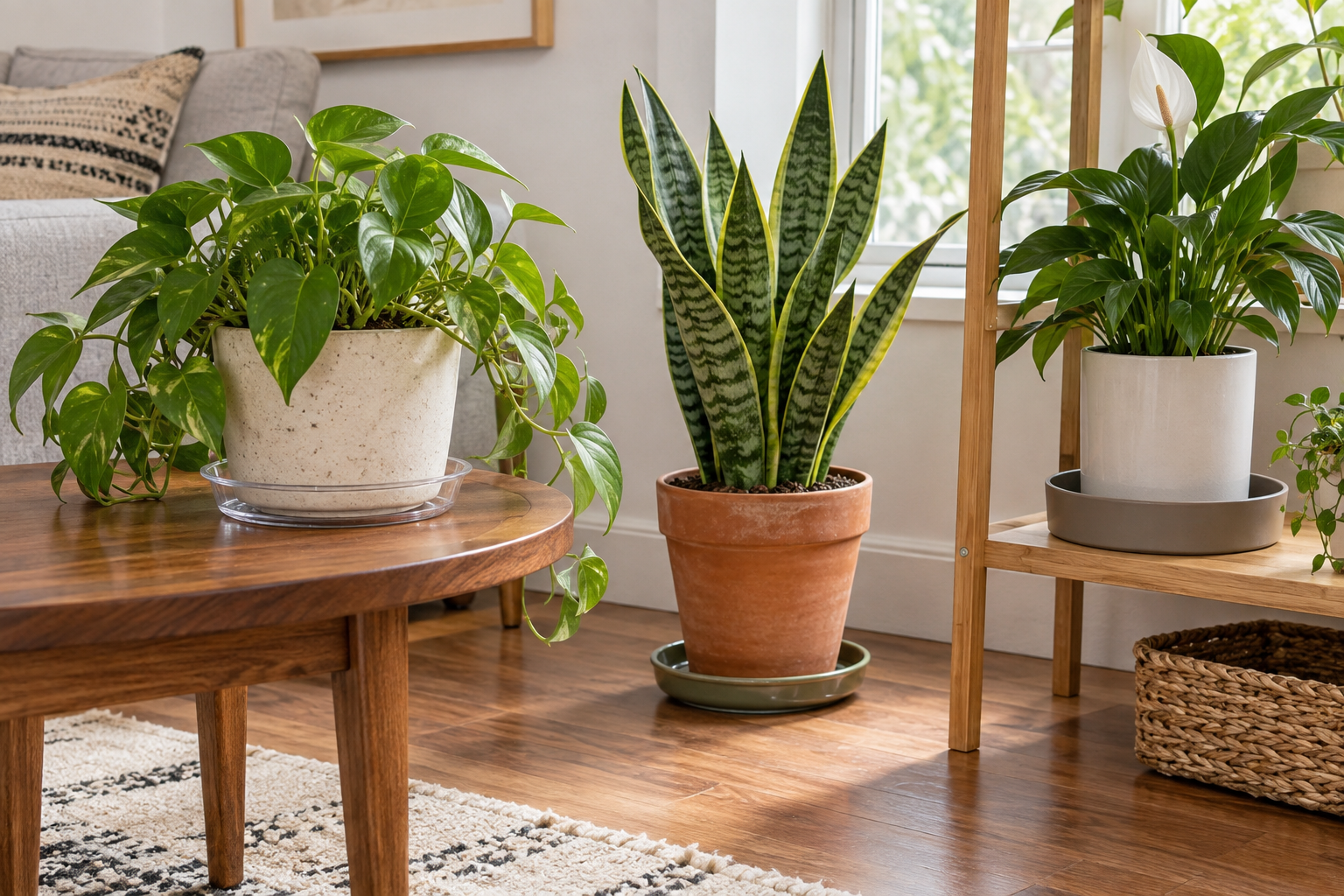
As an Amazon Associate, The Good Home Doc may earn from qualifying purchases.
Quick decision before shopping
First measure the available space, identify the setup or surface constraints, and decide who will maintain the item. Skip the category if it blocks access, conflicts with the manufacturer's instructions or lease, or adds more upkeep than the problem justifies.
Compare saucer formats after measuring the pot:
- Browse category: Compare plant saucers with raised feetCheck actual inside diameter, usable depth, surface-contact design, material, and the maker's placement instructions.
- Browse category: Compare deep heavy-duty plant saucersUseful for larger pots only when the saucer supports the pot base and remains practical to empty.
- Browse category: Compare glazed ceramic plant saucersConfirm the entire contact surface is sealed and compatible with the furniture or flooring underneath.
These are category searches, not tested rankings. Confirm current dimensions, material and surface guidance, drainage capacity, cleaning instructions, and return terms before buying.
A saucer is limited containment for normal watering and drainage, not a guarantee against overflow or floor damage. Check the pot and saucer instructions plus the flooring or furniture maker's care guidance. Move the plant and investigate if water repeatedly escapes, the surface stays damp, a finish changes color, or the pot is too heavy to lift safely.
Quick Best-Fit Guide
- Best simple starting point: a rigid saucer whose inside base fully supports the pot and whose rim leaves visible room for routine drainage.
- Best for frequent inspection: a lightweight plastic saucer that can be lifted, emptied, and washed without flexing under the pot.
- Best for a visible shelf or table: a fully glazed ceramic saucer with documented surface guidance and a separate compatible protective pad if required.
- Best for larger floor pots: a deep, sturdy tray sized to the pot base and manageable when it contains water.
- Best for chronic overflow: no saucer upgrade alone; adjust watering, drainage, pot fit, and plant care rather than relying on a deeper reservoir.
Measure the Pot, Not Just the Label
Measure the widest part of the pot base that will sit inside the saucer. Then compare that number with the saucer's inside flat diameter, not its outside rim. A nominal 10-inch saucer can have much less usable space once a tapered wall or raised center is accounted for.
Check the complete setup too: rim clearance, drainage holes, overall pot weight, the route to a sink, and any door, curtain, pet, robot-vacuum, or foot-traffic conflict. If the plant sits in a decorative cachepot, confirm whether the inner nursery pot drains into that outer pot or into a separate saucer; do not assume a decorative container is watertight.
Comparison Framework
Clear or Colored Plastic
Plastic is light, inexpensive, and easy to inspect. Thin formats can bow, crack, or become difficult to lift beneath a heavy pot. Clear plastic makes collected water visible but does not make moisture under the saucer visible.
Compare: inside base diameter, wall depth, rigidity, feet or ribs, stated indoor use, temperature and sun guidance, cleanability, and whether the material contacts the floor directly.
Glazed Ceramic
Ceramic can coordinate with a pot and resist casual shifting. It is heavier and breakable, and an unglazed underside or fine crack may hold moisture against wood or another sensitive finish.
Compare: glazing on every relevant surface, chips and cracks, weight, rim shape, base smoothness, maker care instructions, and whether a compatible pad or feet are required.
Cork-Backed or Padded Saucers
A backing can reduce scraping, but absorbent material may conceal water and keep it against the surface. Treat the backing as surface contact—not as overflow protection.
Compare: whether the backing is sealed or absorbent, inspection access, drying instructions, replacement signs, stain-transfer cautions, and flooring compatibility.
Deep Heavy-Duty Trays
Deep trays give larger pots more drainage room, but collected water becomes heavy and awkward. A large tray is useful only if it can be emptied before water sits against the pot or spills during handling.
Compare: usable depth, supported pot diameter, rigidity, handles or lift points, emptying method, floor contact, and how the tray behaves when partly full.
Must-Have Selection Criteria
- Full base support: The pot sits flat inside the saucer without balancing on the rim.
- Visible drainage room: The rim leaves enough space to see and remove ordinary runoff before it reaches the top.
- Surface compatibility: The saucer, glaze, feet, and any pad follow the floor or furniture maker's care guidance.
- Practical emptying: The household can lift, drain, wipe, or use a safe alternate removal method without tipping a heavy plant.
- Inspection access: The entire contact area can be checked for trapped moisture, grit, staining, cracks, and condensation.
- Stable placement: The pot remains level and outside likely bumps, pet traffic, curtains, vents, and walking paths.
Setup and Maintenance
Clean and dry the surface before setup. Inspect the pot for cracks, confirm its drainage path, and place it squarely within the saucer's flat area. Follow any instructions for feet, risers, or pads; an improvised absorbent layer can hold water against the finish.
After watering, check the saucer before leaving the plant unattended. Remove collected water according to the plant and product instructions rather than letting the pot sit in a standing reservoir by default. On a regular schedule, move the whole setup, clean the saucer, dry every contact surface, and inspect for grit, rings, softening, discoloration, cracks, or backing deterioration.
Who Should Skip a Plant Saucer
- Skip a basic saucer when a self-watering planter, cachepot, or nursery system requires a different drainage arrangement.
- Skip ceramic where children, pets, door movement, or frequent handling makes breakage likely.
- Skip cork or other absorbent backing on a moisture-sensitive finish unless both product and surface guidance support it and inspection is easy.
- Skip an oversized floor pot you cannot safely lift or drain; use a setup designed for accessible water removal or get help repositioning it.
- Skip indoor placement if watering routinely overflows, the pot leaks unpredictably, or the floor cannot tolerate the remaining moisture risk.
Bottom Line
The best indoor plant saucer has a verified inside fit, enough visible depth for normal drainage, a material suitable for the pot and surface, and an emptying routine you will actually follow. Plastic favors light handling, ceramic favors appearance with more inspection care, padded formats need moisture checks, and deep trays suit larger pots only when they remain manageable. No format replaces careful watering and regular checks beneath the pot.