Small-living-room vertical storage
How to Choose Narrow Bookcases for Small Living Rooms
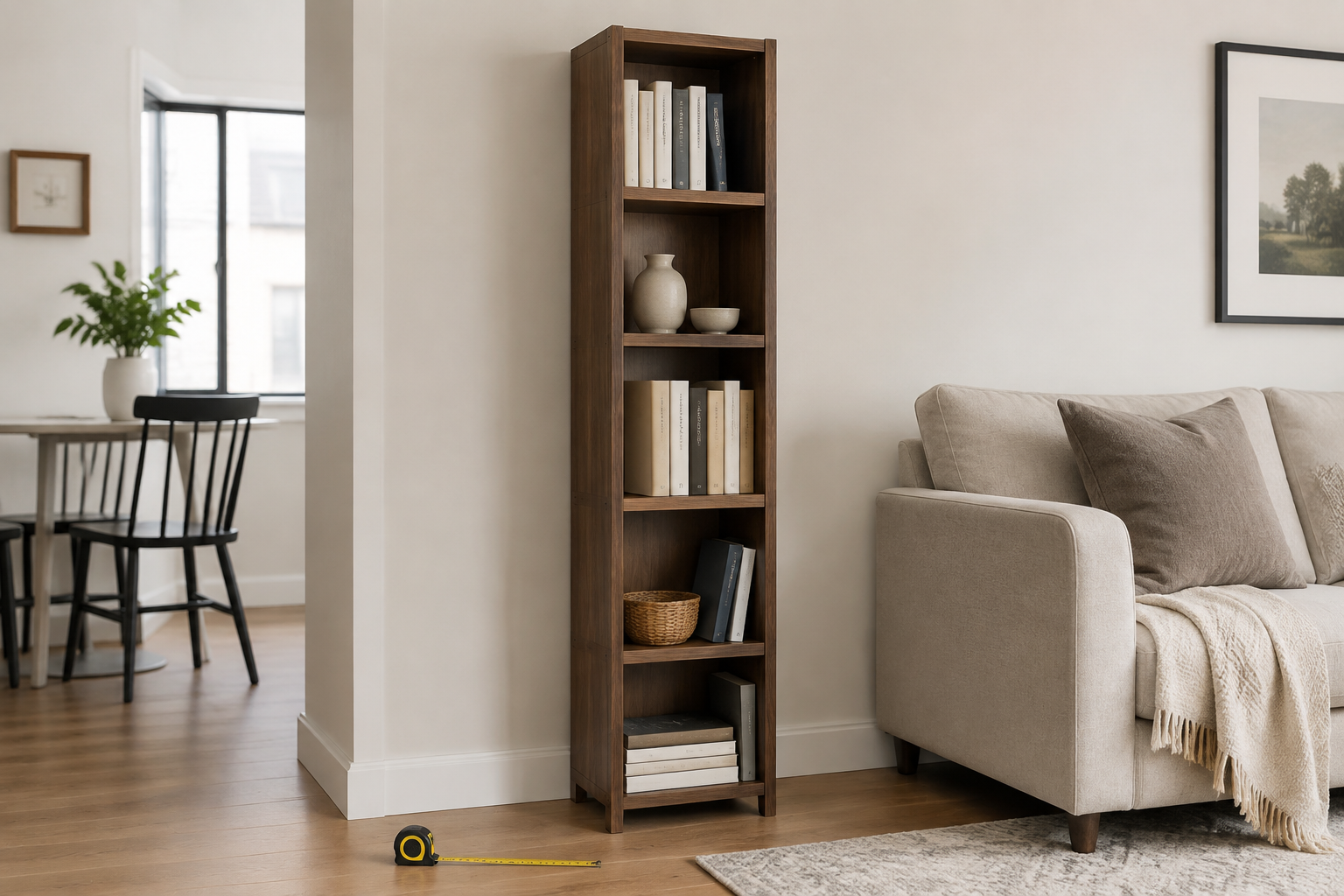
A narrow bookcase can turn a slim wall section into useful storage, but width alone does not make tall furniture a good small-room fit. Measure the full footprint, baseboard gap, shelves, walking route, and approved restraint location before comparing finishes or shelf count.
As an Amazon Associate, The Good Home Doc may earn from qualifying purchases.
Quick decision before shopping
First measure the available space, identify the setup or surface constraints, and decide who will maintain the item. Skip the category if it blocks access, conflicts with the manufacturer's instructions or lease, or adds more upkeep than the problem justifies.
Compare a format around the books, wall, and floor you have:
- Browse category: Compare narrow bookcases for small living roomsCheck complete assembled width and depth, usable shelf dimensions, stated loads, base shape, and restraint instructions.
- Browse category: Compare slim bookcases with adjustable shelvesUseful for mixed book heights when the fixed shelves and adjustment holes still support the intended layout.
These are category searches, not tested rankings. Verify current dimensions, materials, shelf-load guidance, assembly steps, anchoring hardware and wall requirements for the exact listing.
This guide compares bookcase formats and fit criteria without naming winners or claiming hands-on testing. A product photo cannot establish stability or capacity, so use the maker's current instructions and stated shelf loads for the exact model.
Quick best-fit guide
- For mostly books: favor shorter shelf spans, useful shelf depth, and clear per-shelf load guidance over decorative open space.
- For mixed books and display pieces: adjustable shelves make varied heights easier to arrange, provided the intended configuration follows the instructions.
- For a baseboard or trim obstruction: compare rear cutouts, foot placement, and the true wall gap rather than assuming the unit will sit flush.
- For rentals: confirm the lease and an approved anchoring method before buying tall furniture that requires wall restraint.
- When restraint is not possible: skip a tall narrow unit and choose lower, wider storage that fits the room and its instructions.
Measure the complete footprint
Record the open wall width, then measure from the wall to the narrowest point in the walking route. Include feet, trim, doors, drawer pulls, radiator or vent clearance, outlets, curtains, and the bookcase's stated tip-restraint spacing. A 12-inch-wide case can still be too deep for a route beside a sofa.
Mark the floor footprint with removable painter's tape. Open every nearby door and window and walk the usual path with a bag or laundry basket. Measure the baseboard height and projection because it can hold the upper part of a flat-backed case away from the wall.
Compare the useful formats
Tall five- or six-shelf tower
This format puts the most storage on a narrow patch of floor. It also makes restraint planning, load placement, and ceiling clearance especially important. Choose it only when the specified anchoring method is allowed and compatible with the actual wall.
Mid-height narrow bookcase
A mid-height case gives up a shelf or two but may feel less imposing beside a sofa or window. It can also keep frequently used books easier to reach. It is not automatically tip-safe; follow the maker's restraint and placement instructions.
Ladder-style or leaning shelf
A ladder profile may look visually light, but the feet can project farther into the room and shelf depths often change from top to bottom. Verify whether the design is freestanding or must attach to the wall, and do not use it as a climbable ladder.
Narrow cube-style tower
Defined compartments can separate paperbacks, media, or small bins. Thick dividers reduce usable space, and some cube units have strict orientation rules. Use the product only in the maker-approved direction and configuration.
Must-have buying checks
- Complete assembled dimensions: include feet, trim, top overhang, hardware, and the required distance from the wall.
- Usable shelf dimensions: measure your tallest and deepest books; listed outside depth is not the same as usable shelf depth.
- Stated load for each shelf: books become dense quickly. Do not estimate capacity from shelf thickness or marketing photos.
- Clear restraint instructions: check the supplied hardware, wall requirements, placement, and whether different fasteners are needed for the wall material.
- A workable shelf plan: place heavier books on lower shelves while staying within all instructions and loads.
- Assembly access: confirm there is floor space to build the unit and enough ceiling clearance if the instructions require raising it upright.
Nice-to-have features
Adjustable feet can help with minor floor irregularities when the design includes them. Adjustable shelves suit mixed book heights, while a back panel can resist small items falling behind the case. A toe-kick or rear baseboard cutout may improve wall fit, but compare its measurements with your actual trim.
Set up and load it carefully
- Read the assembly and restraint instructions before unpacking every panel.
- Assemble on a protected, level surface with the specified hardware and sequence.
- Position the empty case, check floor contact and clearances, and install the required restraint using an approved method.
- Load lower shelves first and distribute books without exceeding the maker's limits.
- Keep cords, heaters, vents, door swings, and walking routes clear; recheck fasteners and restraint hardware as instructed.
If the wall material, hidden wiring or plumbing, fastener choice, or lease permission is uncertain, stop before drilling and ask the property manager or a qualified installer. Do not improvise an anchor merely to make the furniture fit.
Maintenance and everyday use
Dust shelves according to the finish-care instructions and lift books rather than dragging abrasive objects. Recheck the unit after moving it, changing the shelf layout, or adding dense books. Stop using it if shelves bow, joints loosen, the case rocks, the restraint is damaged, or the wall connection changes.
Who should skip a narrow bookcase
- Skip a tall unit if required wall restraint is prohibited, uncertain, or incompatible with the wall.
- Skip it where the taped footprint crowds a doorway, window, vent, heater, outlet, or main walking path.
- Skip shallow display shelves for oversized art books, records, or deep storage bins that would project beyond the shelf.
- Skip open shelves if frequent dusting or visual clutter will create more work than the storage solves.
- Skip the category if a low console, closed cabinet, or storage ottoman provides enough capacity with a better room fit.
Bottom line
The best narrow bookcase is the smallest stable format that holds the books you actually own, clears the baseboard and walking route, follows verified shelf-load guidance, and can use the maker-required restraint in your home. Measure the entire setup before buying; a slim front view does not guarantee a safe or useful footprint.