Storage Ottoman vs Lift-Top Coffee Table for a Small Living Room
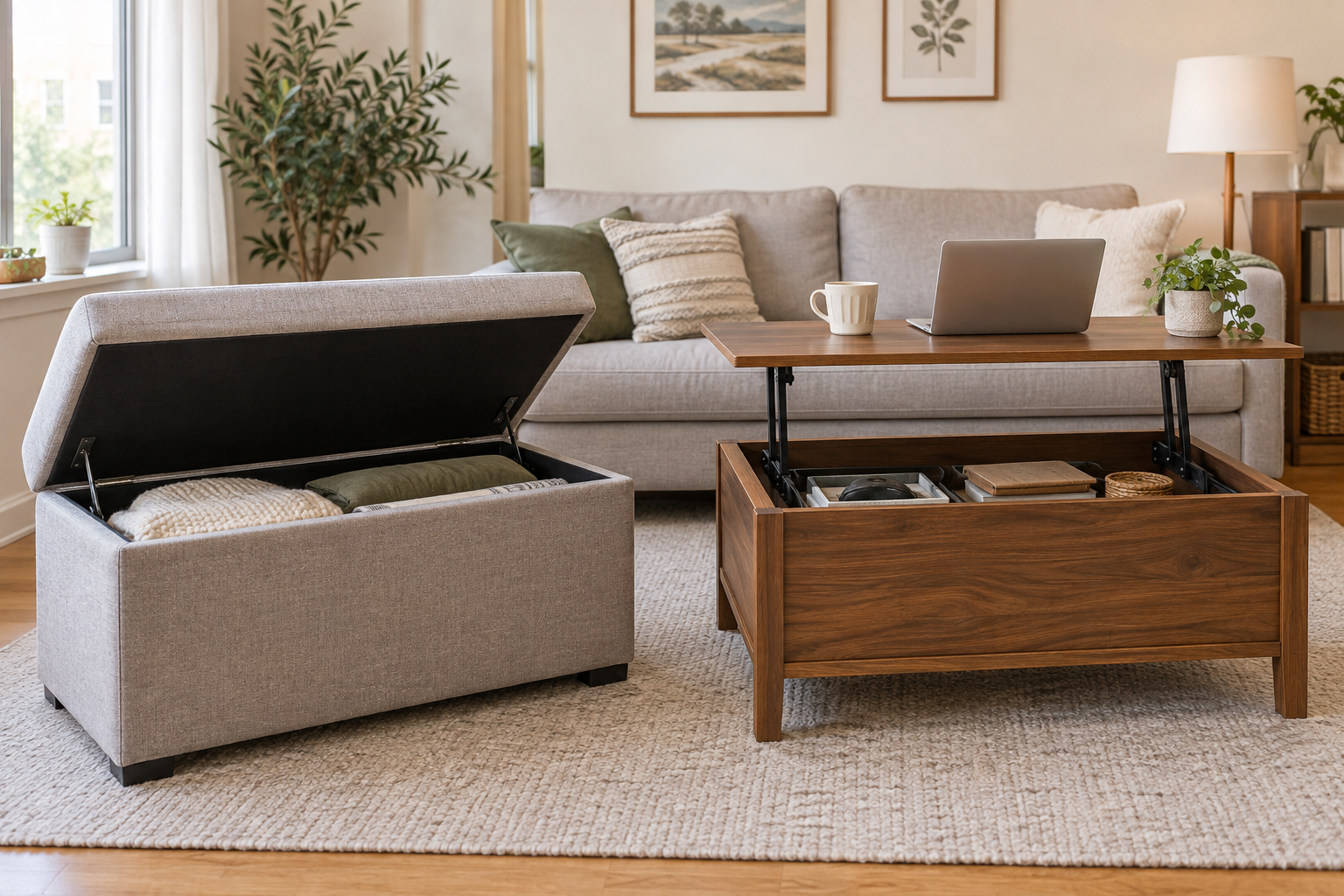
Choose a storage ottoman when concealed soft-goods storage and a padded footrest—or manufacturer-approved occasional seat—matter more than a firm tabletop. Choose a lift-top coffee table when you regularly need a stable raised surface for a laptop or meal and can leave room for the top's full travel. In a small living room, the winner is whichever one fits while closed, open, and in use.
As an Amazon Associate, The Good Home Doc may earn from qualifying purchases.
Quick decision before shopping
First measure the available space, identify the setup or surface constraints, and decide who will maintain the item. Skip the category if it blocks access, conflicts with the manufacturer's instructions or lease, or adds more upkeep than the problem justifies.
Measure both furniture modes before comparing: These affiliate category links are shopping starting points, not tested winners.
- Browse category: Compare storage ottomans for small living roomsCheck complete dimensions, interior space, lid path, feet, materials, stated loads, and every permitted use.
- Browse category: Compare lift-top coffee tables for small living roomsCheck closed and raised dimensions, top travel, knee clearance, hardware, storage access, stated loads, assembly, and care.
This comparison covers furniture formats, not the performance of a particular model. A photograph cannot establish stability, load capacity, seating approval, hinge safety, or durability. Verify the current product listing, assembly guide, warnings, and care instructions for the exact item before buying or using it.
Quick comparison
| Decision | Storage ottoman | Lift-top coffee table |
|---|---|---|
| Primary advantage | Padded top plus concealed storage | Firm top that rises toward the user |
| Use to verify | Footrest, storage, and seating only when each is explicitly permitted | Storage, ordinary tabletop use, and raised-top work only within stated limits |
| Critical clearance | Lid swing or lift-off space and access beside the sofa | Top travel forward and upward, plus knee and hand clearance |
| Typical storage fit | Bulky, light, dry textiles or games | Flatter items that stay clear of the lift mechanism |
| Main upkeep | Upholstery care, crumbs, lid hardware, and floor contact | Hard-surface care, tracks or hinges, fasteners, and compartment cleaning |
Start with the job the furniture must do
A dual-purpose piece does not automatically solve two important problems. List what currently collects in the room, how often it is used, and which missing function causes the most friction. If throws and games need a nearby home and the household already has adequate side tables, an ottoman may earn its footprint. If someone repeatedly balances a laptop or dinner plate on an unsuitable low surface, a lift-top table may address the more important routine.
Do not count a use that the maker does not permit. A padded box is not automatically a seat. A raised tabletop is not automatically designed for leaning, climbing, or heavy equipment. Compare stated uses and load instructions for the exact product, including any separate limits for the top, storage compartment, seat, and raised mechanism.
Measure the closed, open, and occupied layouts
Tape the complete closed footprint on the floor, including projecting feet, handles, trim, and any gap the instructions require around the furniture. Check the route between the sofa, doorway, media unit, radiator or vent, and other furniture. Preserve ordinary access instead of assuming the table can be shifted every time someone walks through.
Then map the opening motion. An ottoman may use a removable lid, a hinge that swings back, or a top that lifts partly upward. A lift-top coffee table commonly moves upward and toward the sofa, so its raised footprint can be materially different from its closed one. Add the user's seated legs, chair or sofa edge, hands, and the objects placed on the top. If the full motion collides with a person, wall, cushion, rug edge, or another table, the piece does not fit.
Compare storage that is actually usable
Exterior volume can be misleading. Record the compartment's inside length, width, and depth, then subtract space occupied by hinges, supports, dividers, and the closing path. An ottoman's broad cavity often suits folded throws, cushion covers, or compact games. Use organizers for small items so they do not migrate into the hardware.
A lift-top table may offer a shallow compartment under the moving top, lower shelves, or both. That can keep a laptop accessory, remotes, or flat games close to the sofa, but tall objects may interfere with closing. Keep contents below documented limits and away from every moving part. Neither format is a suitable place for damp textiles, food that attracts pests, leaking batteries, candles, or items that should remain inaccessible to children.
A soft top and a firm top support different routines
An ottoman is comfortable as a footrest when that use is approved, but a tray may be needed for a cup or other item that needs a level, spill-resistant surface. Verify that any tray is stable on the actual upholstery and remove it before opening or moving the ottoman. Never assume a decorative ottoman supports sitting; confirm the stated use and limit first.
A lift-top table offers a firm raised plane closer to seated height. Compare the raised height with the actual sofa seat and user, along with usable width, depth, knee room, and the top's stated load. A lift-top table should complement a workstation, not promise good ergonomics by itself. Long work sessions may still require a suitable chair, screen position, and separate desk.
Moving parts change daily use
Both formats can contain hinges or lift supports, but a lift-top coffee table usually asks more of its mechanism. Check how the top is opened and lowered, where hands belong, and whether the instructions identify pinch zones or require two-handed operation. Keep children, pets, loose clothing, and stored objects clear of the path. Never let anyone ride, sit, or climb on a moving top.
During assembly, follow the sequence and hardware specifications exactly; large tops can be awkward to align. Recheck only as directed by the maker. Stop using the mechanism if the top racks, drops, binds, will not stay in its intended position, exposes damaged hardware, or behaves differently from the instructions. Obtain product-specific support rather than improvising a repair.
Weight, moving, and floor protection
A storage piece becomes heavier after it is filled. Compare empty product weight, packaging dimensions, delivery route, stairs, and assembly location before ordering. Empty the compartment before repositioning unless the instructions explicitly allow otherwise, and use the documented lifting points. Do not drag either format across flooring.
Check the feet, casters, or base against the actual floor and rug. Suitable pads may help only when allowed and correctly sized; they do not correct an unstable frame or uneven placement. A thick rug can affect door, lid, or lift travel and make some tables less steady. Recheck the complete operating motion after the furniture is placed on its final surface.
Cleaning and appearance over time
An upholstered ottoman can soften a room visually but may collect lint, pet hair, crumbs, and spills. Match the material and care code to the household rather than relying on color alone. Removable covers can help only when the maker documents removal and cleaning. Test no cleaner or treatment beyond the care directions.
A hard coffee-table surface is generally easier to wipe, yet seams, lift hardware, and the storage cavity still collect debris. Check permitted cleaners, heat and moisture limits, and whether coasters or mats are required. Keep liquids away from hardware and stored electronics. Clean with the top supported only in the position and manner the instructions permit.
Household fit and who should skip each option
A storage ottoman is the stronger candidate when concealed storage for light, dry items is the priority, a soft top suits the room, lid access remains easy, and every planned footrest or seating use is manufacturer-approved.
A lift-top coffee table is the stronger candidate when a firm raised surface solves a frequent seated task, its complete travel path fits, users can operate it as directed, and the added hardware and assembly are acceptable.
Skip the ottoman when you need an always-ready firm surface, upholstery care conflicts with spills or pets, or the only suitable model lacks clear approval for the intended sitting or footrest use. Skip the lift-top table when the mechanism crowds the sofa or walking path, a user cannot comfortably control the top, children or pets make the moving zone hard to manage, or a simple fixed table would do the job.
Skip both if either permanent footprint narrows the main route or duplicates furniture you already own. A compact fixed table, nesting tables, under-sofa bin, wall storage, or movable tray may solve one real problem with less weight and complexity.
Bottom line
A storage ottoman prioritizes padded utility and broad concealed storage; a lift-top coffee table prioritizes a firm surface that comes toward the seated user. Choose by the room's most frequent task, then verify three layouts: closed, fully open, and occupied. The most useful piece is not the one with the longest feature list—it is the one the household can access, operate, maintain, and walk around without a daily furniture shuffle.