Slim Velvet Hangers vs Wooden Hangers for a Small Closet
Slim velvet hangers make sense when rail width is the binding constraint and light everyday clothes tend to slip from smooth hangers. Wooden hangers make sense when jackets, structured shirts, or wider shoulders need a broader, more rigid shape. A small closet may work best with both: slim hangers for compact garments and wooden hangers only where their extra width earns its place.
As an Amazon Associate, The Good Home Doc may earn from qualifying purchases.
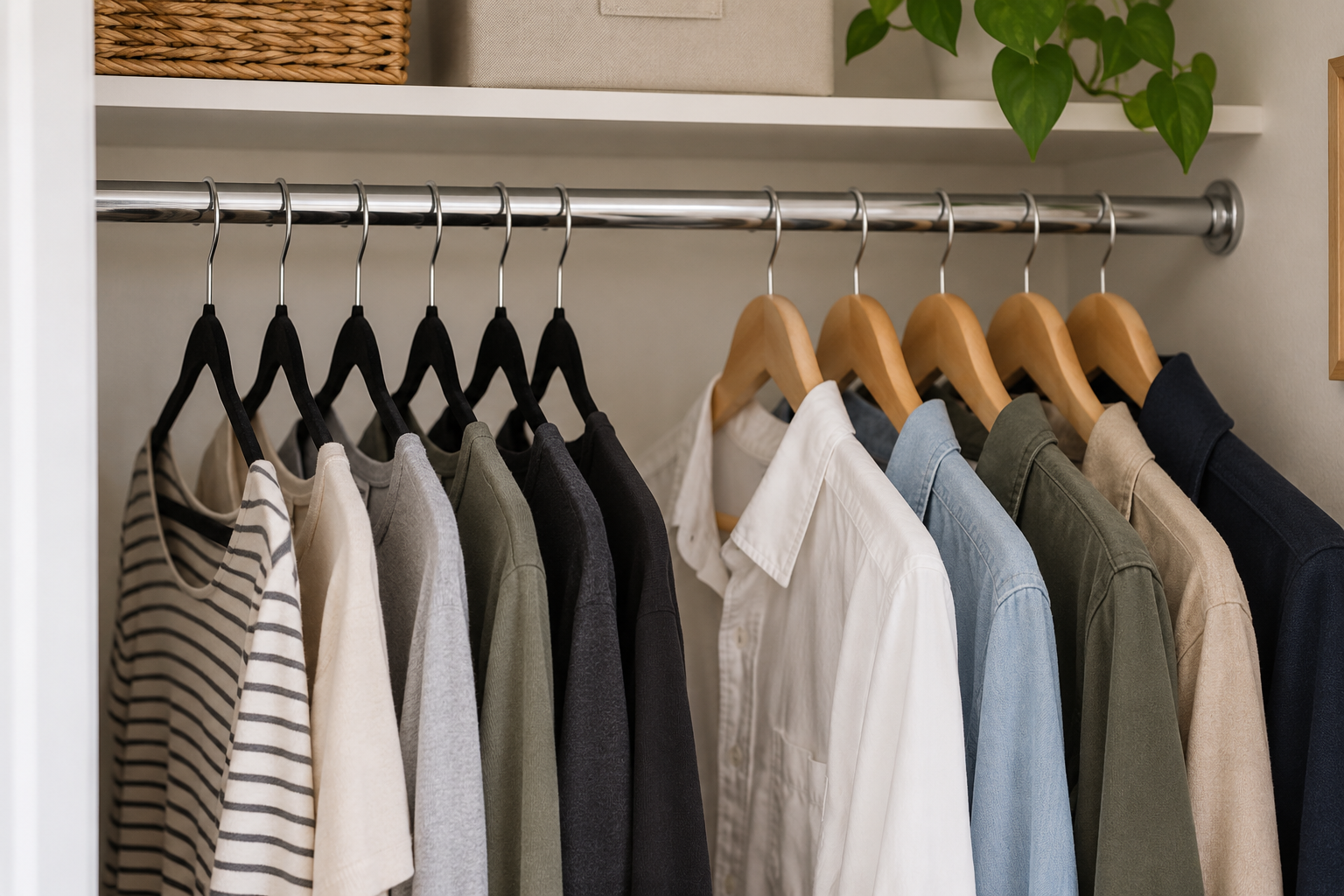
Quick decision before shopping
First measure the available space, identify the setup or surface constraints, and decide who will maintain the item. Skip the category if it blocks access, conflicts with the manufacturer's instructions or lease, or adds more upkeep than the problem justifies.
Measure the rail and sort the garments before shopping:
- Browse category: Compare slim velvet hangersCheck total width, shoulder span and profile, hook opening, garment crossbar, stated load, coating care, and pack count.
- Browse category: Compare wooden clothes hangersCheck shoulder width and thickness, hook fit, finish, crossbar or clips, stated load, surface care, and complete pack dimensions.
These are category searches, not tested rankings. Confirm current dimensions, materials, intended garments, load guidance, finish cautions, care instructions, warranty, and return terms before buying.
Quick decision
| Choose | Best fit when | Main tradeoff |
|---|---|---|
| Slim velvet hangers | Rail width is scarce, garments are mostly light to medium weight, and slippery necklines need more grip | The coating needs careful cleaning, can hold lint, and may make delicate garments harder to remove |
| Wooden hangers | Shoulder shape and rigid support matter more than maximum garment count | The thicker body uses more rail width and adds weight before clothes are loaded |
| Mixed set | Your closet contains both lightweight tops and a smaller group of structured jackets or shirts | You must organize by garment need instead of expecting one uniform hanger to do every job |
Start with rail capacity, not the pack count
Measure the usable rail between brackets, walls, shelf supports, and hanging organizers. Then count the clothes that genuinely belong there. Leave enough side-to-side room to see and remove a garment without dragging every hanger along the rail. A hanger can be described as slim while still becoming crowded once sleeves, collars, and layered fabric overlap.
Compare each hanger's stated thickness and shoulder width, then test a small group before replacing a whole closet. Wooden hangers usually consume more rail length, but removing ten unsuitable garments can create more useful space than changing fifty hangers.
Garment support is a shape question
Match the hanger shoulder span to the garment. A hanger that ends well inside the shoulder can let fabric slump; one that extends past it can create bumps or stress. Slim velvet profiles suit many shirts, blouses, dresses, and light trousers when the shape and crossbar match. A broad wooden profile can better fill a structured shoulder, but wood alone does not guarantee the correct contour or width.
Follow garment care labels for knits, wet items, heavy outerwear, and pieces meant to be folded. Do not hang a garment simply because a hanger claims a high load. The closet rod, brackets, and mounting have separate limits, and a small closet packed tightly becomes harder to inspect.
Grip helps some clothes and frustrates others
A flocked surface can reduce sliding for wide necklines and smooth straps. That grip also creates friction when you pull a garment off one-handed, and rough handling can stretch a neckline or disturb delicate fabric. Check that the coating is even, firmly bonded, and permitted for the garment; lift the hanger off the rail before removing clothing when needed.
Wood is generally smoother and easier to wipe as directed, but a polished shoulder may not hold a slippery item. A correctly positioned garment loop or a hanger designed with appropriate notches may help. Avoid improvised clips, adhesives, or rough grip additions that can mark fabric or expose a sharp edge.
Check the hook and closet clearances
Measure rod diameter and the vertical distance from the rod to the shelf above and clothes below. Confirm the hook opening fits freely without forcing it over the rod. If a hook swivels, verify whether the maker intends it to rotate and whether that movement helps in the actual closet.
Also check front-to-back clearance. Broad hanger shoulders and bulky clothes should not press against doors, a back wall, or shelving. Sliding and bifold doors need their full travel. A denser row of slim hangers does not help if sleeves catch in the door or block access to bins below.
Setup and everyday handling
Neither format requires installation, but a full conversion is still a setup job. Sort garments first, remove damaged hangers, and inspect the rail and supports for looseness or bending. Add clothes in small groups and stop if the rod or its hardware changes position. Renters should report questionable landlord-provided closet hardware instead of modifying or overloading it.
Keep enough empty hangers together that they do not tangle across the rail. If trousers use a crossbar or clips, check the full hanging length and opening method. Do not place hanger packs, stools, or overflow piles where they obstruct the closet door or walking route.
Cleaning, moisture, and finish care
Use only the hanger maker's cleaning method. Velvet-style flocking may collect lint and dust and may not be washable; soaking or scrubbing can damage a coating or transfer loose fibers. Let any approved spot-cleaning dry completely away from clothes before reuse.
Wooden hangers may have sealed, painted, or unfinished surfaces with different care limits. Inspect for splinters, cracks, rough joints, exposed fasteners, peeling finish, or color transfer before hanging clothing. Keep both formats dry. Do not place damp garments in a crowded closed closet; address the drying routine and any recurring room moisture rather than expecting a hanger to solve it.
When a mixed closet works better
Uniform hangers can look calm, but function matters more. Use slim hangers where each fraction of rail width matters and the garment is compatible. Reserve correctly sized wooden hangers for structured pieces that benefit from their shape. Fold heavy knits when their care permits, and move seldom-used clothing to an appropriate clean storage zone instead of compressing the daily rail.
A mixed system is easiest to maintain when each hanger type has a clear job. Group garments by category, keep a small buffer of open rail, and review the setup after a week. If clothes are hard to return, the system is still too dense.
Who should skip each option?
- Skip slim velvet hangers if the available coating sheds or transfers, your clothes need to slide on and off quickly, you cannot clean the surface as directed, or the profile does not support the garment.
- Skip wooden hangers if rail width is already exhausted, the added hanger weight concerns you, the shoulder width mismatches most clothes, or the finish has rough or transferable areas.
- Skip a full matching set if your wardrobe contains sharply different garment weights and shoulder shapes. Buy a small compatible group first.
- Pause the closet upgrade if the rod, brackets, shelf, or wall connection looks loose, bent, cracked, or overloaded. Renters should contact property management; owners should use qualified help when the support condition is uncertain.
Bottom line
Slim velvet hangers are the space-conscious choice for compatible light garments when grip helps. Wooden hangers are the structured choice when shoulder shape and rigidity justify a thicker profile. Measure the usable rail, match hanger width to clothing, inspect finishes and hooks, and use a mixed set when that gives each garment better support without overcrowding the closet.