Motion-Sensor Night-Light vs Plug-In Night-Light for Hallways
Choose a motion-sensor night-light when you want the hallway dark until someone approaches and the sensor can reliably see that approach. Choose an always-on or dusk-to-dawn plug-in light when a small, predictable glow matters more than darkness between trips. The control behavior—not the package label—is the main decision.
As an Amazon Associate, The Good Home Doc may earn from qualifying purchases.
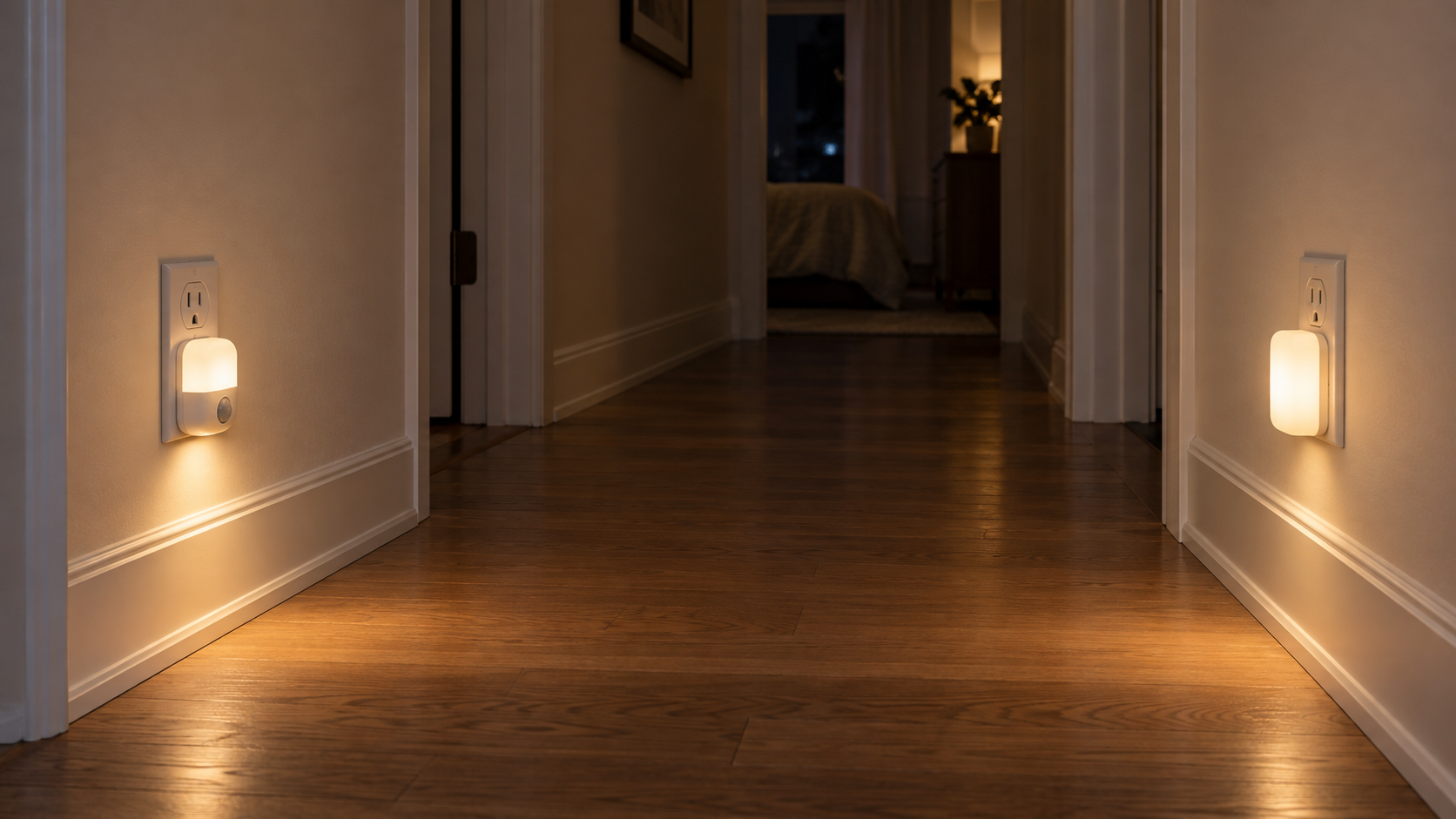
Quick decision before shopping
First measure the available space, identify the setup or surface constraints, and decide who will maintain the item. Skip the category if it blocks access, conflicts with the manufacturer's instructions or lease, or adds more upkeep than the problem justifies.
Choose the activation pattern before shopping: These affiliate category links are comparison starting points, not tested winners.
- Browse category: Compare plug-in motion-sensor night-lightsCheck motion and light-sensor behavior, documented detection range and angle, timeout, brightness, outlet coverage, and manual modes.
- Browse category: Compare dusk-to-dawn plug-in night-lightsCheck the light sensor, brightness, color temperature, outlet fit, pass-through access, controls, and power-loss behavior.
Confirm current specifications and indoor-use instructions on the maker’s listing. A night-light is ordinary guide lighting; it is not emergency lighting and does not repair a loose surface, damaged outlet, dark stair, or obstructed route.
Quick comparison
| Decision point | Motion-sensor night-light | Always-on or dusk-to-dawn night-light |
|---|---|---|
| Light timing | Turns on after detected movement, subject to its modes and timeout | Stays on or responds to ambient darkness |
| Best fit | Routes used occasionally where darkness between trips is preferred | Routes that benefit from a continuous, predictable reference point |
| Main placement issue | The sensor needs an unobstructed view of the approach | The glow must not shine into a bedroom or create persistent glare |
| Common annoyance | Late triggering, missed movement, or nuisance activation | Unwanted light throughout the night or incorrect dusk response |
| Upkeep | Keep both lamp and sensor window clean and unobstructed | Keep the light-sensor window clear on dusk-to-dawn models |
| Cannot replace | Normal switched lighting, emergency lighting, clear walking paths, repairs, or professional accessibility planning | |
Map the route before choosing a control
Walk the hallway with the normal doors, furniture, and lighting in their nighttime positions. Note where a person first enters, where the available outlets sit, whether a corner blocks a sensor’s view, and whether light from that outlet reaches a sleeping area. Clear bags, cords, shoes, and other movable obstacles before treating light as the solution.
Then decide whether useful light must already be present before anyone moves. A steady low glow gives an immediate reference point. A motion model depends on its sensor seeing movement early enough. Product range figures are not a promise in your hallway: doorways, approach angle, mounting height, furniture, and sensor modes all affect behavior.
Choose motion sensing for darkness between trips
A motion-sensor model fits when the route is used intermittently and continuous light would bother nearby sleepers. Look for a documented motion range and angle, a light-sensor mode that matches the room, a suitable shutoff delay, and a manual mode if you sometimes want the light off or continuously on.
Test the proposed outlet by approaching from every normal direction. A sensor facing across the hallway may respond differently from one facing down its length. Check whether a bedroom door, console, laundry hamper, or wall return blocks the first approach. Pets, movement through an adjacent doorway, or changing ambient light may also trigger some models; use the manufacturer’s documented modes rather than assuming all motion lights behave alike.
Choose motion sensing if:
- You prefer full darkness when the hallway is unused.
- The outlet gives the sensor a clear view before the darkest part of the route.
- The listed timeout and brightness fit a normal trip.
- You can return a model that behaves poorly in the actual layout.
Skip it if:
- The sensor would only detect someone after they enter the dark section.
- Nuisance activation would repeatedly disturb a bedroom.
- The household needs a dependable visual reference before movement begins.
Choose steady or dusk-to-dawn light for predictability
An always-on light is the simplest control: when powered and switched on, it provides the same small pool of light. A dusk-to-dawn model adds an ambient-light sensor, so confirm whether it turns fully off during the day and whether nearby lamps or light from a doorway can confuse that response.
Continuous light can work well at a turn or bathroom approach, but brightness and direction matter more because the glow lasts longer. Favor a shielded or downward-facing output and a warm setting when available. Check it from pillow height through open bedroom doors, not only while standing in the hallway.
Choose steady or dusk-to-dawn light if:
- You want the route visible before someone enters it.
- The outlet is poorly aimed for motion detection but well placed for a low guide light.
- A very dim continuous glow will not disrupt adjacent rooms.
- You prefer fewer timing and sensitivity variables.
Skip it if:
- Any continuous glow would interfere with sleep.
- The only outlet points the lamp directly toward eye or pillow level.
- Changing nearby light would defeat the intended dusk response.
Check outlet fit and electrical condition
Compare the full housing dimensions with the outlet plate, lower receptacle, nearby plugs, baseboard, furniture, and vacuum path. A pass-through outlet is useful only if the manufacturer permits the intended load and the second plug can be inserted without crowding. Do not stack adapters or route an extension cord across a walkway just to improve placement.
Use the product only in the documented indoor location and keep it away from water and damp areas unless the manufacturer explicitly identifies the installation as suitable. Stop using an outlet that is loose, damaged, discolored, hot, buzzing, or unable to hold a plug securely. Renters should report it to the property manager; homeowners should use a qualified electrician.
Brightness, color, and maintenance
Buy for low-level guidance, not maximum output. Compare documented brightness and color-temperature settings where available, while recognizing that package terms such as “warm” or “soft” are not precise measurements. Adjustable output is useful when the outlet is closer to a bedroom than expected.
Wipe the housing only as directed after unplugging it, and keep sensor windows clear of dust. Do not paint, tape over, or cover a sensor or diffuser to tame poor behavior. If a model is too bright, too slow, or unreliable in its approved position, return it and choose a better control format.
When neither one is enough
A plug-in night-light is not a fix for a failed wall switch, damaged wiring, loose flooring, a curled rug, a broken stair, or a route that needs a handrail or accessibility change. It also should not be treated as emergency illumination during a power outage unless the product is specifically documented for that purpose and maintained as instructed.
For a household member with vision, balance, mobility, or other individual access needs, generic shopping advice may not establish the right lighting layout. Use appropriate professional guidance for the person and space rather than relying on a consumer night-light as a universal safety measure.
Bottom line
Pick motion sensing when a well-positioned sensor can switch on before the dark stretch and you value darkness between trips. Pick a very dim steady or dusk-to-dawn light when immediate, predictable guidance matters more and the glow will not disturb nearby rooms. After choosing the control, compare motion-specific features in the hallway motion-sensor guide or broader setup limits in the comfort and safety-adjacent pillar.