Manual Citrus Juicer vs Electric Citrus Juicer for a Small Kitchen
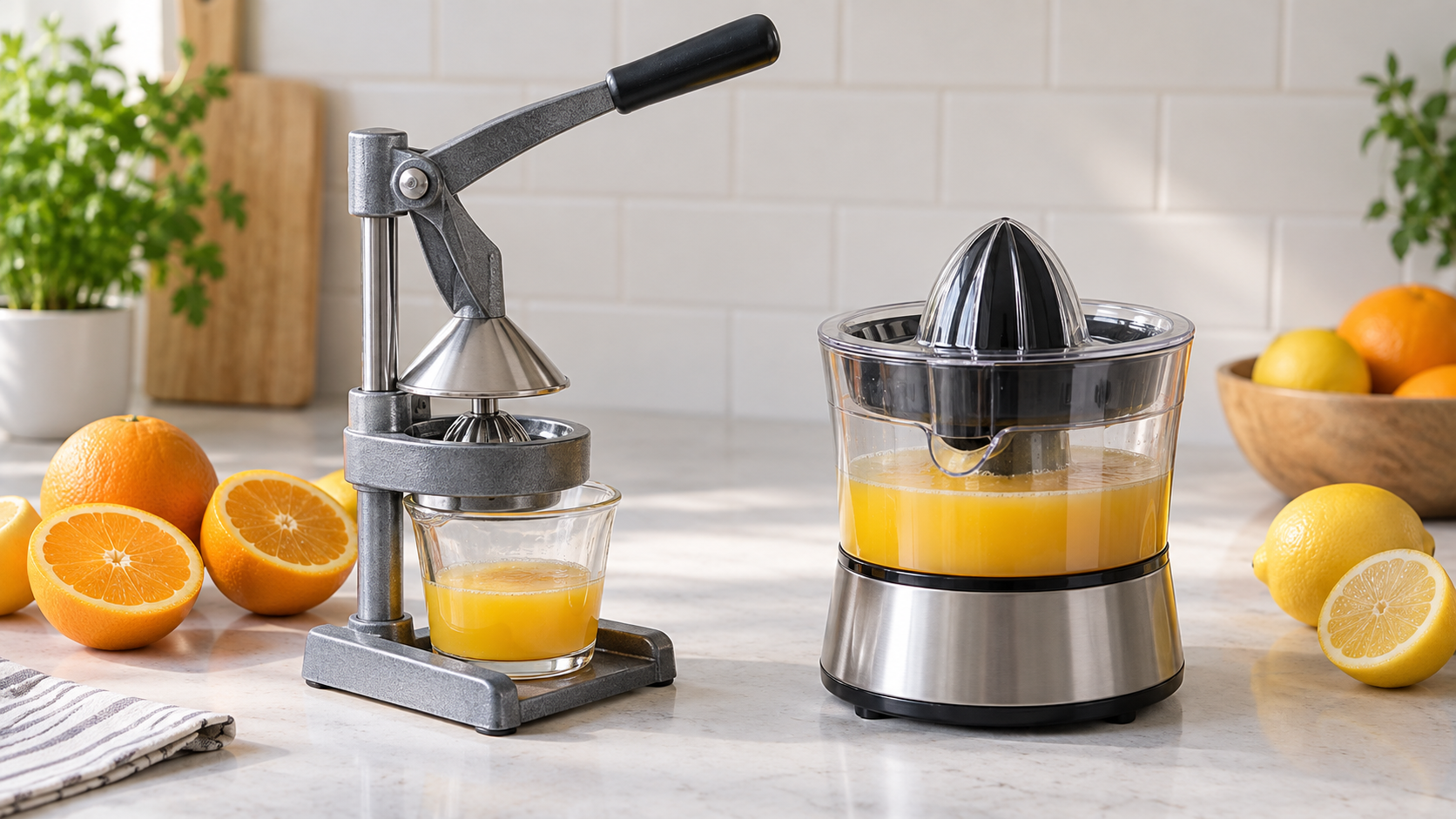
A manual citrus juicer keeps the tool simple and easy to store, while an electric model trades outlet and appliance space for a powered pressing routine. The useful choice depends less on a promise of “more juice” than on how much fruit you process, how much hand pressure feels reasonable, and whether the parts are easy enough to wash every time.
As an Amazon Associate, The Good Home Doc may earn from qualifying purchases.
Quick decision before shopping
First measure the available space, identify the setup or surface constraints, and decide who will maintain the item. Skip the category if it blocks access, conflicts with the manufacturer's instructions or lease, or adds more upkeep than the problem justifies.
Compare the format only after checking the full working and cleaning routine:
- Browse category: Compare manual citrus juicersCheck compatible fruit sizes, handle or cone operation, container capacity, seed control, dimensions, materials, cleaning, and stored shape.
- Browse category: Compare electric citrus juicersCheck cone sizes, pulp control, pitcher capacity, cord length, controls, removable parts, cleaning, and complete operating clearance.
These are category searches, not tested rankings. Confirm current dimensions, compatible fruit, included parts, materials, operating and cleaning instructions, electrical information, warnings, warranty, and return terms before buying.
Quick decision
| Choose | Best fit when | Main tradeoff |
|---|---|---|
| Manual citrus juicer | You juice a few halves at a time, want no cord or motor, and can use the required hand or arm pressure comfortably | The repeated pressing or twisting becomes more noticeable as the batch grows |
| Electric citrus juicer | You make larger or frequent batches and have a suitable outlet, stable work area, and storage spot | It adds a motor base, cord, noise, and more appliance-specific care |
| Skip a dedicated juicer | You rarely juice citrus or an existing tool already fits the occasional job | A simple handheld reamer may be enough |
Start with batch size and frequency
Count citrus halves rather than using a vague label such as occasional or frequent. One lemon for a recipe, two oranges for a glass, and a bag of fruit for several servings create different amounts of repeated work. A manual press or reamer can be quick for a small job because there is no cord to route or motor base to wipe. For a larger batch, repeated squeezing or twisting may become the slowest and least comfortable part.
An electric model can reduce the repeated hand-driven motion, but it does not remove preparation, fruit loading, pulp handling, pouring, disassembly, or washing. If it takes longer to retrieve and clean the appliance than to finish your normal batch manually, powered operation may not earn the extra space.
Manual juicers are not one format
A handheld squeezer, tabletop lever press, and cone reamer all use manual force differently. A handheld squeezer stores compactly but depends on grip and hinge leverage. A tabletop lever press occupies more space and still needs a steady base, overhead handle travel, and enough room for a receiving cup. A reamer is simple, but requires the fruit and tool to be held and turned in a controlled way.
Match the comparison to the specific mechanism. Check the maker's compatible fruit guidance, cup or bowl clearance, stable-use instructions, and whether the cone, strainer, hinge, or pressing cup comes apart for cleaning. Do not assume that a larger or heavier manual tool fits every fruit or needs less effort.
Measure the working footprint, not the base
For a manual lever press, measure the base plus the full handle arc and the height needed to raise it. Confirm upper cabinets will not interfere and that the receiving vessel fits below the spout. For a handheld model, plan where the halves, tool, juice container, and spent fruit will sit during the job.
An electric juicer needs a level, dry work surface and an outlet arrangement that follows its instructions. Include the pitcher or glass, fruit staging area, cord route, lid or cone movement, and room to remove the collection vessel without spilling. Never let the cord cross a sink, hot surface, sharp edge, or busy walkway. If the only available outlet creates an awkward route, the appliance is a poor fit.
Compare effort and controls honestly
Manual does not automatically mean difficult, and electric does not mean effortless. Fruit size, ripeness, mechanism, handle length, stability, and the user's comfort all change the experience. If grip strength, hand pain, or pressing force is a concern, try the motion with a returnable or already available tool rather than relying on broad “easy press” language.
On an electric model, check whether pressure on the fruit starts the cone or whether separate controls are used. Review cone direction, pressure guidance, pulp settings, pitcher markings, and any pause or cooling instructions in the manual. Keep fingers, utensils, loose clothing, and hair away from moving parts, and unplug the appliance as directed before disassembly or cleaning.
Pulp and seeds depend on the strainer system
Look at how the tool catches seeds and where pulp collects. Fine slots may reduce what reaches the container but can take longer to rinse. Wider openings may move juice quickly while allowing more pulp through. Adjustable pulp screens add choice but also add fitted parts and crevices to clean.
Do not treat pulp preference as an extraction-performance claim. Decide whether you want clearer juice, more pulp, or easy straining afterward, then inspect the actual cone and screen. Check whether the strainer remains seated during use and whether it lifts out without tipping debris into the juice.
Cleanup can decide which tool gets used
List every food-contact part: cone, press cup, screen, spout, pitcher, lid, bowl, and any gasket. Confirm which parts are removable and whether the manufacturer permits hand washing or dishwasher cleaning. “Dishwasher-safe” may apply only to selected removable pieces, never the motor base.
Rinse and wash parts according to the instructions before pulp dries in slots and seams. Let pieces dry completely before reassembly or closed storage. Wipe an electric base only as directed; never immerse it. A manual tool with a complicated hinge may take more brushing than a simple powered cone, while an electric appliance with several nested screens may reverse that advantage.
Storage and maintenance tradeoffs
A small manual reamer or squeezer can fit in a drawer, but confirm the handles do not jam the drawer and that sharp or pinching edges are stored safely. A lever press needs a cabinet or counter location that can accept its full height and weight. Check whether oiling, tightening, or other hinge care is allowed or required rather than improvising maintenance.
Electric models add a cord, drive connection, and motor base. Check whether components nest, whether the cord has an approved storage method, and whether replacement cones, pitchers, or strainers are available. Store every model dry and assembled only as instructed. If an electric unit smells hot, has a damaged cord, or behaves irregularly, stop using it and follow the manufacturer’s service guidance.
Who should skip each option?
Skip a manual juicer when its required grip, pressing, or twisting motion is uncomfortable; your usual batches are large; the lever cannot open safely under your cabinets; or the hinge and strainer are harder to clean than you will tolerate.
Skip an electric juicer when outlet access or cord routing is poor, appliance noise is unwelcome, counter and cabinet space are already tight, or you juice too little citrus to justify storing and cleaning a motorized tool.
Skip both when you need only a small squeeze now and then, the recipe already allows bottled juice, or another simple tool meets the need. A dedicated juicer is not useful merely because it is compact.
Bottom line
Choose a manual citrus juicer for small batches, minimal appliance upkeep, and easy storage when the pressing motion suits you. Choose an electric citrus juicer when larger or more frequent batches justify the powered cone, outlet setup, motor base, and extra parts. Measure the full working arrangement, compare the actual food-contact pieces, and let the cleanup you will really complete break the tie.