Is Window Privacy Film Worth It for Renters?
Privacy film can be worth it when you need daylight plus a blurred view, the exact film is approved for the glass, and your lease allows a reversible covering. Skip it when you need dependable darkness or nighttime privacy, cannot identify the glass, or would be covering a damaged or leaking window.
As an Amazon Associate, The Good Home Doc may earn from qualifying purchases.
Quick decision before shopping
First measure the available space, identify the setup or surface constraints, and decide who will maintain the item. Skip the category if it blocks access, conflicts with the manufacturer's instructions or lease, or adds more upkeep than the problem justifies.
Start with a removable sample: Browse category: compare frosted static-cling privacy film on Amazon only after checking the maker's glass exclusions and your rental rules.
This is a category shortcut, not a tested ranking. Confirm glass compatibility, roll dimensions, privacy limits, installation directions, and return terms for the exact product.
Quick Decision: Buy, Skip, Delay, Choose an Alternative, or Escalate
- Buy: you want to soften a street- or courtyard-facing view while keeping daylight, and compatible static-cling film is permitted on sound, smooth glass.
- Skip: you need blackout, a clear outward view, guaranteed nighttime privacy, or a no-maintenance result.
- Delay: ask what glass and coatings are present, check the lease, and test a removable sample before ordering a full roll.
- Choose an alternative: use existing blinds, a temporary shade, or approved curtains when darkness, nighttime coverage, or an adjustable view matters.
- Escalate: report cracked glass, failed seals, water entry, a broken lock, a window that will not open, or persistent condensation instead of covering it.
When Privacy Film Is Worth Buying
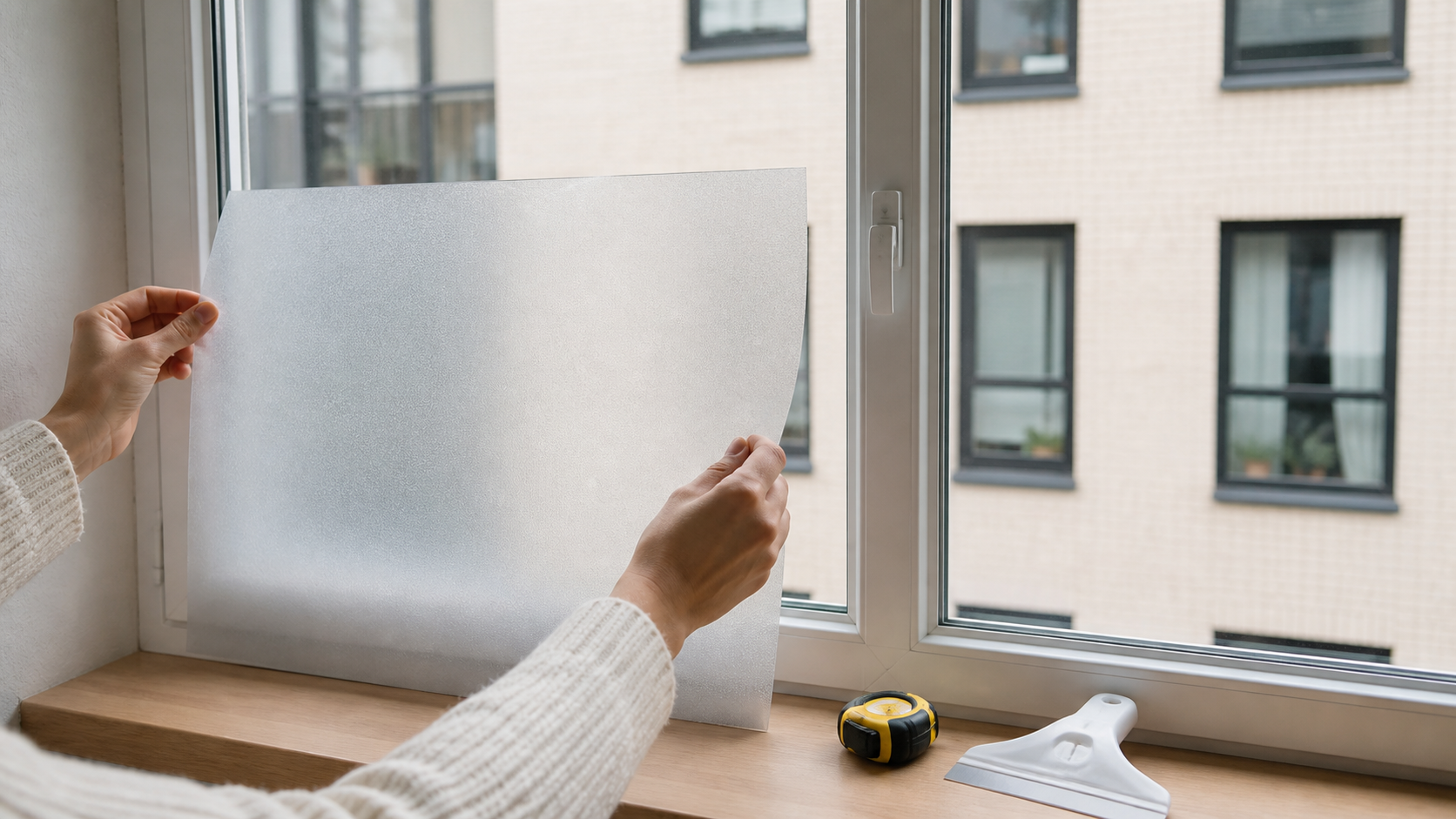
The strongest case is a bathroom, ground-floor room, glass door, or shared-courtyard window where unwanted sightlines are the actual problem. Frosted film can blur detail without using floor space or requiring a curtain rod. Partial coverage can protect the lower sightline while leaving sky and daylight visible above it.
Film makes more sense when the pane is simple to measure, the glass type is known, the lease permits it, and the product instructions explicitly cover that glass. Static-cling material is usually the lower-commitment category because it has no pressure-sensitive adhesive, but “static cling” does not override glass restrictions.
Five Criteria That Decide the Answer
- The goal: decide whether you need blurred detail, blocked sightlines, darkness, glare control, or a clear view. One film rarely does all five.
- Day versus night: frost still blurs after dark, but close silhouettes may show. Reflective “one-way” effects depend on which side is brighter and can reverse when the room is lit.
- The glass: identify plain, tempered, laminated, tinted, coated, textured, single-pane, or insulated glass and follow written restrictions.
- The rental rule: check window-covering, exterior-appearance, adhesive, egress, and removal rules. Get written permission when unclear.
- Setup tolerance: film needs accurate cuts, clean glass, bubble removal, edge care, cleaning, and eventual removal.
Red Flags and Reasons to Escalate
Do not guess about coated, tinted, insulated, laminated, or specialty glass. Some films interact with heat differently, and compatibility is product-specific. Ask the landlord, building manager, window maker, or a qualified window professional when the glazing cannot be identified. Do not apply film to cracked, chipped, loose, or already damaged panes.
Film must not interfere with a latch, sensor, ventilation opening, safety marking, required view panel, or emergency exit. A window that leaks, has moisture between panes, will not close or lock, or has damaged framing needs a maintenance request. Film is not a repair, security upgrade, insulation fix, or protection against breakage.
Cost, Setup, and Maintenance Tradeoffs
Film can cost less than new blinds or a curtain setup for one plain pane. The real budget includes a sample, enough roll width to avoid awkward seams, trimming allowance, cleaning supplies, an application tool, and waste from a bad cut. Patterned film may need extra material to align repeats.
A small static-cling panel can be manageable; large panes, high windows, curved edges, and pattern alignment are harder. Follow the exact cleaning, wetting, trimming, temperature, curing, and edge-gap directions. Do not cut directly against unknown coated glass unless the manufacturer specifically instructs it.
Use only maker-approved cleaning methods. Abrasive pads, blades, and solvents can scratch or haze some films. Watch bathroom and kitchen edges for lifting and recurring condensation. Film does not correct high humidity, poor ventilation, failed seals, or water intrusion.
Who Should Skip Window Privacy Film
Skip it if you want darkness for sleep, dependable visual coverage with room lights on, frequent access to a clear view, or a result you can move between windows without measuring. It is also a poor fit for textured glass, unknown glazing, damaged windows, or a lease that prohibits visible changes.
Renters who cannot accept residue, lifting, finish disputes, or removal work should choose a non-contact alternative. Adhesive-backed film raises those stakes and deserves explicit permission. Do not rely on words such as “removable,” “heat control,” or “one way” without reading the exact conditions and exclusions.
Better Alternatives by Problem
- Nighttime privacy: use a blind, shade, or curtain that physically covers the opening.
- Bedroom darkness: choose a compatible blackout shade or curtain; translucent film is not blackout material.
- A view you want sometimes: choose an adjustable covering rather than permanently blurring the pane.
- Unknown or restricted glass: use a freestanding screen or approved hardware that does not touch the glass.
- Drafts, leaks, or failed seals: request maintenance instead of hiding the symptom.
A Low-Risk Way to Decide
- Write down the sightline and time of day causing the problem.
- Confirm glass type, window condition, lease rules, and building restrictions.
- Compare film with an adjustable curtain or shade.
- Order the smallest suitable sample and follow its test directions.
- Check it from inside and outside, where safe and permitted, in daylight and after dark.
- Proceed only if privacy, light, appearance, adhesion, and removal tradeoffs work.
Bottom Line
Window privacy film is worth it for many renters who need daylight-friendly view blurring on known, compatible glass and accept some setup and removal work. It is not right for blackout, guaranteed nighttime privacy, unknown specialty glass, damaged windows, or a lease that disallows it.
If the category passes these checks, move to the privacy-film selection guide. If it does not, compare reversible options in the renter-friendly upgrades guide.