Refrigerator organization decision
Is a Refrigerator Lazy Susan Worth It?
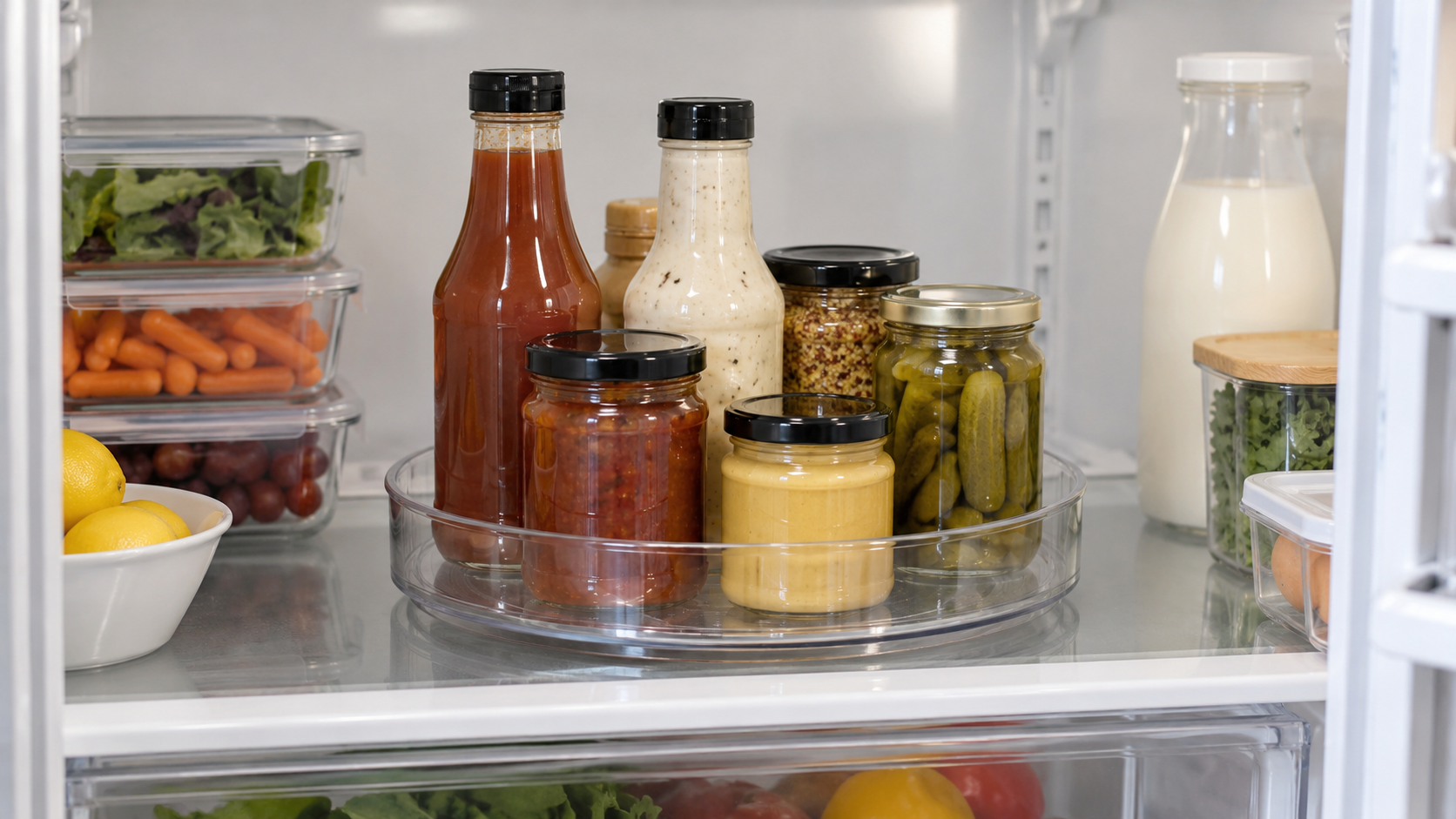
A refrigerator lazy Susan is worth considering when small jars and bottles regularly disappear at the back of a shelf and a measured turntable can rotate without hitting the door, walls, or neighboring food. Skip it when the shelf is too shallow, most containers are rectangular, or a simple bin would use the space better.
As an Amazon Associate, The Good Home Doc may earn from qualifying purchases.
Quick decision before shopping
First measure the available space, identify the setup or surface constraints, and decide who will maintain the item. Skip the category if it blocks access, conflicts with the manufacturer's instructions or lease, or adds more upkeep than the problem justifies.
Shop only after testing the circle on your shelf: This affiliate category search is a starting point, not a tested ranking.
- Browse category: Compare refrigerator turntables with raised edgesConfirm the complete diameter, base footprint, usable inner area, rim height, material guidance, cleaning instructions, and return terms.
This guide decides whether the category fits the refrigerator and routine. It does not rank brands or assume a turntable is food-contact safe, dishwasher-safe, freezer-safe, leakproof, or compatible with every appliance; verify the current product and refrigerator instructions.
Quick answer: buy, delay, or skip
Buy one when a cluster of frequently used jars fits inside one measured circle, the shelf leaves room for full rotation, and turning the tray will improve access.
Delay until you map the full diameter with paper or cardboard, load it with the actual containers, and test door closure plus nearby shelf and drawer movement.
Skip it when the circle wastes the shelf corners, tall bottles are unstable, the shelf lip blocks the base, or cleaning a separate moving tray will not happen regularly.
Run the paper-circle test first
- Measure usable shelf depth and width. Work around vents, lights, controls, shelf supports, and the raised front edge.
- Cut a paper circle. Match the turntable's complete exterior diameter, not the smaller usable platform.
- Add the real containers. Set the jars and bottles you expect to store on the circle and note any unused wedges.
- Test the moving envelope. Rotate the paper and containers without letting them strike the wall, door bins, or neighboring food.
- Close and reopen the door. Check the normal door angle, center hinge, and the path used to lift containers out.
A circle that technically fits may still waste useful corners or require the refrigerator door to open farther than the kitchen allows. If the mockup fails, a narrow bin or an edited shelf layout is the cheaper answer.
What makes a turntable useful
The right items
Turntables work best for a stable group of small or medium jars and bottles used often enough to benefit from rotation. Compare each container's base, height, weight, and tendency to tip. Tall, top-heavy bottles and loosely capped containers deserve extra caution, especially near a door that closes firmly.
A usable rim
A raised edge can help keep container bases within the platform during normal rotation, but it is not proof against tipping or leaks. Check whether the rim is high enough to guide the actual containers without making labels or short jars hard to reach. A divided model may separate bottles, but fixed sections can reduce flexibility.
Smooth access without crowding
The tray should turn using a controlled touch without scraping the shelf or forcing nearby items aside. Check the maker's load and use instructions, distribute weight reasonably, and stop using a tray whose base binds, cracks, wobbles, or moves across the shelf unexpectedly.
Cost and setup tradeoffs
The purchase price is only part of the decision. A turntable consumes a fixed circular footprint, and the lost corners can matter more than the cost in a compact refrigerator. Wide models may demand a deep shelf; small models may hold too little to change the routine.
Setup is simple only after measuring. Remove expired and duplicate items first, adjust shelves only as the refrigerator manual permits, and keep required clearance around vents and sensors. Do not cover controls or force a shelf into a position the appliance does not support.
Maintenance and spill cleanup
Condensation, sticky jar bottoms, crumbs, and small leaks collect beneath containers and around moving parts. Check whether the platform lifts off, whether parts can be submerged, and which cleaners and temperatures the maker permits. A removable smooth tray may simplify wiping; bearings, seams, or grippy inserts may require more detailed drying.
Clean spills promptly, inspect the shelf underneath, and allow every part to dry before reloading. A rim may contain a very small drip, but do not treat a consumer organizer as verified spill containment. Discard food or clean the appliance according to appropriate food and refrigerator guidance when a larger leak occurs.
Red flags and who should skip one
- The complete diameter or rotating containers overlap a vent, light, control, door bin, shelf lip, or drawer path.
- The product lacks clear dimensions, material guidance, cleaning directions, or intended-use information.
- Most items are rectangular packages that already line up efficiently in rows.
- The planned load includes tall glass bottles, unstable containers, or items that should not be moved together.
- The household needs to pull a whole meal group out at once; a handled bin may fit that routine better.
- The refrigerator is already overcrowded enough that air paths and safe storage guidance cannot be followed.
- Anyone expects the organizer to extend food life, correct an appliance temperature problem, or replace routine cleaning.
Better alternatives for some refrigerators
A narrow handled bin uses rectangular shelf space and pulls a group forward, but it needs a clear removal path. A low open tray can group packets while preserving top access. Door storage may suit some condiments only when the refrigerator maker's guidance and the food label permit that location. No organizer can be best after removing expired items and assigning simple front and back zones.
The refrigerator-bin guide compares rectangular formats in detail. For a broader process that starts with the problem instead of the product, use the home product category pillar.
When to escalate instead of organizing
A turntable cannot correct inconsistent cooling, recurring water inside the refrigerator, damaged shelving, a door that does not close, unusual noises, or an appliance error. Follow the refrigerator manual and contact the manufacturer, landlord, or a qualified appliance professional when the issue is equipment performance or damage rather than access to jars.
Bottom line
A refrigerator lazy Susan is worth it when one measured circle holds a frequently used group better than rows or bins and can rotate freely without compromising appliance clearances. Test the footprint with the real containers, verify the product and refrigerator instructions, and include cleaning in the decision. If the circle wastes space or the load is unstable, choose a rectangular bin, rearrange the shelf, or skip the organizer.