Is a Portable Blackout Shade Worth It for Travel and Rentals?
A portable blackout shade is worth it when unfamiliar windows regularly disrupt sleep, you can attach and remove the panel without harming the room, and one packable shade will be reused. It is usually not worth it for a single short stay, a window that must remain immediately usable, or a long-term rental where properly measured curtains are easier to live with.
As an Amazon Associate, The Good Home Doc may earn from qualifying purchases.
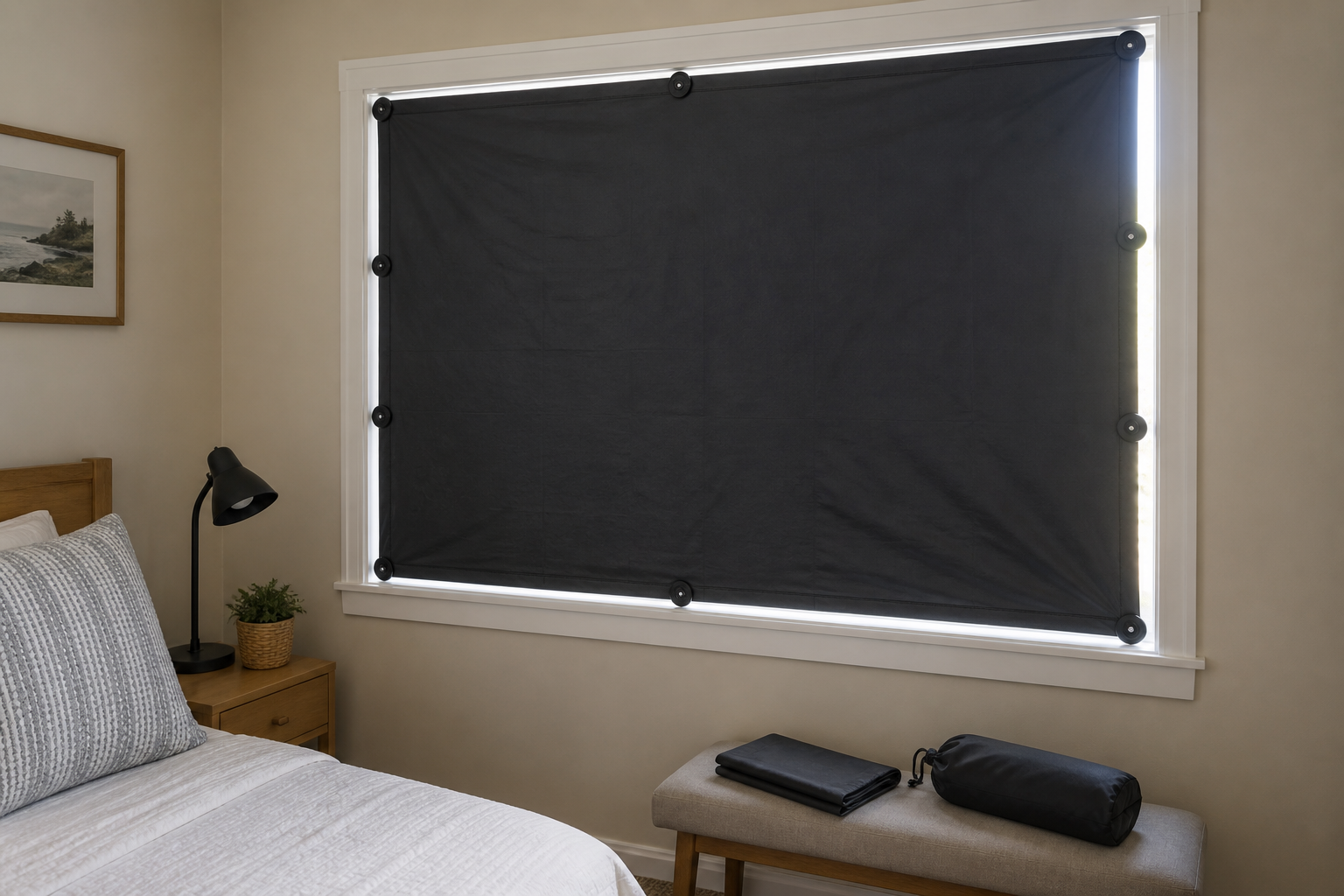
Quick decision before shopping
First measure the available space, identify the setup or surface constraints, and decide who will maintain the item. Skip the category if it blocks access, conflicts with the manufacturer's instructions or lease, or adds more upkeep than the problem justifies.
Compare the category after measuring: This is a shopping starting point, not a tested winner. Check the exact attachment, dimensions, surface rules, care, and heat warnings before buying.
- Browse category: Compare portable blackout shades on AmazonLook for enough coverage beyond the glass, several adjustable attachment points, compact storage, and instructions that fit the actual window.
This page answers whether the category belongs in your luggage or rental at all. If the answer is yes, the portable blackout shade comparison explains suction-cup, hook-and-loop, and static-cling formats. For a covering that will stay up, use the renter-friendly blackout curtain guide. Both routes sit within the broader renter-friendly home upgrades hub.
The short answer
- Buy one if you travel repeatedly, sleep is predictably affected by bright rooms, and a reusable panel fits the windows and attachment surfaces you normally encounter.
- Borrow or improvise carefully for a rare trip when an eye mask or an accommodation with adequate curtains can solve the same problem with less gear.
- Choose curtains instead for a stable rental bedroom where daily window access, appearance, and a long-term setup matter more than packing size.
- Skip temporary coverings when they would obstruct an emergency exit, ventilation opening, heater, window air conditioner, lock, or required window operation.
When it earns its place
The strongest case is repeat use. Families managing naps in changing rooms, shift workers staying in temporary housing, and frequent travelers may get value from a shade that installs quickly and fits into one pouch. The benefit is control over an uncertain room, not a guarantee of total darkness.
Value drops when setup becomes a nightly project. A shade that needs extensive trimming, many loose fasteners, or furniture moved to reach the glass may stay packed. Include installation and morning removal in the decision, especially when the window provides the room's ventilation.
Four checks before buying
1. Can it cover more than the visible glass?
A panel that matches the glass exactly can leave a bright border. Measure width and height when possible, then check whether the design can overlap the edges without covering handles, locks, vents, or hardware. For unknown travel windows, a foldable oversized panel is more adaptable, but excess fabric still needs secure support.
2. Will the attachment suit the room?
Suction cups generally need clean, smooth glass. Adhesive-backed fasteners can conflict with weak paint, wallpaper, textured trim, or rental rules. Static-cling material must be approved for the particular glazing. “Removable” is not proof that a product is suitable for every surface, so follow the maker's preparation and removal instructions and the property's rules.
3. Will you install it often enough?
Count the full routine: unpacking, cleaning an attachment area, hanging, adjusting gaps, removing, drying if damp, folding, and keeping small parts together. A simple shade reused many times has a clearer case than a complicated kit bought for one night.
4. Is the packed form genuinely convenient?
Compare the folded dimensions—not only weight—with your suitcase, car, or storage closet. A pouch that holds the panel and every attachment reduces the chance that one missing cup or tab makes the shade useless on the next trip.
Portable shade versus simpler alternatives
| Option | Best fit | Main compromise |
|---|---|---|
| Portable blackout shade | Repeat travel or temporary rooms where window light is the main problem | Window and surface fit, installation time, storage, and edge gaps |
| Sleep mask | Solo traveler who tolerates wearing one and needs the smallest solution | Does not darken the room for children, partners, or daytime use |
| Renter-friendly curtains | Longer stay with measurable windows and an allowed support method | More hardware, bulk, and setup; rod and surface limits still apply |
| Choose a darker room | Trip planning when room features can be confirmed before arrival | Availability and descriptions may be uncertain |
Heat, glass, and window access matter
Dark material at a sunny window can become warm. Follow both the shade maker's and window maker's placement guidance, particularly for insulated, coated, wired, laminated, cracked, or other specialty glass. Do not treat generic online advice as approval for a specific window.
Keep fabric away from heaters, radiators, lamps, vents, and window air conditioners. Remove or reposition the shade if instructions require it or if you notice unusual heat, odor, condensation, detachment, or glass concerns. The covering must not interfere with emergency egress or other required access.
Rental, hotel, and family cautions
- Get permission before putting adhesive on hotel or rental paint, wallpaper, trim, or glass when rules are unclear.
- Do not cover a required exit, fire-safety device, sprinkler, vent, door viewer, or window lock that needs to remain accessible.
- Avoid loose cords and loops. Keep small clips, magnets, tabs, and suction cups away from children according to the product instructions.
- Let damp fabric dry before packing, and inspect mounts and seams before reuse.
- Do not promise privacy from a central panel alone; edge gaps can still expose the room at night.
Who should skip it?
Skip a portable shade if you rarely travel, dislike wearing down setup time, need to open the window frequently, cannot identify the glass or permitted attachment surface, or would risk a deposit or hotel charge. It is also a poor fit when the room's only practical emergency opening would be obscured.
For a long rental stay, a measured curtain setup is usually less fiddly. For one traveler, an eye mask may solve the actual sleep problem with almost no storage. And if outside light is not the main reason the room is uncomfortable, adding a window product is unlikely to address the real issue.
Bottom line
A portable blackout shade is worth buying for repeat use in temporary rooms when it offers verified coverage, a compatible removable attachment, and a routine you will actually follow. Buy by dimensions and setup—not by a “total blackout” phrase. For one-off travel or permanent rental use, a sleep mask or properly fitted renter-friendly curtains will often be the cleaner decision.