Is a Dehumidifier Drain Hose Worth It for a Basement?
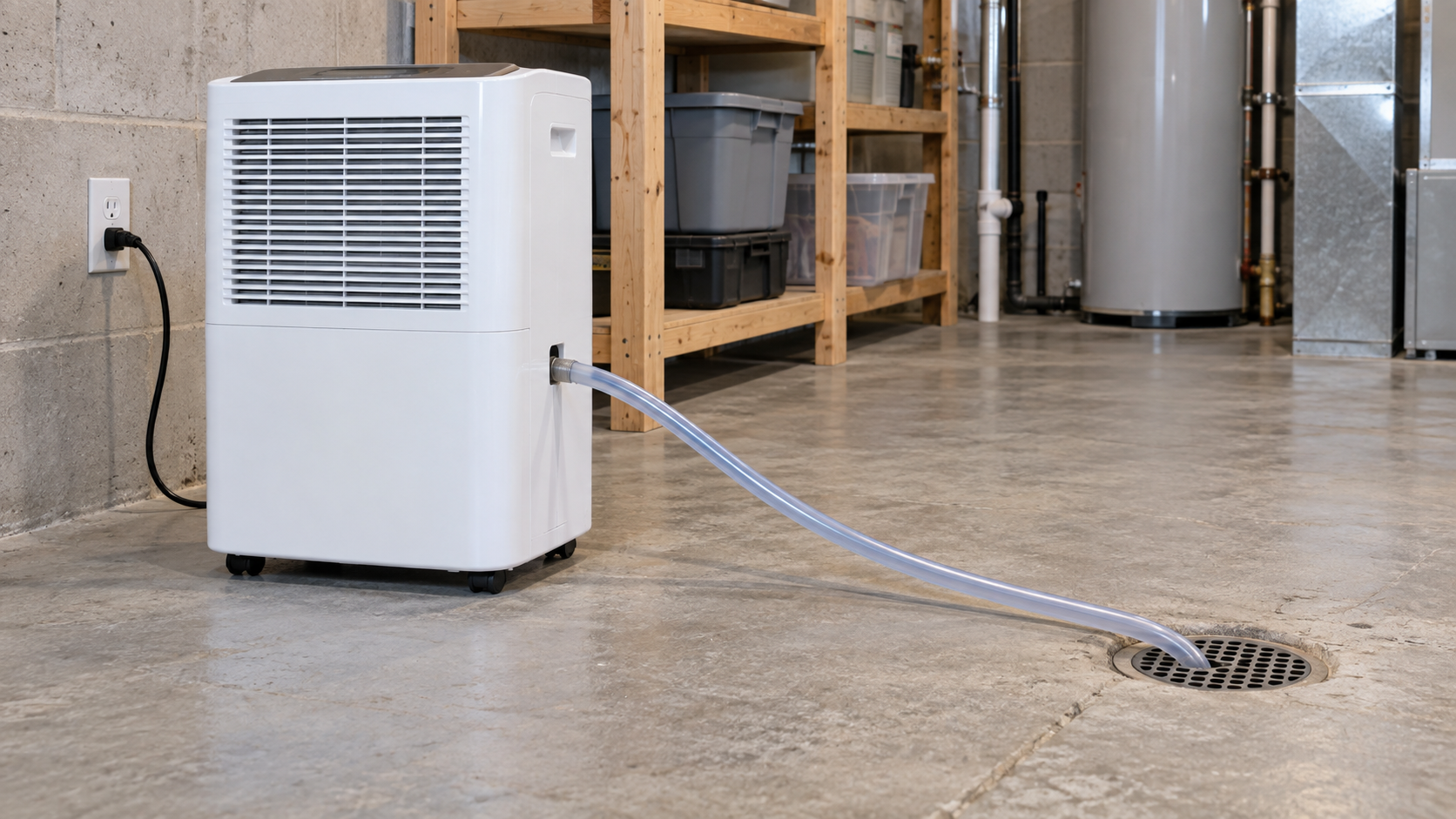
A gravity drain hose is worth it when your dehumidifier explicitly supports continuous drainage and you have a secure route that slopes downhill all the way to an approved drain. Skip it when the hose would run uphill, cross a walkway, kink behind storage, or make a small leak easy to miss.
As an Amazon Associate, The Good Home Doc may earn from qualifying purchases.
Quick decision before shopping
First measure the available space, identify the setup or surface constraints, and decide who will maintain the item. Skip the category if it blocks access, conflicts with the manufacturer's instructions or lease, or adds more upkeep than the problem justifies.
Start with the exact appliance manual: A generic hose is useful only if its inside diameter, connection, material, and route match the dehumidifier maker's requirements.
- Browse category: Compare dehumidifier gravity drain hoses on AmazonThis is a category search, not a tested winner. Confirm every specification against the current manual before buying.
This guide covers the hose decision, not plumbing alterations or moisture diagnosis. For the wider appliance and room-fit decision, use the home comfort and setup pillar. If dampness is unexplained or materials are wet or damaged, start with the leaks and moisture prevention guide instead.
Quick decision: buy, skip, delay, choose an alternative, or escalate
- Buy: the manual permits gravity drainage, the hose fits the specified port, and the entire route can descend to an approved drain without creating a trip or leak risk.
- Skip: you empty the bucket easily, the drain route is awkward, or the hose would be hidden where a loose connection or backup could go unnoticed.
- Delay: you have not found the exact manual, measured the full route, confirmed the drain destination, or checked whether the unit needs an adapter.
- Choose an alternative: keep using the bucket for a low-duty setup, or consider a maker-approved condensate pump when water must travel upward—without treating a pump as maintenance-free.
- Escalate: ask the manufacturer about unclear compatibility. Contact an appropriate qualified professional for a drain that backs up, an electrical concern, standing water, active leakage, damaged materials, or a route that would require plumbing changes.
When a gravity hose earns its keep
The strongest case is a basement where the dehumidifier collects enough water that bucket emptying interrupts operation, yet a nearby floor drain or other manual-approved destination sits lower than the drain port. The hose can reduce a repetitive chore and avoid a full bucket stopping the unit, but only while the route remains open and leak-free.
Continuous drainage is not the same as unattended protection. A hose can loosen, flatten, collect debris, shift out of the drain, or stop flowing if the appliance moves. Plan to inspect the connection, hose, drain end, surrounding floor, filter, and unit on a regular schedule.
Check these six things before buying
- Appliance authorization: locate the model number and current manual. Confirm that continuous gravity drainage is supported and identify the required connector, hose size, maximum route, and installation steps.
- Continuous downward slope: measure from the drain port to the destination. Gravity cannot reliably push water uphill or through a sag that traps water.
- Drain destination: use only a destination allowed by the appliance instructions and local setup. Do not improvise a connection to plumbing or assume every basement opening is a suitable drain.
- Secure ends: the appliance connection must seat as directed, and the drain end must stay in position without being submerged or obstructing the drain.
- Protected route: keep the hose out of walking paths, door swings, storage traffic, sharp bends, wheels, and freezing areas.
- Inspection access: every connection and the full hose route should remain visible enough to check for drips, movement, buildup, and kinks.
Cost, setup, and maintenance tradeoffs
A plain hose is usually a simpler accessory than a pump, but the total setup may also require a manufacturer-specified adapter or fitting. Avoid choosing on sticker price alone: an inexpensive hose with the wrong diameter, a weak connection, or material that kinks on your route is not a bargain.
Setup is easy only when the geometry works. The dehumidifier must sit level as instructed while its drain port remains above the destination. Raising an appliance on improvised furniture or unstable blocks to create slope introduces a different problem; use only a stable arrangement permitted by the appliance maker.
Maintenance includes cleaning or flushing the hose as directed, checking for buildup, confirming the connection after moving the unit, and keeping the drain open. Continue normal reservoir, filter, coil, and cabinet care from the manual. A drain hose does not reduce the moisture load or repair the source of dampness.
Gravity hose versus bucket versus pump
| Option | Best fit | Main tradeoff |
|---|---|---|
| Gravity hose | Compatible unit with a lower, nearby approved drain | Needs continuous slope, a secure route, cleaning, and routine leak checks |
| Collection bucket | Light or intermittent use where someone can empty it reliably | Operation may stop when full, and carrying water is a recurring chore |
| Condensate pump | Manual-approved setup where water must move upward or farther away | Adds cost, power, sound, moving parts, tubing, and another failure point to monitor |
If a pump appears necessary, check whether the dehumidifier has an integrated pump or specifies a compatible external approach. Do not route tubing into walls, ceilings, fixed plumbing, or exterior locations without appropriate guidance and permission.
Red flags that mean stop the setup
- The manual does not mention continuous drainage, or the correct connection and hose requirements remain unclear.
- The only route rises, sags, passes under a door, crosses a walkway, or disappears behind packed storage.
- The drain is slow, backed up, damaged, unidentified, or positioned where the hose end could be submerged.
- Water appears around the connection, beneath the unit, along the hose, or near an outlet or cord.
- The basement has standing water, active seepage, recurring staining, soft materials, a persistent strong musty odor, or visible growth. A hose is not an inspection or remediation plan.
- The proposed setup depends on an extension cord, unstable platform, altered drain, or any arrangement contrary to appliance instructions.
Who should skip a drain hose?
Skip it if bucket emptying is infrequent and manageable, if you cannot inspect the route, or if children, pets, stored items, or basement traffic are likely to pull or crush the hose. Renters should also skip alterations to plumbing or building surfaces unless the property manager has approved them.
A hose is also the wrong purchase when the real question is why water keeps appearing. If the dehumidifier runs heavily, humidity does not improve, or dampness returns, investigate the source rather than making continuous drainage a reason to ignore it.
Bottom line
A dehumidifier drain hose is worth it when the exact appliance supports it and the basement provides a short, visible, continuously downhill path to a suitable drain. Delay until you verify the manual and route. Use the bucket when the duty is light, consider a manufacturer-approved pump when gravity cannot work, and get qualified help when drainage, moisture, electrical, or building conditions are uncertain.