Is a Countertop Water Filter Dispenser Worth It for a Small Kitchen?
A countertop gravity-fed dispenser can be worth it when several people regularly use filtered drinking water, a larger ready-to-dispense reservoir reduces pitcher refills, and one permanent counter spot is easy to refill and clean. Skip it when the exact system lacks an independently certified claim for your identified water concern, the usable capacity does not improve your routine, or its footprint and maintenance cost more space and effort than a pitcher or compatible faucet filter.
As an Amazon Associate, The Good Home Doc may earn from qualifying purchases.
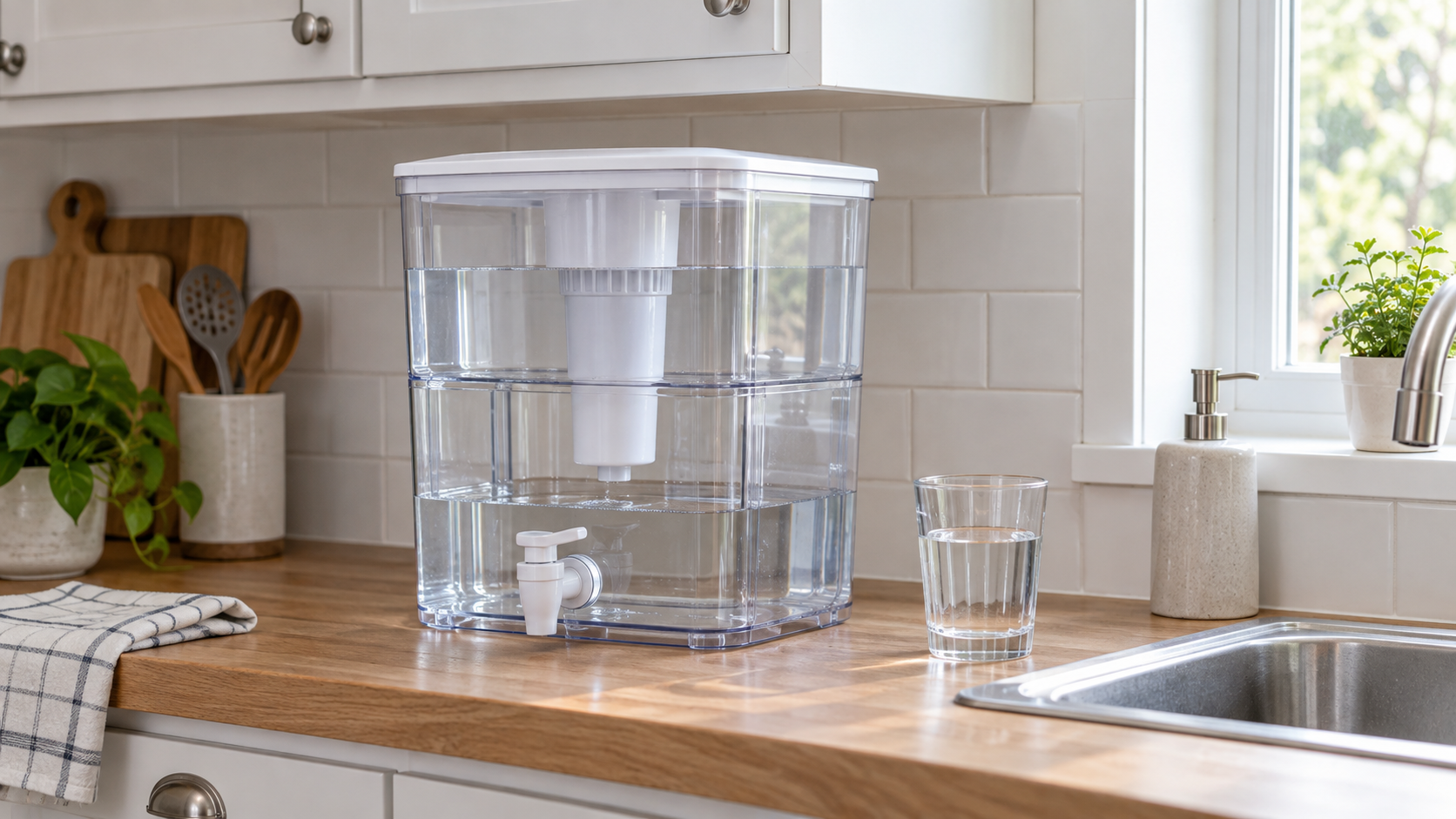
Quick decision before shopping
First measure the available space, identify the setup or surface constraints, and decide who will maintain the item. Skip the category if it blocks access, conflicts with the manufacturer's instructions or lease, or adds more upkeep than the problem justifies.
Verify the exact filter claim before shopping: This affiliate category link is a comparison starting point, not a tested winner or a promise that every listing is certified for the same substances.
- Browse category: Compare countertop gravity-fed water filter dispensersCheck the complete system and cartridge in a current certification database, then compare usable filtered-water capacity, dimensions, refill clearance, spigot access, cleaning instructions, and replacement-cartridge supply.
This guide compares a product format, not brands or treatment performance. Begin with the current information for your water supply, identify the specific concern, and verify the exact system and cartridge in an independent certification listing. A countertop retail filter does not make every water source safe and should not be used to override a boil-water or do-not-use advisory.
Quick decision
It is likely worth considering when the household routinely empties a pitcher, wants simple spigot access, can reserve a dry and level counter location, and will follow the documented refill, cleaning, and cartridge routine.
It is probably not worth it when one person uses only a modest amount of filtered water, the dispenser would crowd food preparation or an appliance, lifting the upper reservoir is awkward, or the correct replacement cartridge is difficult to identify or obtain.
Start with the water question, not capacity
“Filtered water” is not one performance claim. Look up the exact model and cartridge in the certifier's current database and read the listed reduction claims and conditions of use. A certification mark associated with one claim does not establish that a product reduces every substance, and a product description such as “multi-stage” does not replace an independent listing.
Public-water customers can start with the utility's current consumer confidence report. Private-well users, households under an advisory, or anyone dealing with a sudden change in color, odor, taste, or health symptoms should use appropriate official guidance or testing rather than selecting a countertop filter by retail copy.
Measure the complete operating footprint
Record the dispenser's width and depth, then add the room needed to operate the spigot and place the tallest glass or bottle beneath it. Measure the height with the lid removed or open and confirm that upper cabinets will not block reservoir removal or refilling. Keep the unit away from counter edges, heat, direct sun, and food-preparation traffic according to its instructions.
The water route matters too. Decide whether you will fill the upper tank in place or carry it between sink and dispenser. Check the empty and filled handling routine, grip points, faucet clearance, drip risk, and whether each removable part fits the sink for washing. Do not choose a location that requires reaching over a hot appliance or moving the filled dispenser.
Compare usable capacity with real demand
Capacity figures may describe different parts of the system. Distinguish the upper unfiltered reservoir, lower ready-to-dispense reservoir, and total vessel volume. The useful question is how much filtered water is ready between refills and how long the household is willing to wait for gravity flow.
For several days, count drinking glasses, bottles, and other intended uses. Compare that demand with the dispenser's documented usable capacity and refill cycle. A larger vessel is not automatically more convenient if the household still has to top it up repeatedly, if filtering pauses while the lower tank is full, or if stored water sits longer than the care instructions allow.
Price the cartridge routine, not just the dispenser
Record the exact replacement-cartridge model and the maker's replacement basis, including any time, volume, water-condition, or indicator assumptions. Confirm that genuine replacements are identifiable and available through a route you are willing to use. Do not compare cartridge life using one headline number when test conditions and replacement rules differ.
An indicator can be useful, but check what it actually tracks. Some reminders are time- or use-based rather than direct measurements of water quality. Follow the current instructions even if taste and appearance have not changed, and do not extend cartridge use based on guesswork.
Cleaning is part of the purchase
Before buying, read the complete cleaning and sanitizing instructions. Check whether the lid, reservoirs, spigot, seals, and cartridge housing separate without tools; which parts may be immersed or placed in a dishwasher; and how everything must dry and reassemble. A large capacity is a poor trade if the vessel is too bulky for the sink or has inaccessible seams around the spigot.
Use only the cleaning products and methods allowed by the manufacturer. Empty and clean the system at the documented interval, after extended nonuse, and whenever the instructions require it. Cracks, leaks, a damaged spigot, or parts that no longer seat correctly are reasons to stop using the dispenser and follow the maker's support guidance.
Countertop dispenser, pitcher, or faucet filter?
| Decision point | Countertop dispenser | Pitcher | Faucet-mounted filter |
|---|---|---|---|
| Space used | Permanent counter footprint plus refill clearance | Refrigerator or counter space | Faucet and sink clearance |
| Ready supply | Larger reservoir can serve repeated pours | Smaller batches require more frequent refilling | Filters at the sink at its documented flow |
| Handling | Upper tank or fill vessel plus periodic full disassembly | Lift, fill, wait, and pour | Compatible attachment, bypass use, and seal checks |
| Hard fit gate | Counter and cabinet clearance | Shelf, door, and filled-lifting fit | Exact faucet compatibility |
The right format still depends on an independently verified claim for the actual concern. If two formats meet that requirement, choose the one whose space and maintenance routine the household is most likely to sustain.
Who should skip a countertop dispenser?
- The specific system and cartridge do not have a verifiable certified claim that matches the identified concern.
- The dispenser would obstruct preparation space, cabinet doors, appliance ventilation, sink work, or a safe walking route.
- Carrying, lifting, or aligning a filled reservoir is uncomfortable or likely to cause spills.
- The household will not complete the documented cleaning, sanitizing, and cartridge-replacement routine.
- A current water advisory or suspected plumbing or well problem requires official guidance, testing, or professional attention instead of a retail filter.
Sources to check before buying
Use the EPA's Consumer Confidence Report guidance to find public-water information, then search the NSF drinking-water treatment unit listings or another accredited certifier's current database for the exact system and cartridge. Also read the manufacturer's current performance data sheet, installation instructions, and cleaning guidance. Those documents—not the product shape or a broad marketplace label—define the verified scope and required upkeep.
Bottom line
A countertop water filter dispenser earns its space when the exact certified claims fit a known need, the ready-water capacity meaningfully reduces refills, and the household has a workable location and maintenance routine. If any of those gates fails, a smaller pitcher, a compatible faucet filter, or no new product may be the better decision.