Glass vs Plastic Food Storage Containers for Weekly Meal Prep
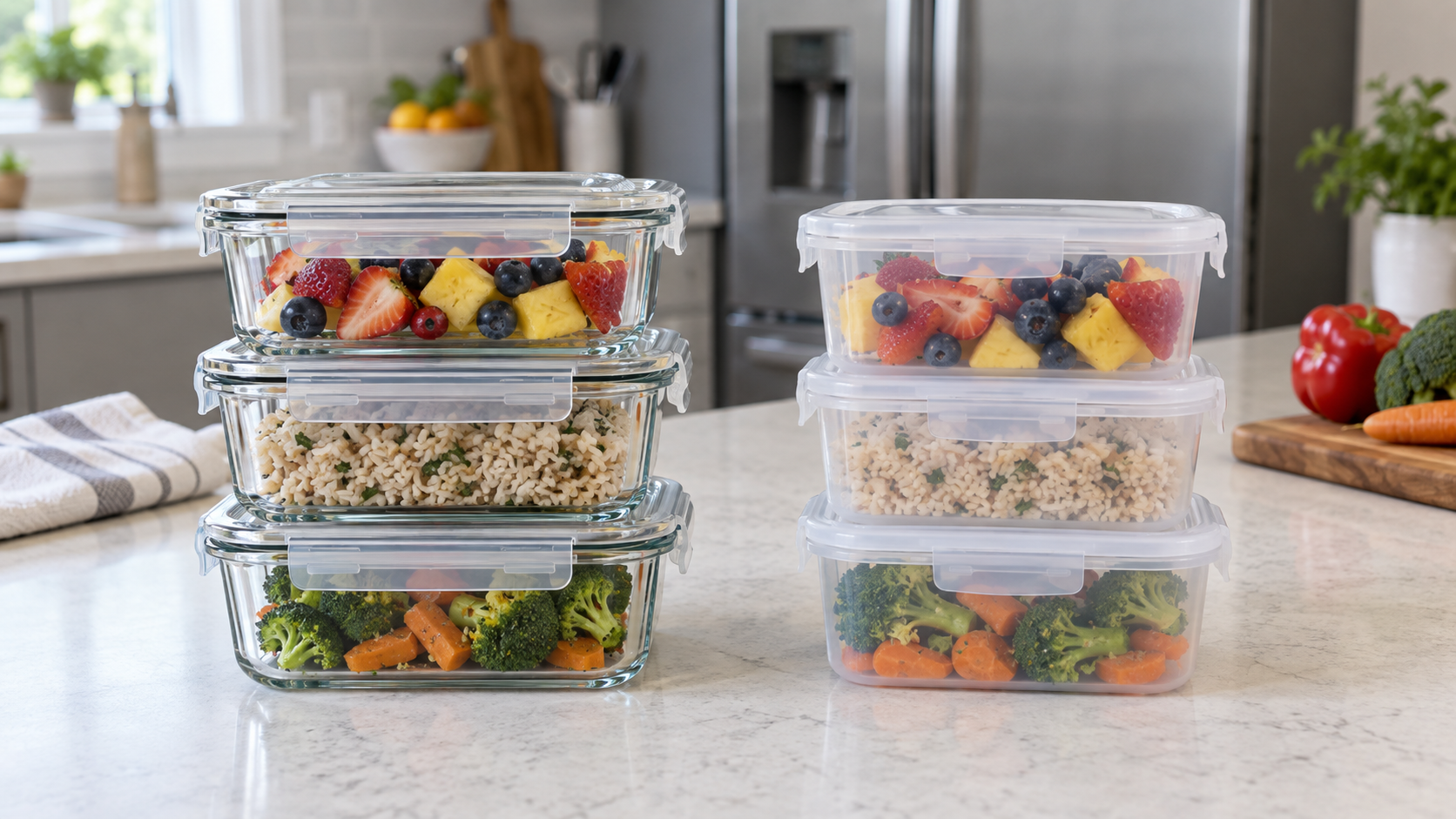
Glass is heavier and breakable but usually easier to keep clear and odor-free. Plastic is lighter and easier to carry but can stain, scratch, or retain odors over time. For weekly meal prep, the better material is the one that fits the whole route: filling, chilling, carrying, reheating, washing, and storing.
As an Amazon Associate, The Good Home Doc may earn from qualifying purchases.
Quick decision before shopping
First measure the available space, identify the setup or surface constraints, and decide who will maintain the item. Skip the category if it blocks access, conflicts with the manufacturer's instructions or lease, or adds more upkeep than the problem justifies.
Compare the material that fits your routine:
- Browse category: Shop glass meal-prep containersStart here when stain resistance and at-home reheating matter more than carrying weight.
- Browse category: Shop reusable plastic meal-prep containersStart here when light weight, nesting, and packed-lunch handling matter most.
These are category shopping routes, not tested rankings. Check each maker's current food-contact, freezer, microwave, oven, dishwasher, venting, and lid instructions before buying or using a container.
Quick Decision
Choose glass when most meals move between refrigerator, counter, and table; you want a surface that resists common food stains and odors; and everyone handling the containers can manage the weight and breakage risk.
Choose plastic when containers commute in a lunch bag, sit on a high shelf, need to nest tightly, or are handled by someone who would struggle with heavy or breakable pieces.
Choose a mixed system when batch-cooked meals stay home but snacks and lunches travel. A small number of compatible shapes is usually easier to manage than two oversized sets.
Glass vs Plastic at a Glance
| Decision point | Glass | Plastic |
|---|---|---|
| Carrying | Heavier; breakage needs consideration | Lighter; often easier for commuting |
| Stains and odors | Nonporous glass base is usually easier to keep clear | May stain, scratch, or retain odors with use |
| Empty storage | Often stacks rather than deeply nests | Often nests more compactly |
| Heating | Some bases permit microwave or oven use | Some permit microwave use; oven use is generally not the intended job |
| Damage pattern | Can chip or break | Can warp, crack, scratch, or discolor |
Those are category tendencies, not permissions. The label and current manufacturer instructions for the exact base, lid, gasket, and clips decide how each piece may be used.
When Glass Fits Weekly Meal Prep Better
Glass is a strong fit for meals prepared and eaten mostly at home. The clear, rigid base makes it easy to see leftovers, and it does not flex when a full container is lifted. Foods that commonly discolor plastic are less likely to change the appearance of a glass base.
The tradeoff is handling. A week's worth of filled glass containers can be heavy in a refrigerator drawer or work bag. Check shelf placement, avoid unstable towers, and do not use a chipped or cracked piece. Sudden temperature changes can damage some glass; follow the maker's temperature and thawing directions rather than moving a cold container straight into heat.
Glass fits best for: refrigerator-to-table meals, tomato-based or strongly colored foods, people who prefer rigid containers, and households with accessible low shelves.
Skip glass when: the container will be carried daily, dropped frequently, handled by young children, stored overhead, or used where broken glass would create a difficult cleanup.
When Plastic Fits Weekly Meal Prep Better
Plastic reduces the weight of a packed lunch and often nests more efficiently after washing. That makes it practical for commuting, school lunches, crowded cabinets, and households that need many portions without loading a refrigerator shelf with heavy bases.
Condition matters more as plastic ages. Replace a container according to the maker's guidance when it is cracked, badly warped, deeply scratched, or no longer seals as intended. Do not treat every clear plastic container as interchangeable: food-contact documentation and heating, freezing, and washing limits vary.
Plastic fits best for: transported lunches, lightweight stacks, deep nesting, and users who need easier lifting.
Skip plastic when: recurring stains and odors would be frustrating, the intended heating method is not explicitly permitted, or the household tends to keep worn pieces long after lids and bases stop fitting correctly.
Five Checks That Matter More Than Material
- Useful portion sizes: Count breakfasts, lunches, dinners, and snacks. A high piece count is not useful if half the bases are too small.
- Lid system: Fewer lid footprints reduce matching. Check whether replacements are sold and whether gaskets can be removed and reinstalled for cleaning.
- Leak instructions: A locking lid is not automatically leakproof. Use liquids only as the maker permits and keep containers upright when required.
- Appliance permissions: Confirm guidance separately for base, lid, gasket, and clips. Look for venting instructions and dishwasher-rack placement.
- Filled and empty footprints: Measure refrigerator shelves, lunch bags, dishwasher space, and the complete nested or stacked set.
Reheating and Freezing Need Product-Specific Rules
Do not buy from a general claim such as “microwave safe” or “freezer safe” alone. Read the instructions for whether the lid stays on, must be vented, or must be removed; whether clips and gaskets may be heated; and whether food must be thawed first. Oven permission for a glass base does not automatically include its lid.
Leave expansion room when freezing liquids and use only containers the maker permits for freezing. If a base, rim, lid, or seal is damaged or distorted, stop using it for jobs that depend on a secure closure.
Cleaning and Weekly Reset
A meal-prep system works only if every part dries before the next batch. Separate removable gaskets only when the maker provides instructions, clean lid channels, and let components dry fully before nesting. Trapped water and mismatched lids turn a large set into cabinet clutter quickly.
Once a week, match every base to a lid and pull damaged or orphaned pieces from the active stack. Keep the most-used sizes together. For cabinet-specific help, the food storage container guide for shallow cabinets explains depth, nesting, and vertical lid storage.
Bottom Line
Glass is usually the better home-base container; plastic is usually the easier travel container. Neither material wins every meal-prep routine. Buy the smallest set that covers your real week, verify every care and temperature instruction, and choose lids and sizes you can replace rather than chasing the largest piece count.