Foldable vs Fixed Two-Step Stool for High Kitchen Cabinets
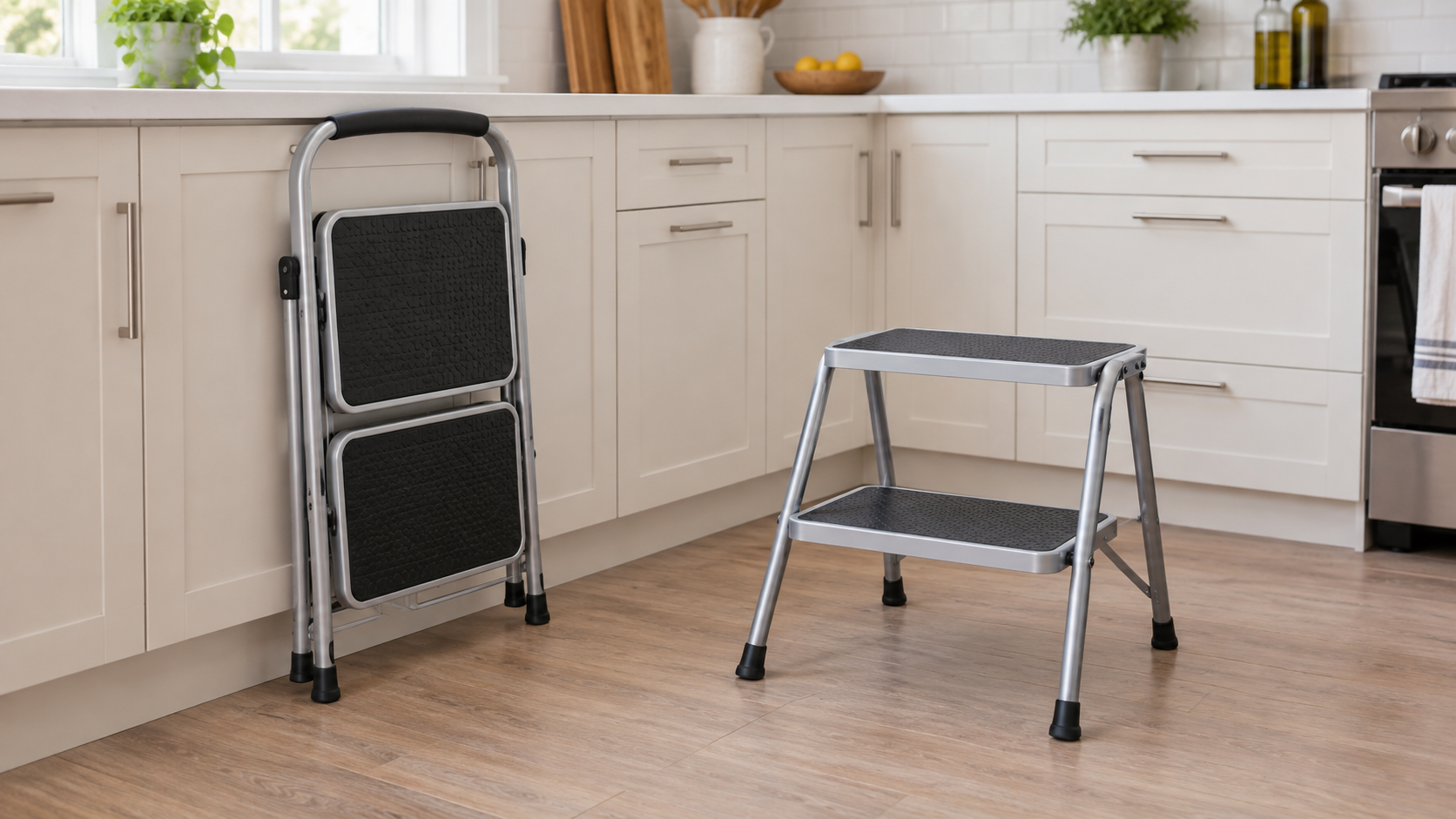
A foldable two-step stool is easier to put away in a narrow kitchen, but every use adds an opening and locking check. A fixed two-step stool removes that folding step and can be quicker to inspect, yet its full footprint always needs a safe home. Choose by the reach you need, the floor space available during use, and whether you can follow the complete setup routine every time.
As an Amazon Associate, The Good Home Doc may earn from qualifying purchases.
Quick decision before shopping
First measure the available space, identify the setup or surface constraints, and decide who will maintain the item. Skip the category if it blocks access, conflicts with the manufacturer's instructions or lease, or adds more upkeep than the problem justifies.
Compare only after measuring the reach, use area, and storage spot: These affiliate category links are shopping starting points, not tested winners or a promise that either format is safe for every person or task.
- Browse category: Compare folding two-step stoolsCheck intended use, highest standing level, open and folded dimensions, duty rating, locking instructions, tread, feet, handhold, product weight, and inspection guidance.
- Browse category: Compare fixed two-step stoolsCheck intended use, step height, complete footprint, duty rating, tread, feet, handhold, product weight, storage position, and maker warnings.
This is a format comparison, not a safety certification or an accessibility recommendation. Product construction and instructions vary. Read the current label and manual for the exact stool, stay within every stated limit, and do not use a household stool for a task that calls for a ladder, specialized access equipment, or a qualified professional.
Quick comparison
| Decision | Foldable two-step stool | Fixed two-step stool |
|---|---|---|
| Daily setup | Must open fully and lock exactly as directed | No folding mechanism, but placement and condition still need checking |
| Stored footprint | Usually narrower when folded | Uses its full footprint between jobs |
| Moving parts | Hinges, spreaders, and locks add inspection points | Usually fewer moving parts |
| Carrying | Can be compact but may open or pinch if handled incorrectly | Bulkier through narrow routes even when lightweight |
| Best fit | Occasional access where closed storage is limited | Frequent access where a dedicated storage spot exists |
Start with required reach
Measure from the floor to the cabinet shelf and note where the item sits from the cabinet front. Then compare that job with the product's highest permitted standing level—not its overall frame height. Choose the minimum stool height that lets you face the steps, keep your body centered, and reach without standing on a prohibited surface or stretching sideways.
A second step does not make every upper cabinet practical. Deep shelves, items behind other items, and heavy cookware can require awkward reaching even when the height looks sufficient. Move frequently used or heavy objects lower rather than treating a taller stool as the only answer. Never stand on a top rail, handle, or other surface the maker does not identify as a step.
Measure the working footprint
For a folding model, use its fully open width and depth at the feet. For a fixed model, use the widest and deepest points at floor level. Mark the footprint in the actual kitchen. Open nearby cabinet doors, drawers, refrigerator doors, and the oven door; account for floor transitions, mats, vents, and the household traffic route.
Both formats need a firm, dry, level surface with every foot fully supported. Do not place either on a rug edge, countertop, table, another stool, boxes, or stairs. If the kitchen cannot provide the complete permitted footprint without blocking a route or creating a collision, neither format fits that location.
The folding mechanism is a routine, not a feature
A folding stool saves space only when you can open, lock, close, carry, and store that particular design as instructed. Before each use, confirm that it is fully open and that its spreaders, platform, or locks are in the required position. Keep hands clear of pinch points and do not assume an audible click proves correct setup unless the manual says so.
A fixed stool avoids this mechanism, which can suit frequent kitchen access or anyone likely to rush the opening check. That does not make it automatically more stable. Foot spacing, frame geometry, tread condition, surface contact, construction, and correct use still matter, and a compact fixed stool can be a poor fit if it rocks or forces an off-center stance.
Storage changes the decision
Measure a folding stool in its closed shape, including handles and feet, and follow the maker's storage position. A narrow gap is useful only if the stool can be removed without snagging, opening unexpectedly, or forcing you to reach behind an appliance. Keep vents, shutoffs, panels, and walking paths clear.
A fixed stool needs a dedicated floor or shelf location large enough for its complete shape. Do not leave it as an invitation to climb or as a trip obstacle. Households with children, pets, or shared kitchens need a storage plan that matches their circumstances and the product instructions. If neither stool can be stored responsibly, reorganizing the cabinets is the better fix.
Compare what must be inspected
Before using either type, look for bent or cracked parts, loose fasteners, corrosion, damaged treads, worn or missing feet, contamination, and any movement that the design should not have. Stop using a damaged stool. Do not improvise repairs, alter the frame, or replace feet and hardware with unapproved parts.
A folding stool adds hinges, rails, spreaders, and locks to that check. A fixed stool may have welded or bolted joints that still need inspection even though they do not move during setup. Keep treads and feet clean and dry according to the maker's care directions, and store the stool away from conditions its materials are not designed to handle.
Must-have checks before buying
- Documented purpose: The maker identifies it for the intended household use and provides understandable instructions.
- Usable reach: The permitted standing level closes the reach gap without encouraging overreaching.
- Complete fit: Open footprint, approach path, cabinet clearance, carrying route, and stored dimensions work in the real kitchen.
- Stated limits: The duty rating covers the user plus anything carried, and every prohibited use is acceptable to the household.
- Secure contact: Treads and feet are intact, cleanable, and appropriate for a firm, dry, level surface as directed.
- Inspectable construction: Locks, hinges, joints, fasteners, treads, rails, and feet are visible enough to check before use.
Setup and use tradeoffs
Carry the stool with both hands as directed and set it down before climbing. Face the steps while ascending and descending, keep your stance centered, and maintain the contact the maker requires. Make separate trips rather than carrying an object that blocks your view, changes your balance, or prevents secure climbing.
Foldable models reward careful setup with compact storage. Fixed models reward a dedicated location with fewer setup motions. Neither choice compensates for rushing, wet floors, unsuitable footwear, damaged parts, an uneven stance, or a job outside the product instructions.
Who should skip each format?
Skip a foldable stool if the locking sequence is confusing, hand strength or dexterity makes the mechanism difficult to operate, you are likely to leave it partly open, or there is no safe place to unfold it fully. Choose a fixed format only if its footprint and storage can be managed without creating another hazard.
Skip a fixed stool if it will live in the traffic path, cannot fit through the carrying route, has no responsible storage location, or will be used as everyday seating despite instructions that do not permit that use. A smaller stored footprint may matter more than instant availability.
Skip both if you cannot climb and descend as instructed, need to lean or twist to reach the cabinet, must carry a bulky or heavy item, or have balance, mobility, vision, or other needs that general shopping guidance cannot address. Move the item lower, ask for help, or seek appropriate professional advice or equipment rather than forcing the task.
Bottom line
Choose a foldable two-step stool when occasional cabinet access and tight storage justify a deliberate opening, locking, inspection, and closing routine. Choose a fixed two-step stool when access is frequent, the complete footprint has a dedicated home, and avoiding a folding mechanism makes the routine simpler. In either case, exact reach, permitted standing level, open footprint, duty rating, floor contact, inspection, and the user's ability to follow the instructions matter more than the format label.