How to Choose an Under-Sink Organizer Without Blocking What You Need to Reach
As an Amazon Associate, The Good Home Doc may earn from qualifying purchases.
The cabinet under a kitchen or bathroom sink is one of the easiest places in the home to waste money on the wrong organizer. It looks like a simple storage problem, but the space is usually interrupted by pipes, supply lines, shutoff valves, garbage disposal parts, uneven cabinet floors, and products that should not be stacked together casually.
A good under-sink organizer should do three things: make daily items easier to grab, keep the back of the cabinet from becoming a forgotten pile, and leave important access points visible. If an organizer only looks tidy on day one but blocks valves or has to be emptied every time you need one bottle, it is not doing its job.
If under-sink storage is part of a larger small-space reset, start with the small-home organization systems guide so cabinet storage, closet overflow, entryway zones, and laundry routines stay connected.
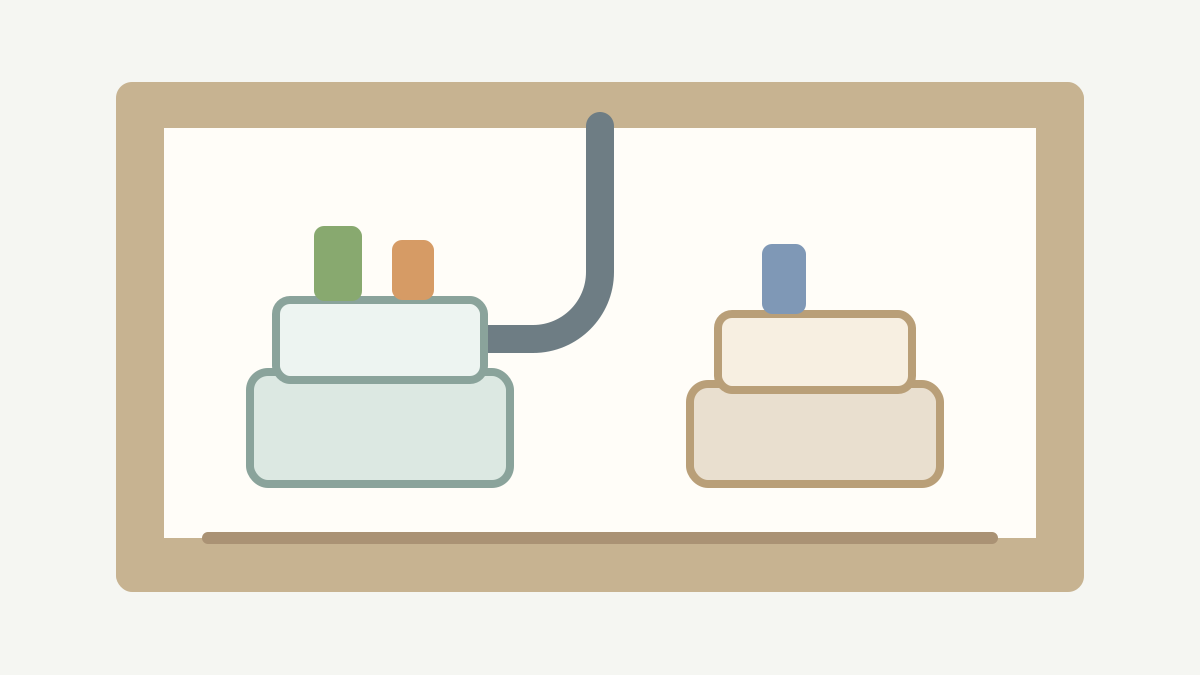
Quick answer: map access before shopping
Choose the smallest removable format that holds the items used weekly while leaving a hand-width route to every shutoff valve and a clear view of the cabinet floor. If you cannot reach a valve without unloading or lifting the organizer, the layout fails even when the rack technically fits.
- Draw the door opening, drain, supply lines, valves, disposal or filter, and lowest obstruction.
- Mark a no-storage service zone around anything that must remain reachable.
- Fit bins or pull-outs only in the remaining rectangles; do not shop from the cabinet's outside dimensions.
Shopping links after the decision: Use these affiliate shortcuts after you check the measurements, setup limits, and skip criteria in this guide.
- Browse category: Under Sink Organizer With Pipe ClearanceA relevant category to compare after applying the guide's fit checks.
- Browse category: Pull-Out Under-Sink OrganizersUseful upgrade or fit check when deep cabinets hide daily supplies.
- Browse category: Under-Sink Storage BinsGood modular option when plumbing leaves the cabinet layout awkward.
These links are shopping starting points, not test rankings. Confirm dimensions, materials, installation limits, cleaning needs, return policy, and whether the product solves your actual home problem before buying.
Start by measuring the real usable space
Printable cabinet-fit worksheet
| Measurement | Your number | Why it matters |
|---|---|---|
| Clear door opening (width × height) | _____ × _____ | A product wider than the opening cannot be installed even if the cabinet interior is wider. |
| Usable left rectangle (W × D × H) | _____ × _____ × _____ | Captures space beside plumbing, not behind it. |
| Usable right rectangle (W × D × H) | _____ × _____ × _____ | Often differs because of disposal or supply routing. |
| Lowest obstruction height | _____ | Sets the maximum assembled shelf or drawer height. |
| Valve reach path | _____ wide | Preserves access without unloading the cabinet. |
| Door/hinge sweep | _____ deep | Prevents handles and pull-outs from colliding. |
Hypothetical worked example: A cabinet interior is 30 inches wide, but a center stile leaves two 13-inch door openings. Plumbing consumes the middle 10 inches, leaving a 9 × 16-inch rectangle on the left and an 8 × 14-inch rectangle on the right after preserving valve access. A 24-inch-wide shelf advertised for a “30-inch cabinet” will not pass through either opening. Two bins no wider than the measured rectangles are the viable starting format. These are illustrative calculations, not measurements of a real installation.
Do not measure the cabinet like it is an empty box. Open the doors and measure around the obstacles that actually exist.
- Width: Measure the clear space on the left and right sides of the drainpipe or disposal.
- Depth: Measure from the front lip to the first obstruction in the back.
- Height: Measure from the cabinet floor to the lowest pipe, hose, disposal, or basin curve.
- Door opening: Measure the usable opening, especially if the cabinet has a center stile or narrow doors.
If the cabinet has a garbage disposal, pull-out trash setup, water filter, or bulky plumbing layout, assume you need a more flexible organizer rather than a full-width shelf. Renters should also check whether the organizer requires screws, adhesive pads, or door-mounted brackets before buying.
Must-have features
Adjustable shelves or offset tiers
Fixed two-tier shelves often fail under sinks because the drainpipe sits exactly where the middle shelf wants to go. Look for organizers with adjustable shelf panels, split shelving, or narrow side-by-side units that can sit around plumbing instead of fighting it.
A pull-out tray or drawer
Deep cabinets turn small bottles into a scavenger hunt. A pull-out tray helps you reach items in the back without unloading the front. This is especially useful for dish soap refills, sponges, dishwasher pods, trash bags, hair tools, or bathroom cleaning supplies.
Clear access to shutoff valves
Any organizer you choose should leave shutoff valves visible and reachable. You do not need professional plumbing knowledge to avoid blocking access. If something in the cabinet needs to be reached quickly, do not bury it behind a rigid rack full of products.
Easy-to-clean materials
Under-sink cabinets deal with drips, residue, dust, and occasional product leaks. Smooth plastic, coated metal, or wipeable trays are usually easier to maintain than unfinished wood or fabric bins.
Nice-to-have features
- Removable bins: Helpful for grouping sponges, gloves, and small bottles.
- Raised edges: Useful for catching small spills before they spread across the cabinet floor.
- Non-slip feet: Helpful if the cabinet floor is slick or slightly uneven.
- Transparent drawers: Good for bathrooms where small items disappear easily.
- Label space: Useful in family homes where several people use the same cabinet.
Which type should you buy?
Best for most kitchens: narrow pull-out organizers
A narrow pull-out organizer works well when one side of the cabinet has open vertical space. It keeps everyday supplies visible and leaves the pipe area alone. Choose this style if you mostly store dish soap, dishwasher detergent, scrub brushes, gloves, and trash bags.
Skip it if: your cabinet has very little depth, the door opening is narrow, or the organizer would block a shutoff valve.
Best for bathrooms: stackable drawers
Stackable drawers are useful for small bathroom items like extra toothpaste, razors, cotton rounds, soap refills, hair products, and travel bottles. Clear drawers are better than opaque bins if several people share the bathroom.
Skip it if: the drawers are too tall to fit below the sink basin or if the frame would sit directly in front of plumbing access.
Best for awkward plumbing: modular bins
When the cabinet layout is crowded, separate bins can be better than one large organizer. Use one bin for daily items, one for refills, and one for occasional-use supplies. This approach is also renter-friendly because it usually requires no installation.
Skip it if: you need everything to slide out smoothly. Bins are flexible, but they can still become cluttered if they are too deep.
Best for tall bottles: single-level trays
If you store tall spray bottles or large refills, a single-level pull-out tray may be more useful than a two-tier shelf. It will not double your vertical storage, but it makes the cabinet easier to use and clean.
Skip it if: you mostly store small items that would tip over or get lost without dividers.
Setup difficulty
Most under-sink organizers are simple to place in the cabinet, but pull-out units vary. Some freestanding pull-outs only need assembly. Others work best when screwed into the cabinet floor so they do not shift when pulled forward.
Renters should favor freestanding organizers, removable bins, or products that do not require drilling. If a product uses adhesive, check whether it can damage cabinet surfaces when removed.
Maintenance tips
- Use a removable liner or tray if you store liquids that may drip.
- Check the cabinet every few weeks for product leaks or damp spots.
- Keep heavy refill bottles on the bottom level, not on a high shelf.
- Store only what belongs under the sink. Overflow inventory belongs somewhere easier to inspect.
- Do not cram products around valves, hoses, or disposal parts.
If moisture protection is part of the reason you are reorganizing, compare organizers with the under-sink drip tray guide so storage access and leak containment do not work against each other.
When to stop and call a pro
An organizer will not solve a cabinet that has active leaking, water damage, soft flooring, mold-like growth, pest activity, or damaged plumbing parts. If you notice moisture, staining, loose fittings, recurring odors, or anything that looks unsafe, pause the storage project and contact the appropriate qualified professional or your landlord.
Bottom line
The best under-sink organizer is not always the biggest one. It is the one that fits the actual cabinet, keeps daily items reachable, and does not hide anything important. Measure around the plumbing, choose adjustable or modular storage when the layout is awkward, and leave yourself enough room to see what is happening inside the cabinet.
Sources and limits
The safety boundary in this guide follows the U.S. EPA WaterSense advice to find and fix household leaks rather than treating detection or storage as repair: EPA WaterSense, Fix a Leak Week (retrieved October 25, 2026). Product fit must come from the exact manufacturer's current dimensions and instructions; no named organizer was tested for this guide.