Broom and Dustpan vs Cordless Stick Vacuum for a Small Apartment
Choose a broom and dustpan when most quick messes are loose debris on compatible hard floors and you value instant setup, quiet operation, and no charging. Choose a cordless stick vacuum when rugs, floor seams, upholstery, or fine mixed debris make powered pickup useful enough to justify charging, filter care, and a larger storage system.
As an Amazon Associate, The Good Home Doc may earn from qualifying purchases.
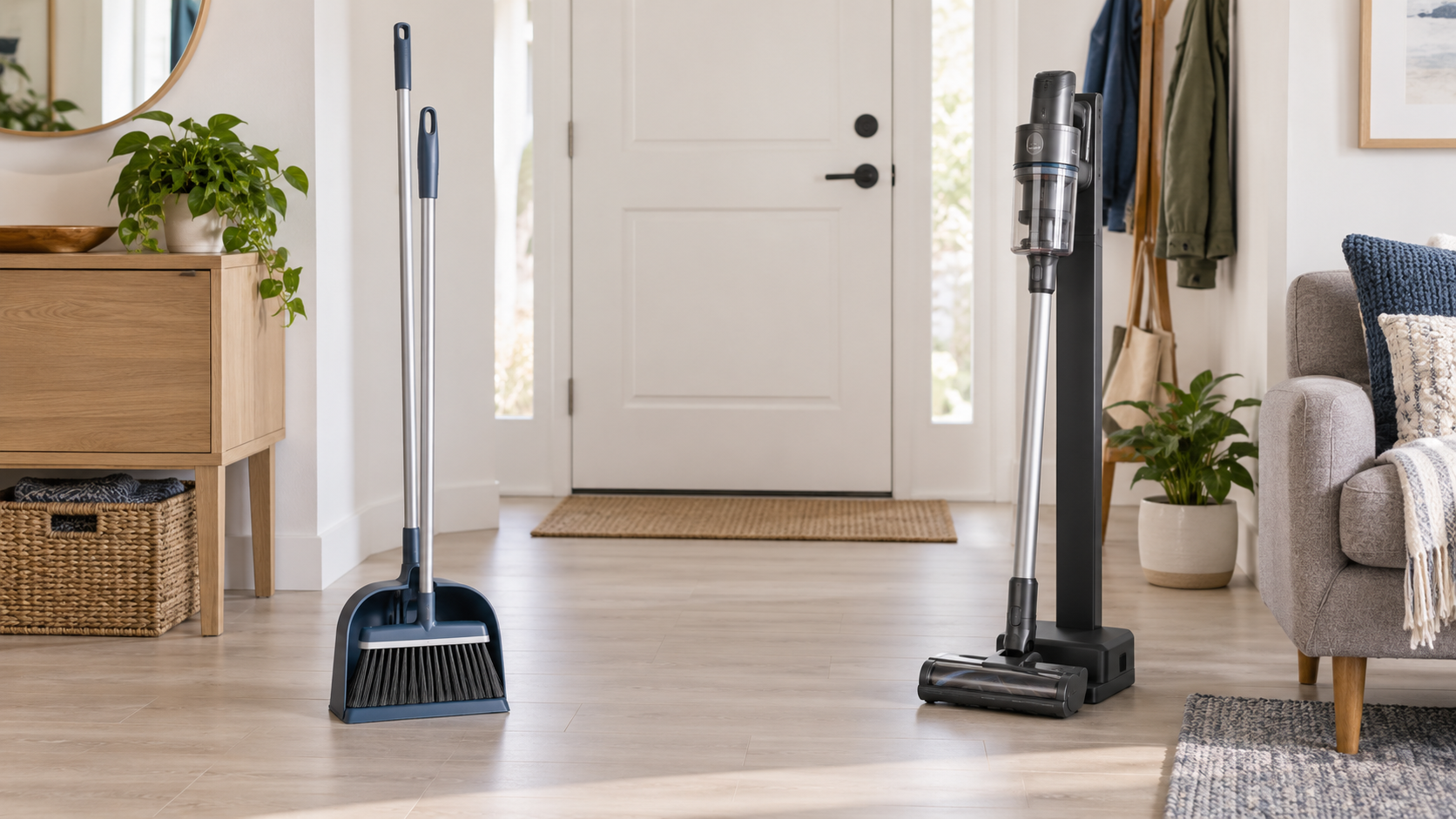
Quick decision before shopping
First measure the available space, identify the setup or surface constraints, and decide who will maintain the item. Skip the category if it blocks access, conflicts with the manufacturer's instructions or lease, or adds more upkeep than the problem justifies.
Compare the complete setup, not only the tool body: These affiliate category links are shopping starting points, not tested winners.
- Browse category: Compare upright broom and dustpan setsCheck handle height, bristle type, dustpan lip, comb edge, standing footprint, nesting, floor guidance, and cleaning instructions.
- Browse category: Compare cordless stick vacuumsCheck floor-head guidance, complete stored dimensions, charging method, battery terms, bin and filter access, attachments, and replacement-part route.
Category results change. Verify current manufacturer specifications, floor-care instructions, electrical guidance, warranty terms, and return conditions before ordering.
Quick Decision
- Choose the broom and dustpan for crumbs, dry soil, litter, and other visible loose debris on mostly hard floors when immediate access matters more than powered pickup.
- Choose the cordless stick vacuum when the normal route includes rugs, textured surfaces, floor gaps, upholstery, or debris that sweeping tends to scatter or leave behind.
- Keep a mixed system only if each tool has a distinct job and both have usable storage. In a tiny apartment, two inconvenient tools are not an upgrade.
Side-by-Side Tradeoffs
| Decision point | Broom and dustpan | Cordless stick vacuum |
|---|---|---|
| Best fit | Visible dry debris on compatible hard floors. | Mixed hard floors, rugs, edges, gaps, and attachment jobs. |
| Start-up | Ready immediately; no outlet, charge, or settings. | Fast only when charged, assembled, and accessible. |
| Storage | Tall, narrow set; bristles and pan should stay clean and supported. | Tool, floor head, charger, attachments, and ventilation need a planned home. |
| Upkeep | Remove hair, wash permitted parts, and dry fully. | Empty bin, clear brush roll, clean or replace filters, and care for the battery. |
| Noise | Quiet, though bristles and pan can scrape. | Motor and floor-head noise vary by mode and surface. |
| Ongoing inputs | Usually limited to eventual tool replacement. | Filters, batteries, rollers, or other parts may need replacement. |
Match the Tool to Floors and Debris
A broom works best when its bristles suit the floor and the debris stays loose enough to guide into the pan. Softer or flagged bristles can collect mixed crumbs and dust on smooth floors, while stiffer heads may move grit but may not suit every finish. Follow the flooring maker's care guidance; “hard floor” does not make every broom or vacuum head appropriate.
A stick vacuum earns the extra upkeep when suction and a suitable floor head solve jobs a broom handles poorly. Check whether the exact model permits use on the apartment's rugs and flooring, whether the roller can be disabled or changed when required, and whether attachments cover baseboards, upholstery, or narrow gaps. Avoid assuming a high-power label proves good pickup on every surface.
Setup, Charging, and Storage
Measure a broom set while nested and standing. A shallow closet may fit the handles but not the dustpan base. Store bristles without crushing them, keep the pan lip clean, and avoid a position where either handle falls into a walkway.
For a cordless vacuum, measure the complete dock or stand with the tool attached, all attachments, and the cord connected. Confirm that the specified outlet and charger reach the location without crossing a path. Renters should use a floor stand or manufacturer-approved non-wall storage when drilling is not permitted; do not improvise an adhesive mount for equipment the maker expects to be mechanically secured.
Cleaning and Maintenance
A broom still needs care. Hair winds around bristles, fine debris collects at the head, and a dirty dustpan lip leaves a frustrating line behind. Remove debris, wash only as directed, and let permitted wet-cleaned parts dry fully before storage.
A cordless vacuum adds a bin, filter, floor head, air path, and battery. Check how the bin opens, whether emptying puts your hand near collected debris, how filters are cleaned and dried, how hair is removed from the roller, and whether replacements remain available. Never reinstall a washable filter before the maker says it is fully dry, and stop using damaged electrical parts.
Who Each Option Fits
A broom and dustpan fits a mostly hard-floor studio, a household that handles quick visible messes as they happen, anyone who values quiet cleaning, and renters without a convenient charging location.
A cordless stick vacuum fits an apartment with area rugs or several surface types, pet hair or fine mixed debris, useful above-floor attachment jobs, and a resident willing to empty and maintain the machine after short sessions.
A two-tool setup fits when the broom stays beside a frequent spill zone and the vacuum handles the scheduled whole-apartment route. Assign the jobs before buying; otherwise one tool is likely to become stored clutter.
Who Should Skip Each Format?
Skip the broom as the primary tool if most flooring is carpet, debris settles into rugs or seams, sweeping aggravates dust concerns, or grip, bending, and dustpan use make the routine difficult. A long-handled pan reduces bending for some users but does not make every set accessible.
Skip the cordless stick vacuum if there is no safe charging and storage spot, the realistic runtime does not cover the route, replacement filters or batteries are unclear, emptying creates an unacceptable mess, or the household will not maintain the brush roll and filter.
Skip both as a forced either-or choice if the apartment needs a compact corded vacuum, handheld vacuum, robot vacuum, damp floor-care tool, or professional cleaning support for the actual surfaces and accessibility needs.
Buying Checklist
- List the apartment's hard floors, rugs, thresholds, upholstery, and common debris.
- Check the floor or rug maker's cleaning guidance before choosing bristles or a powered head.
- Measure the complete stored setup, including pan base, charger, cord, and attachments.
- For a vacuum, confirm charging time, documented runtime basis, battery terms, filter care, bin emptying, and replacement parts.
- For a broom set, confirm handle height, bristle care, dustpan-lip contact, nesting, and stable storage.
- Choose the tool whose full cleanup and maintenance routine you will actually complete.
Next Steps
If manual cleaning matches the apartment, use the broom and dustpan guide to compare handle, head, pan, and storage formats. If powered pickup wins, use the cordless stick vacuum guide to check floor heads, charging, bin care, filters, and attachments. Readers considering automation should compare a robot vacuum with a cordless stick vacuum as a separate scheduled-cleaning decision.
Bottom Line
A broom and dustpan is the practical default for immediate, quiet pickup of loose debris on mostly hard floors. A cordless stick vacuum is the stronger primary tool when rugs, crevices, upholstery, or mixed debris justify powered pickup and its maintenance system. Let the apartment's surfaces, stored footprint, cleanup route, and upkeep tolerance decide.
Next step: Put this decision in context with the renter-friendly upgrades guide.