How to Choose Washable Oven Mitts for Small Home Kitchens
A small kitchen does not need a drawer full of heat-handling gear. It needs a pair that fits the people cooking, gives suitable hand and wrist coverage, keeps a usable grip, and can be cleaned and dried exactly as its maker directs. Start with those constraints, then choose the simplest format that handles your real pans and storage space.
As an Amazon Associate, The Good Home Doc may earn from qualifying purchases.
Quick decision before shopping
First measure the available space, identify the setup or surface constraints, and decide who will maintain the item. Skip the category if it blocks access, conflicts with the manufacturer's instructions or lease, or adds more upkeep than the problem justifies.
Compare the format that fits your pans and storage:
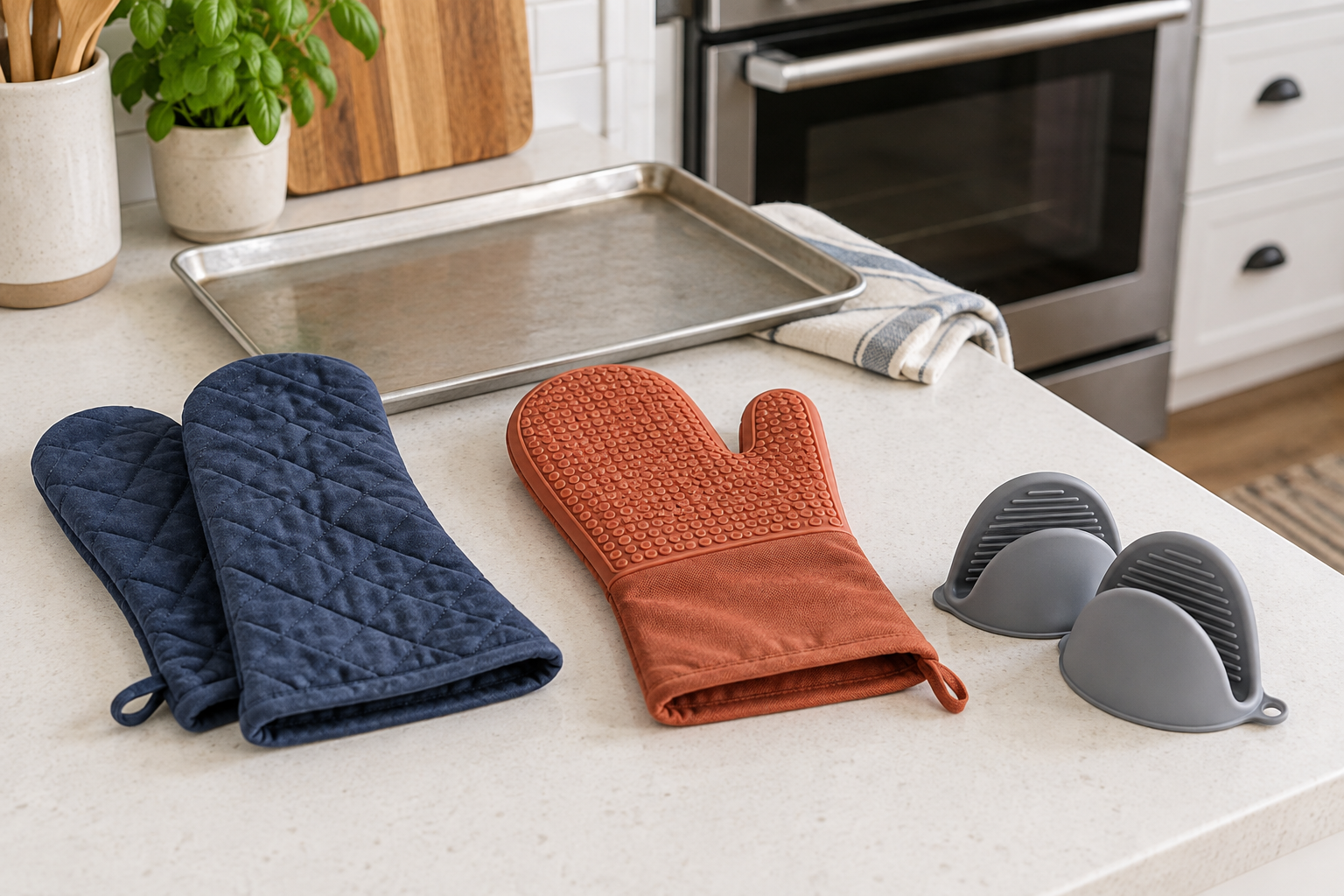
- Browse category: Compare washable quilted oven mittsCheck hand dimensions, cuff length, care label, drying method, hanging loop, and current heat-use instructions.
- Browse category: Compare silicone-grip fabric mittsCheck grip coverage, seam construction, flexibility, inner lining, wash method, and maker warnings.
- Browse category: Compare compact silicone pinch mittsConfirm the limited coverage works for the exact handles and dishes you move.
These are category searches, not tested rankings. Confirm current dimensions, materials, care, drying, inspection, replacement, wet-use, steam, and heat-use instructions before buying or using any mitt.
This guide compares washable oven-mitt formats, not specific models. Materials, construction, laundering instructions, and heat-use limits vary by product. Use the current maker instructions for the exact pair in your kitchen rather than treating a material name as a performance guarantee.
Quick Best-Fit Guide
- Full quilted fabric mitt: a flexible, familiar choice when the exact pair fits securely and its care routine is manageable.
- Silicone-grip fabric mitt: useful when you want a fabric body with a textured gripping surface, provided seams and lining stay in good condition.
- Full silicone mitt: worth comparing when wipe-clean outer material matters, but lining, flexibility, cuff coverage, and care still need checking.
- Compact pinch mitt: best reserved for short, simple moves with compatible handles when limited coverage is acceptable.
Fit Comes Before Material
Measure from the wrist crease to the tip of the longest finger and across the widest part of the hand, then compare those measurements with the maker's size information. A mitt that is too loose can twist or reduce control. One that is too tight can limit finger movement and make it harder to establish a stable grip before lifting.
Check whether the shape is handed, ambidextrous, sold as a pair, or designed for a particular grip. If more than one person cooks, fit the smallest and largest regular user rather than assuming one oversized pair works for everyone. A second size may be more useful than extra features.
Coverage Should Match the Cookware
Short mitts save drawer space, but coverage matters around deep ovens, large roasting pans, sheet pans, and dishes with handles close to hot surfaces. Compare total length, cuff length, cuff opening, and the portion of the hand actually covered. Make sure the cuff does not interfere with sleeves or restrict wrist movement.
Compact pinch mitts expose more of the hand and wrist. They are a poor default for deep reach, broad pans, awkward dishes, or any move that brings uncovered skin close to a hot surface. Choose the format for the most demanding routine move you can perform according to the cookware and mitt instructions.
Quilted Fabric Mitts
Quilted mitts can offer flexibility and a familiar full-hand shape. Compare the outer fabric, insulation construction, lining, stitching, cuff, and grip treatment. Do not infer protection from thickness alone: compression, wear, seams, and the maker's documented use conditions all matter.
Fabric models can absorb water and cooking spills. Follow the care label and do not use a mitt while wet or damp unless its manufacturer explicitly permits that condition. Water and steam can create a serious burn risk. Let a washed mitt dry fully by the documented method before returning it to service.
Silicone-Grip Fabric Mitts
These combine a fabric or insulated body with a textured silicone gripping area. The added texture may help control compatible cookware, but it does not correct poor sizing or an awkward lifting angle. Look at how far the grip surface extends across the palm, fingers, and thumb, and whether the hand can close comfortably around your smallest and largest handles.
Inspect the boundary between materials, the lining, and every seam. Follow the exact laundering and drying directions; mixed-material construction may have different care limits from an all-fabric towel or all-silicone tool.
Full Silicone and Compact Silicone Mitts
A silicone outer surface may be easier to wipe, but the category includes very different shapes and linings. Some full mitts use a separate inner liner; some compact styles cover only the fingertips and part of the palm. Compare flexibility, interior texture, cuff coverage, seams, hanging design, and whether the stated care method reaches the areas that collect moisture or residue.
Do not assume every silicone item is suitable for the dishwasher, washing machine, or the same heat exposure. Follow product-specific cleaning and use directions. Skip a compact format if its limited coverage causes you to reach farther, pinch an unstable edge, or place uncovered skin near a hot pan.
Heat-Use Claims Need Context
A temperature number without exposure time, test basis, and use instructions is not enough to compare mitts. Look for manufacturer documentation covering the intended use, maximum contact conditions, wet-use restrictions, steam warnings, and signs that require replacement. Do not use a mitt to touch an open flame, heating element, or any surface the maker excludes.
Plan the move before opening the oven: clear the landing space, confirm the mitts are dry and undamaged, establish a balanced grip with both hands when appropriate, and move the cookware without pausing. If a vessel is too heavy, unstable, damaged, or difficult to grasp safely, stop and change the setup rather than relying on thicker mitts.
Washing, Drying, and Inspection
“Washable” can mean machine washable, hand washable, or wipe clean. Record the allowed water temperature, detergent restrictions, drying method, and whether liners must be repositioned after washing. A pair that takes a long time to dry needs a storage spot with airflow and perhaps a backup pair.
Before each use, check for holes, thinned areas, separated seams, damaged grip surfaces, compressed insulation, distorted liners, and lingering dampness. Retire a mitt when it reaches the maker's replacement criteria or damage makes coverage and control uncertain. Washing does not restore worn insulation.
Small-Kitchen Storage
Measure the drawer, hook, rail, or cabinet location with the mitts folded as their maker permits. Hanging loops can keep bulky pairs accessible and help with airflow, but the location should stay away from burners, hot appliance surfaces, and splashes. Do not hang mitts from an oven-door handle if that conflicts with appliance guidance or places them near heat.
One well-fitting pair plus a clearly stored backup can be more practical than several mismatched mitts. Keep pairs together so a rushed cook does not discover one missing after the oven is open.
Must-Haves Before Nice-to-Haves
Must-Haves
- A secure hand fit and usable finger movement for the regular cook.
- Coverage suited to the cookware, oven depth, and planned grip.
- Current, specific heat-use, wet-use, steam, cleaning, drying, inspection, and replacement instructions.
- A gripping surface and shape that work with the household's actual handles and pan edges.
- A storage and drying location away from heat and splashes.
Nice-to-Haves
- Hanging loops that fit the planned hook.
- Different sizes or colors for household members.
- A flexible cuff that stores compactly without compromising coverage.
- A removable liner only when its cleaning and reassembly directions are clear.
Who Should Skip Each Format
- Skip loose one-size mitts if they rotate, slip, or prevent a stable grip.
- Skip compact pinch mitts for deep-oven reach, large pans, awkward dishes, or anyone needing wrist and forearm coverage.
- Skip fabric-heavy formats if your routine makes it difficult to keep them clean and fully dry between uses.
- Skip mixed-material mitts when the care directions are unclear or seams and lining are hard to inspect.
- Skip any pair with undocumented use limits, visible damage, dampness, or a shape that does not match the intended cookware.
Buying Checklist
- Measure each regular user's hand and the available storage location.
- List the largest, deepest, and most awkward cookware you routinely move.
- Choose the required hand, wrist, and cuff coverage before comparing materials.
- Verify current dimensions, handedness, materials, construction, and grip coverage.
- Read the exact heat-use, wet-use, steam, cleaning, drying, inspection, and replacement directions.
- Confirm the pair allows a stable grip on your actual handles without excess looseness.
- Plan a dry, accessible storage spot and a backup for wash day.
Bottom Line
The best washable oven mitt for a small kitchen is the least bulky format that fits securely, covers the real task, grips the household's cookware, and can be cleaned, dried, inspected, and stored as directed. Full fabric and silicone-grip fabric mitts are the broadest starting points; full silicone and compact pinch styles deserve a closer look only when their fit, coverage, and documented use limits match the job.