How to Choose Toilet Paper Holders with Storage for Small Bathrooms
A toilet paper holder with storage is useful only when it keeps the active roll easy to reach and backup rolls dry without crowding the toilet. The best format fits the rolls you actually buy, stays steady during one-handed use, and leaves enough room to sit, clean, and move normally.
As an Amazon Associate, The Good Home Doc may earn from qualifying purchases.
Quick decision before shopping
First measure the available space, identify the setup or surface constraints, and decide who will maintain the item. Skip the category if it blocks access, conflicts with the manufacturer's instructions or lease, or adds more upkeep than the problem justifies.
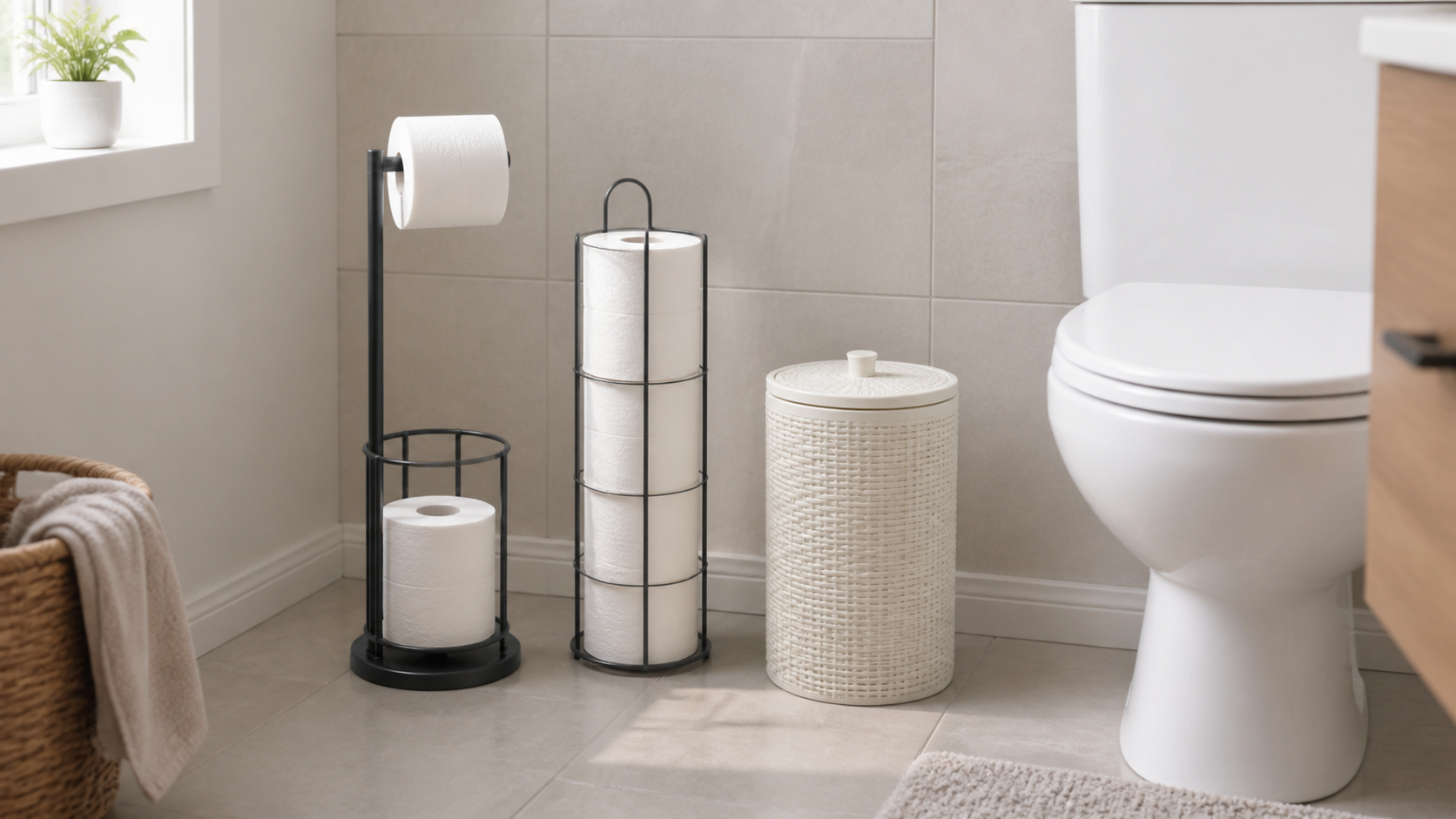
Compare the storage format that fits your floor space and routine:
- Browse category: Compare freestanding holders with reserve storageCombines dispensing and backup storage, but base size, roll clearance, and stability need checking.
- Browse category: Compare slim reserve-roll towersUseful beside an existing wall holder when floor width is tight and quick restocking matters.
- Browse category: Compare covered toilet paper canistersOffers more splash and dust protection, with a lid and capacity tradeoff.
These are category searches, not tested rankings. Confirm current dimensions, usable roll capacity, material, assembly, cleaning instructions, stability guidance, and return terms before buying.
This guide covers floor-standing dispensing and reserve-roll storage, not wall-mounted plumbing work or broad bathroom shelving. It does not name product winners or claim hands-on testing. Use the framework below to choose a format, then verify the current listing.
Quick Best-Fit Guide
- Best all-in-one format: a freestanding dispenser with a weighted or broad base and reserve storage below.
- Best beside an existing wall holder: a narrow reserve-roll tower that makes each roll easy to lift out.
- Best near occasional splashes: a covered canister positioned outside the direct splash zone.
- Best for easy cleaning: an open, simple frame that lifts with one hand and has few seams.
- Best when floor clearance is already tight: skip the category and use measured cabinet or over-toilet storage.
Measure the Bathroom and the Rolls
Measure the available floor rectangle at the holder's widest points, including feet, handles, lids, and any roll overhang. Keep the toilet seat area, flush control, vanity doors, drawers, waste bin, heater vents, and normal walking path clear. A paper outline on the floor makes an advertised footprint easier to judge.
Measure a fresh roll across its diameter and width. Larger rolls may rub a dispenser post, fail to enter a narrow tower, or reduce stated reserve capacity. Check the inner tube too if the dispenser arm or spindle has an unusual shape.
Comparison Framework
Freestanding Dispensers with Reserve Storage
This format puts the active roll at hand height and stores backups near the base. It is convenient when a wall holder is absent or awkward, but the tall post creates leverage. A small or light base can shift while tearing paper.
Choose one when: you need dispensing and storage together, can place a stable base on level flooring, and the arm clears your usual rolls.
Slim Reserve-Roll Towers
An open tower uses a narrow vertical footprint and makes stock easy to see. It works with an existing dispenser, but the bottom roll sits closest to floor dust and splashes. Internal width and the way rolls load matter more than advertised count.
Choose one when: you already have a usable dispenser and want a simple, narrow place for two or three backups.
Covered Canisters
A lidded canister hides rolls and adds a barrier against dust and incidental droplets. It also adds a two-handed step, can trap moisture if wet rolls or surfaces are enclosed, and may be harder to clean around textured sides.
Choose one when: concealed storage and basic splash protection matter more than the fastest refill.
Must-Have Buying Checks
- Verified footprint: Include the widest point, not only the base diameter.
- Real roll compatibility: Check internal width, opening, spindle clearance, and capacity with your usual rolls.
- Stable use: Look for a broad or weighted base, level contact points, and maker assembly guidance.
- Cleaning access: The holder should lift easily so the floor and base can be wiped and dried.
- Bathroom-suitable care: Follow material instructions and inspect coated metal, seams, and fasteners for wear or corrosion.
- Sensible placement: Keep paper away from direct shower, tub, sink, and toilet splashes.
Nice-to-Have Features
- A raised bottom: Helps keep the lowest roll off the floor, though it does not make the paper waterproof.
- A simple carry loop: Useful for moving a reserve tower during cleaning.
- A roll stop: Helps keep the active roll on an open dispenser arm without complicating reloading.
- A smooth removable lid: Easier to wipe than deep decorative texture.
What to Avoid
Avoid choosing by claimed roll count alone. Capacity can assume narrower rolls than your household uses. Skip a design that rocks empty, requires squeezing rolls through a tight opening, blocks sitting space, or must be wedged between the toilet and wall.
Do not treat a covered holder as sealed moisture protection. Paper that becomes damp should be discarded, and a wet holder should be cleaned and dried according to its care instructions before restocking. Persistent leaks, condensation, or dampness need the source addressed rather than hidden by storage.
Who Should Skip This Category
- Skip floor-standing storage if it narrows the safe path or makes toilet transfers and cleaning harder.
- Skip open towers in a direct splash zone or where curious pets regularly reach the rolls.
- Skip metal formats when the maker's material and bathroom-care guidance are unclear.
- Skip an all-in-one dispenser if the existing wall holder already works and cabinet storage keeps backups drier.
- Skip added storage if it encourages buying more rolls than the room can keep clean and accessible.
Buying Checklist
- Measure the open floor footprint and movement clearance.
- Measure a fresh roll's diameter and width.
- Decide whether you need dispensing, reserve storage, or both.
- Compare base stability, loading method, usable capacity, and splash exposure.
- Check materials, seams, cleaning access, and assembly.
- Confirm that normal toilet use, drawers, doors, and floor cleaning remain easy.
- Use cabinet or over-the-toilet storage instead if the floor is already crowded.
Bottom Line
A stable freestanding dispenser is the practical all-in-one starting point, a slim tower suits backup rolls beside an existing holder, and a covered canister offers tidier, more protected storage. The best choice is the one that fits your rolls and available floor space while keeping paper dry, reachable, and easy to clean around.