How to Choose Sink Splash Guards for Kitchen Faucets
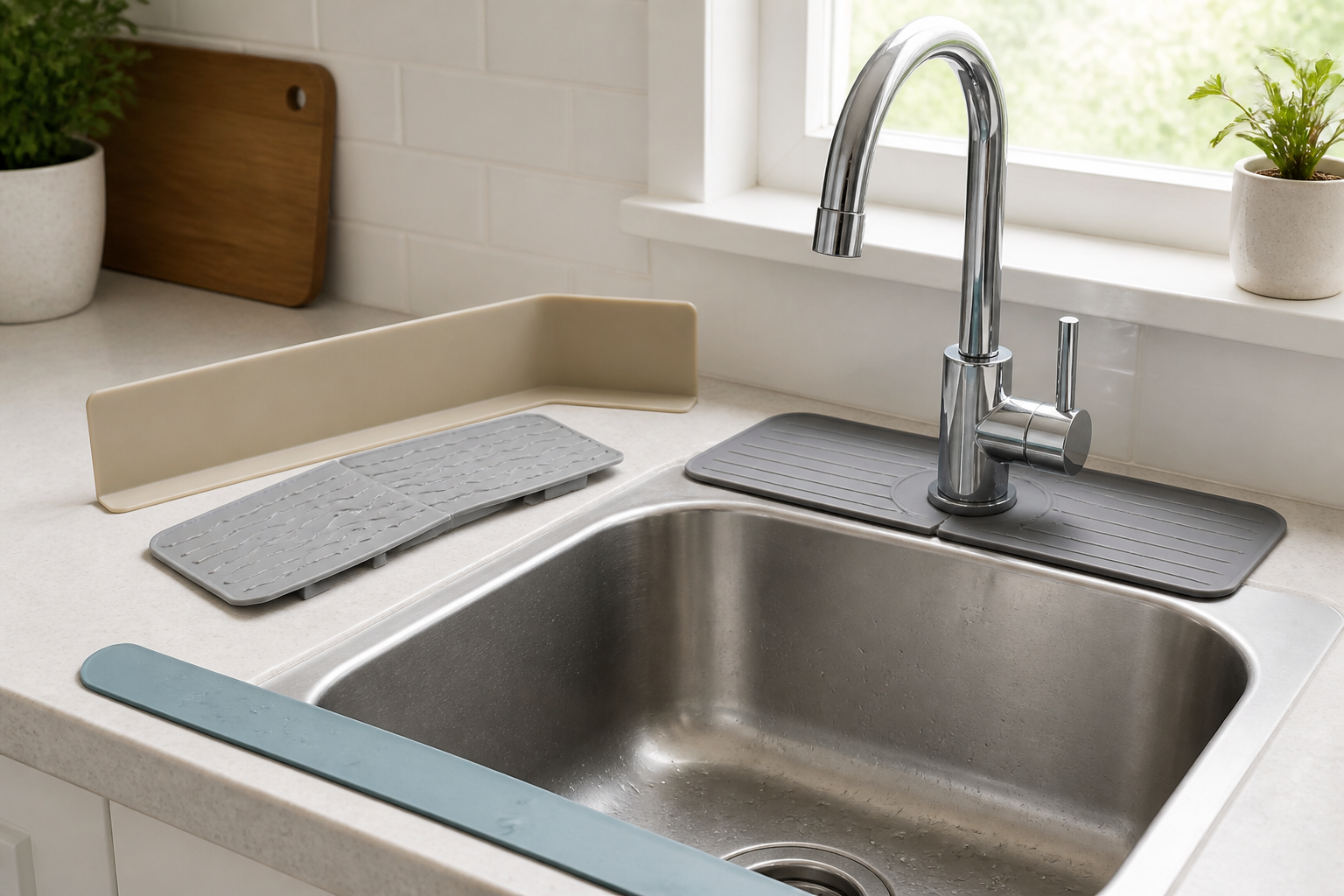
A kitchen sink splash guard can make routine droplets easier to contain, but only when it fits the faucet base, lies flat on the counter, and sends water somewhere useful. Measure the faucet and the available counter ledge before choosing a silicone mat, sink-edge strip, or raised barrier.
As an Amazon Associate, The Good Home Doc may earn from qualifying purchases.
Quick decision before shopping
First measure the available space, identify the setup or surface constraints, and decide who will maintain the item. Skip the category if it blocks access, conflicts with the manufacturer's instructions or lease, or adds more upkeep than the problem justifies.
Compare the guard format with your faucet and counter:
- Browse category: Compare silicone faucet mats for kitchen sinksCheck the faucet opening, mat depth, drainage direction, and counter clearance.
- Browse category: Compare removable sink-edge splash guardsPrioritize edge fit, stability, cleaning access, and a height that does not obstruct the sink.
- Browse category: Compare silicone sink splash barriersVerify the usable length, counter contact, drainage, and material-care instructions.
These are category searches, not tested rankings. Confirm current dimensions, materials, drainage design, surface guidance, cleaning instructions, return terms, and compatibility for the exact guard you consider.
This guide compares removable splash-guard categories without naming winners or claiming hands-on testing. These products manage ordinary water around a working sink; they do not repair a loose faucet, failed seal, leaking supply line, damaged counter seam, or plumbing problem.
Quick Best-Fit Guide
- Best for droplets around a single-hole faucet: a fitted silicone mat whose opening matches the faucet base and whose channels drain toward the basin.
- Best for splashes along an exposed sink edge: a low removable strip that sits flat without blocking normal sink access.
- Best for a corner or side splash path: a short raised barrier sized to the exact counter section.
- Best when the counter is uneven or heavily seamed: skip a flexible guard unless it can lie flat and be lifted for drying.
- Best for active or recurring water at the faucet mount: skip the accessory and have the source checked.
Measure the Faucet and Counter First
Measure the faucet-base diameter and note any handle, soap dispenser, sprayer, window trim, backsplash, or sink lip that shares the space. For a pre-cut mat, compare the stated opening with the widest part that must pass through it. A stretchable opening still needs to sit without pulling the mat upward.
Measure the ledge from the faucet centerline to the backsplash and basin edge. Then note whether the counter slopes toward the sink. A mat with drainage channels cannot drain uphill, and a deep mat may cover a seam or interfere with a rear-mounted handle.
Comparison Framework
Fitted Silicone Faucet Mats
These mats wrap around the faucet base and collect routine droplets from wet hands. Sloped channels may direct water toward the basin when the mat, faucet, and counter geometry align.
Choose this format when: the opening fits closely, the mat can sit flat, and its front edge reaches the basin without bridging a raised rim. Watch for curled edges, channels that end on the counter, and cut-to-fit openings that may tear or remain uneven.
Removable Sink-Edge Guards
Low strips or rails sit along an exposed edge where washing repeatedly sends droplets onto the counter. They are easier to position away from the faucet but need enough contact area to resist shifting.
Choose this format when: the splash path is predictable and the counter offers a flat, clean landing zone. Avoid a tall barrier that catches handles, cookware, sleeves, or cleaning tools.
Raised Corner or Side Barriers
Short raised barriers can address one side of a sink next to a wall, appliance, or preparation area. They contain rather than absorb, so water still needs a route back to the basin or a simple wipe-up routine.
Choose this format when: one clearly defined edge receives most of the routine splash. A barrier is a poor fit if it traps water against grout, caulk, a counter seam, or an absorbent surface.
Must-Have Buying Checks
- Faucet opening: Compare the inside opening and cut guidance with the full faucet-base shape.
- Usable dimensions: Measure depth, width, and every nearby fixture rather than relying on a listing photo.
- Drainage direction: Confirm that grooves or a slope terminate over the basin on your sink geometry.
- Flat contact: The guard should not rock over caulk beads, seams, raised rims, or textured counter material.
- Removable cleaning: Choose a design you can lift, wash, and dry on both sides.
- Surface compatibility: Follow the counter, sink, faucet, and guard makers' care guidance.
Nice-to-Have Features
- Trim guidance: Clearly marked cut lines can help only when the maker permits trimming and the final opening remains intact.
- A low front profile: Reduces interference with sink access while still directing small droplets.
- Simple channels: Broad, reachable grooves are generally easier to wipe than dense decorative ridges.
- Neutral visibility: A color that makes standing water or residue easy to see supports routine cleaning.
Setup and Maintenance
Clean and dry the counter and guard according to their material instructions before setup. Position the guard without covering loose caulk, an open seam, faucet hardware that needs service, or a control that must move freely. Run the faucet normally and use a small amount of clean water to confirm where droplets travel; do not flood the counter to test it.
Lift the guard regularly and dry the underside and counter. Wash away soap film and food residue before it accumulates in channels. Replace a guard that stays curled, cracks, tears around the opening, develops residue that cannot be removed, or no longer sits flat.
Who Should Skip a Sink Splash Guard
- Skip one if water appears from beneath the faucet base, inside the cabinet, or around plumbing connections.
- Skip a fitted mat when nearby handles or fixtures prevent it from lying flat.
- Skip a raised barrier in a narrow work zone where it will snag cookware, clothing, or cleaning tools.
- Skip any design that traps water against a seam, backsplash joint, grout line, wood edge, or damaged surface.
- Skip adhesive formats when the counter maker or lease terms do not permit them.
- Skip the category if wiping the counter is faster and more reliable than lifting and cleaning another accessory.
Buying Checklist
- Identify whether the water is ordinary sink splash or a leak that needs attention.
- Measure the faucet base, counter depth, basin edge, and nearby controls or dispensers.
- Map the real splash path and the counter's drainage slope.
- Compare fitted mats, low edge guards, and raised barriers by that measured path.
- Verify material care, trimming rules, surface compatibility, and return terms.
- Plan how often you will lift, wash, and dry both sides.
When the Problem Is More Than Splash
Stop using the guard as the answer if water returns beneath the faucet, around a counter seam, or inside the cabinet; if the faucet moves at its mount; or if the counter swells, stains, or softens. Renters should document the condition and contact the landlord or property manager. Homeowners should use a qualified plumber or appropriate counter professional for diagnosis and repair.
Bottom Line
A fitted silicone faucet mat is the practical starting format when its opening, depth, and drainage path match the sink. A removable edge guard fits a predictable splash zone, while a raised barrier is for one specific side or corner. The right option lies flat, drains or wipes clean easily, stays out of the workflow, and never hides a leak or damaged surface.