How to Choose Freestanding Coat Racks for Apartments
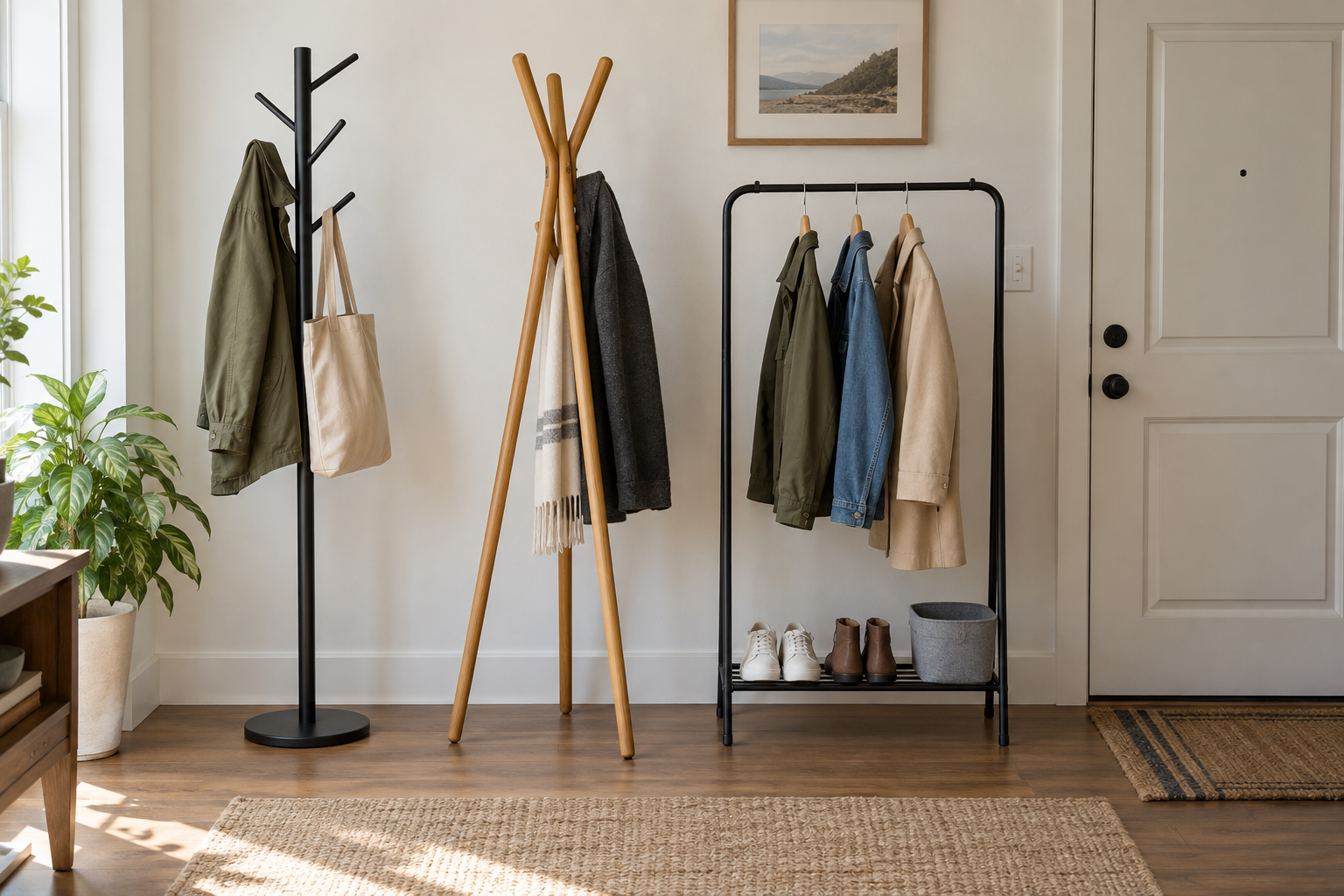
For most renters, the right coat rack is a stable freestanding model that fits the clear floor area without narrowing the doorway. A slim tree rack saves width, a tripod spreads support across a wider base, and a garment-rack format makes hanger space easier to see. Measure the base and the longest hanging item before choosing—not just the rack's height.
As an Amazon Associate, The Good Home Doc may earn from qualifying purchases.
Quick decision before shopping
First measure the available space, identify the setup or surface constraints, and decide who will maintain the item. Skip the category if it blocks access, conflicts with the manufacturer's instructions or lease, or adds more upkeep than the problem justifies.
Compare formats after measuring the full base: Browse category: Browse freestanding coat racks for apartments.
This is a product-category shortcut, not a tested ranking. Verify current assembled dimensions, base footprint, rack weight, stated load and distribution instructions, hook or rail layout, assembly, floor-care guidance, included stabilization instructions, warnings, and return terms.
Choose the format by the storage problem
| Format | Usually suits | Check closely |
|---|---|---|
| Slim tree rack with a round or weighted base | A few daily coats and bags in a tight corner | Base diameter, hook reach, load distribution, and whether long items touch the floor |
| Tripod or splayed-leg rack | Renters who want visible support points and hooks at several heights | Leg spread, toe-level trip points, uneven loading, and floor contact |
| Garment-rack style with a rail | Several jackets on hangers or a flexible coat-and-shoe zone | Full width, hanger swing, rail height, lower-shelf clearance, and caster or foot instructions |
These are formats, not performance guarantees. A broad-looking base is not automatically stable, and a compact rack is not automatically easy to move. Use the exact product's documentation and dimensions.
Measure the base, coats, and walking route
Mark the complete base footprint on the floor with removable paper or painter's tape only if the flooring guidance allows it. Open the door fully and walk through while carrying a bag. Keep the rack clear of the door swing, exit route, heater, vent, electrical panel, and anything that needs regular access.
Then measure vertically. Compare the lowest hook or rail with the longest coat, scarf, umbrella, or tote you intend to hang. Fabric dragging on the floor collects grit and moisture. Also allow sideways room for sleeves and hanger shoulders; the frame dimensions do not include the clothes that project beyond it.
Stability depends on the real daily load
Read the maker's total-load and per-hook guidance when provided, including any instructions about distributing weight. Heavy bags and several coats on one side can change how a rack behaves. Load and unload it in the sequence the instructions describe, and do not let a convenient hook become storage for groceries, luggage, sports gear, or other items the rack was not designed to hold.
A freestanding product avoids wall holes, but that does not make every placement appropriate for a rental. Follow any included anti-tip or stabilization instructions. If those instructions require wall attachment, ask the landlord before buying or installing it. Never omit required hardware just to preserve the wall.
Check the rental floor and nearby surfaces
Look at every foot, cap, or base pad before assembly. Confirm that the product guidance permits the intended hard floor or carpet. Added felt or rubber pads can shift, change level contact, or conflict with the instructions, so do not assume an aftermarket pad is harmless. Clean trapped grit and lift the rack according to its directions rather than dragging it.
Leave space between hanging hardware and painted walls, trim, mirrors, or doors. Moving coats, exposed fasteners, and swiveling hooks can rub nearby finishes. No product can promise a damage-free move-out; floor finish, dirt, moisture, load, movement, and time all affect marking risk.
Assembly and portability matter in apartments
Before buying, compare the packaged dimensions with stairways, elevators, hallway turns, and the apartment door. For assembly, identify the widest completed section and whether the rack can be disassembled for a move. Keep the instructions, supplied tool, spare hardware, and original wall-stabilization parts together.
During setup, use every required fastener in the specified position and tighten it only as instructed. Recheck joints on the schedule the maker gives. Stop using a rack that leans, rocks, has cracked parts, loose hooks, missing feet, bent hardware, or fasteners that will not remain secure. Do not improvise a structural repair.
Must-haves and nice-to-haves
Must-haves
- A measured base that leaves the door and walking route clear.
- Enough height and sideways clearance for the actual coats or hangers.
- Documented assembly, intended use, load distribution, and care guidance.
- Complete, level floor contact on the intended surface.
- A loading routine that does not concentrate every heavy item on one side.
- A move-out plan that fits the building route and your next storage space.
Nice-to-haves
- Hooks at different usable heights without sharp projections into the walkway.
- A lower shelf for light, dry items when it does not block cleaning.
- Replaceable maker-approved feet or caps.
- A frame that disassembles into manageable sections and keeps standard hardware together.
Noise, cleaning, and maintenance
A rack can create apartment noise when loose joints click, hangers knock against a rail, or hard feet shift on the floor. Correct assembly and balanced loading come first. If hangers are the main noise source, choose a compatible hanger format rather than wrapping or modifying the rail without approval from the manufacturer.
Dust the base and floor beneath it, dry wet outerwear elsewhere when the rack's care guidance calls for it, and inspect connections, hooks, rail, feet, and finish regularly. Do not place damp fabric against walls or leave water pooled around the base. Persistent moisture, wall staining, or a building leak belongs in a landlord maintenance request, not a storage-product workaround.
Who should skip a freestanding coat rack?
- Renters whose only placement narrows an exit, doorway, or busy walkway.
- Homes with no product that can follow its required stabilization instructions under the lease.
- Households needing storage for very heavy bags, equipment, or a large seasonal wardrobe; a permitted closet system or cabinet may fit better.
- Anyone who cannot assemble, balance, inspect, or move the rack as directed.
- Homes where children or pets are likely to climb, pull, or collide with an exposed rack; choose a more suitable storage plan and follow product warnings.
- People who need a mobility support, grab point, or transfer aid; an ordinary coat rack is not designed for that use.
Bottom line
A freestanding coat rack can solve a renter's coat-storage problem without drilling, but the no-drill label is only the start. Choose among a tree, tripod, and garment-rack format by measuring the complete footprint, garment clearance, door swing, walking route, floor contact, assembly, load distribution, and moving plan. Skip the category when safe placement or required stabilization does not fit the apartment or lease.