How to Choose Collapsible Laundry Baskets for Small Apartments
A collapsible laundry basket earns its storage space only when it carries a real load comfortably and becomes meaningfully smaller afterward. For an apartment, compare the open basket, the collapsed package, and the complete route to the washer. Handles, stairs, ventilation, cleaning, and resistance to folding at the wrong moment matter more than a vague “space-saving” label.
As an Amazon Associate, The Good Home Doc may earn from qualifying purchases.
Quick decision before shopping
First measure the available space, identify the setup or surface constraints, and decide who will maintain the item. Skip the category if it blocks access, conflicts with the manufacturer's instructions or lease, or adds more upkeep than the problem justifies.
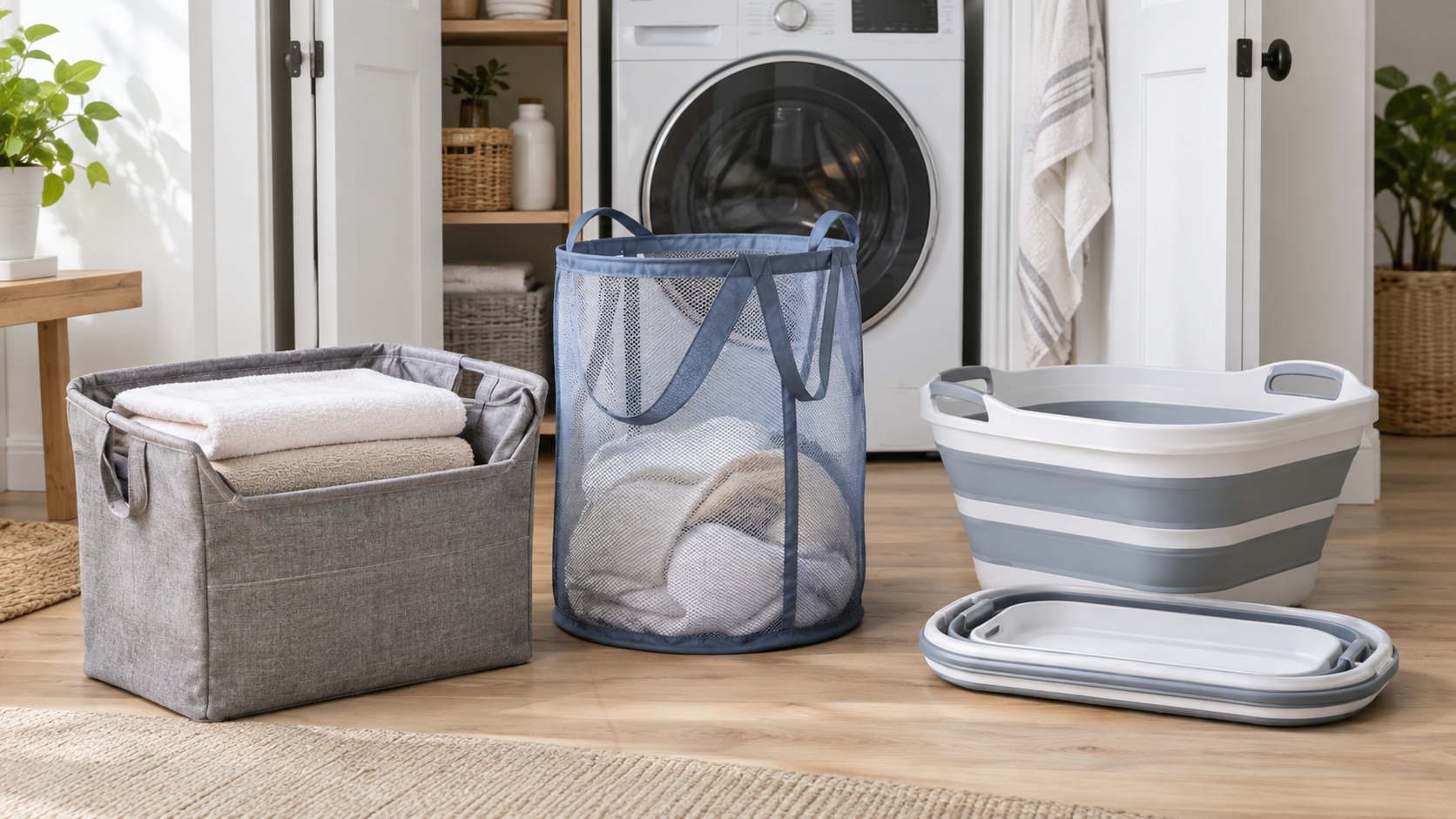
Compare the folding format after measuring your load and storage slot: These affiliate category links are shopping starting points, not tested rankings.
- Browse category: Fold-flat structured fabric basketsUseful when you want a rectangular opening and a thin stored package; check base support and how the sides lock open.
- Browse category: Pop-up mesh laundry basketsLight and ventilated, but flexible walls and spring frames may be awkward with heavy loads or on stairs.
- Browse category: Flexible fold-down basketsA wipeable choice with a rigid rim; compare collapsed thickness, hinge material, weight, and handle clearance.
Confirm current open and collapsed dimensions, stated capacity or load, material care, handle construction, folding instructions, warnings, and return terms before buying.
Start with the apartment route
Measure from the laundry storage spot to the machine, including the narrowest doorway, hallway turn, elevator, and stair landing. A broad basket that feels comfortable across one room can become clumsy in a shared corridor. If you use a laundromat, also check the vehicle, cart, or walking portion of the trip and plan how detergent travels without leaking onto clothes.
For stairs, a basket should leave you a clear view of the steps and let you keep a hand available when the building route requires it. A product photo showing a large pile says little about safe handling. If a loaded basket blocks your view, pulls your shoulders wide, or needs two hands through a difficult route, choose a smaller basket, make two trips, or use a suitable rolling format where stairs are not involved.
Choose the right collapsible format
| Format | Best fit | Main tradeoff |
|---|---|---|
| Structured fabric, fold-flat | Shelves, closet gaps, and people who want a box-like opening | Panels and inserts add weight and need a clear cleaning method |
| Pop-up mesh | Very tight storage and lightweight dry laundry | Flexible sides can sag; spring frames can twist or reopen abruptly |
| Flexible fold-down | Wipeable surfaces and a rigid carrying rim | Collapsible bands, joints, and handles add bulk and wear points |
| Rigid basket | Frequent heavy loads and the simplest grab-and-go routine | Does not shrink for storage, but may carry more predictably |
These are formats, not winners. The best choice depends on the load, route, and storage slot. A rigid basket is a valid outcome if every collapsible option makes the carrying job less stable or saves too little space.
Measure open and collapsed dimensions
Record the maximum length, width, and height while the basket is fully open. Then compare those numbers with the machine opening, counter clearance, and route. Usable interior space can be smaller than exterior dimensions because of tapered walls, structural panels, and folding bands.
For storage, measure the whole collapsed package, including handles, rims, feet, and any strap that holds it shut. Decide whether it stores vertically or flat, and make sure it will not spring into a door, block a shutoff, cover a vent, or become a trip hazard. A basket that collapses from 11 inches to 4 inches may be helpful in a shelf slot but irrelevant under a bed with only 3 inches of clearance.
Capacity is not the same as a manageable load
Volume claims do not tell you how heavy the basket becomes with jeans, towels, or damp items. Use the maker's current stated load guidance when available, but also set a personal limit based on the route and lifting height. Test the intended shelf or machine transfer with a light load first.
- Wide, low baskets can keep folded clothes visible but may be awkward through narrow doors.
- Tall baskets use less floor area but can hide stairs and encourage overfilling.
- Soft baskets may conform to a closet gap, yet bulging sides can catch doorframes.
- Rigid-rim baskets preserve the opening but require enough hand clearance around the handles.
Inspect handles and the folding mechanism
Look for handles attached to the structural part of the basket rather than only a thin liner. Check the opening size with your hand, the seam or fastener construction, and whether the grip presses into your fingers under an ordinary load. Long straps can suit shoulder carrying, but they also let a flexible basket swing; short side handles offer control but keep the load away from your body.
Open and collapse the basket only as directed. Pinch points can occur at hinged rims, folding panels, and compressible bands. A pop-up frame should have a documented folding sequence and a way to remain closed in storage. Keep children and pets away while operating spring frames, and stop using a basket if a wire, hinge, handle, or panel is exposed, cracked, or separating.
Ventilation, wet items, and cleaning
Ventilation helps air move around ordinary dry laundry, but it does not make a closed pile of damp textiles suitable for long storage. Move wet towels and workout clothes to the washing or drying routine promptly. Follow fabric-care instructions and avoid using the basket as a permanent damp-clothes hamper unless its maker specifically supports that use and cleaning method.
Mesh can release lint and small items and may snag hardware. Coated fabric can wipe clean but may have seams or panels that retain moisture. Flexible plastic-style baskets are often easier to wipe, yet grooves and collapsible joints still need access and drying time. Check whether any liner is removable and whether the maker permits machine washing; do not assume it from appearance.
Must-have checks
- Open dimensions that fit the real load, doorway, machine, and turning route.
- Collapsed dimensions that fit a verified storage slot without blocking access.
- Current stated load or capacity guidance appropriate to the planned use.
- Handles you can grip without forcing an awkward wrist or shoulder position.
- A folding mechanism with clear instructions and no exposed damaged parts.
- Cleaning and drying directions that fit your routine.
Nice-to-have features
- A closure strap or latch that keeps the empty basket flat.
- A removable, washable liner when the maker documents its care.
- A stable base insert for folded clothing.
- Ventilated sides for ordinary dry laundry.
- A light empty weight, provided the frame still stays open during loading.
Pockets, lids, labels, and dividers are only useful when they solve a real part of the routine. Each can add seams, weight, and cleaning work.
Who should skip a collapsible basket?
- Anyone whose typical load exceeds the maker's stated guidance or feels difficult to control.
- People carrying laundry on stairs when the basket blocks their view or requires both hands.
- Households with enough storage for a rigid basket and no meaningful need to fold it.
- Users who want a rolling solution for a long, level route rather than a carried basket.
- Anyone unable to operate the folding mechanism without pinching, twisting, or force.
- Homes where children or pets may play with a spring frame, straps, or an unstable open basket.
A simple comparison framework
- Map the route: Note stairs, thresholds, doors, turns, and the machine opening.
- Define one normal load: Use the clothing mix you actually carry, not a staged maximum.
- Measure both states: Compare fully open use with the complete folded package.
- Choose a mechanism: Decide whether panels, a spring frame, or compressible bands fit your dexterity and cleaning routine.
- Check the weakest points: Review handles, seams, hinges, frame ends, and base support.
- Plan care: Make sure the basket can be emptied, cleaned, dried, and stored without becoming another chore.
Bottom line
For a small apartment, the best collapsible laundry basket fits a normal load, stays controllable along the full route, and folds small enough to solve a verified storage problem. Compare fold-flat fabric, pop-up mesh, and flexible fold-down formats by measurements, handle comfort, base stability, ventilation, care, and folding hardware. Skip the category when a rigid basket or rolling hamper makes the actual trip easier and safer.