How to Choose Bottle Brushes for Water Bottles and Narrow Jars
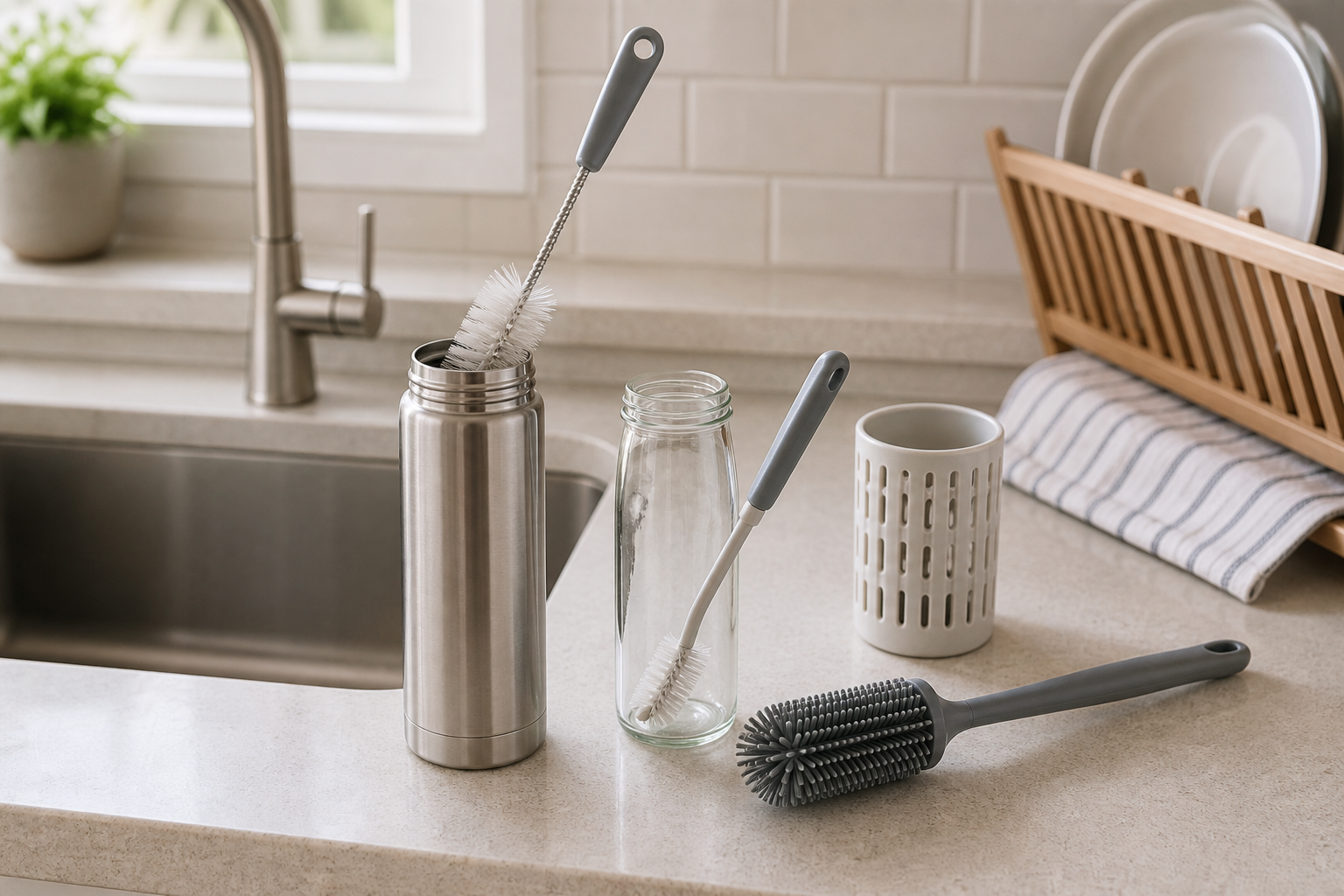
The right bottle brush is determined by the vessel, not by the biggest brush head in the set. Measure the narrowest opening and the full interior depth, then choose a head that can pass through the neck, reach the base, and make contact around the bottom edge without becoming trapped.
As an Amazon Associate, The Good Home Doc may earn from qualifying purchases.
Quick decision before shopping
First measure the available space, identify the setup or surface constraints, and decide who will maintain the item. Skip the category if it blocks access, conflicts with the manufacturer's instructions or lease, or adds more upkeep than the problem justifies.
Compare the brush format with the vessel you clean:
- Browse category: Compare long bottle brushes for water bottlesPrioritize verified head diameter, total reach, and bottom-edge contact for tall reusable bottles.
- Browse category: Compare narrow brushes for jars and carafesLook for a slim head and controlled shaft that can pass through the smallest opening.
- Browse category: Compare long-handle silicone bottle brushesCheck whether the flexible bristles contact your vessel shape and whether the maker allows your preferred cleaning method.
These are category searches, not tested rankings. Confirm current dimensions, materials, surface guidance, cleaning instructions, drying design, replacement parts, and return terms for the exact brush you consider.
This guide compares bottle-brush categories without naming winners or claiming hands-on testing. A listing photo cannot confirm fit inside your bottle, and “dishwasher safe” or surface-compatibility claims should come from the current maker instructions.
Quick Best-Fit Guide
- Best for tall reusable water bottles: a long, narrow nylon-bristle head that reaches the base without forcing the neck.
- Best for narrow jars and carafes: a slim brush with a controlled shaft and bristles at the tip.
- Best for flexible, easy-rinse bristles: a silicone brush whose head shape contacts the vessel walls and bottom.
- Best for straws, lids, and threads: separate small detail brushes sized for those parts, not one oversized all-purpose head.
- Best when the opening is extremely narrow: skip a standard brush and use only a vessel-maker-approved cleaning method.
Measure the Vessel Before the Brush
Measure the inside diameter at the narrowest point of the opening, not the outside rim. Then measure from the opening to the deepest interior surface. A brush needs enough usable reach after you account for the handle and any unbristled section near the head.
Also look at the base shape. A rounded shoulder, square bottom edge, internal ridge, or tapered neck may need tip bristles or a flexible head. Do not force a wide head through a narrow neck; a stuck brush can damage the brush or make the vessel unusable.
Comparison Framework
Nylon-Bristle Bottle Brushes
Nylon bristles usually provide concentrated contact and are available in many diameters. Stiffness varies, so the brush must match the surface and the type of residue.
Choose this format when: the maker permits the bristle material and you need bristles that reach around a bottom edge. Watch for an exposed wire tip, a head that is too wide at rest, and bristles that hold debris near the core.
Silicone-Bristle Bottle Brushes
Silicone heads rinse visibly and can flex through some openings, but widely spaced or very soft nubs may not contact every curve. A large flexible head still needs to exit the neck without excessive pulling.
Choose this format when: easy rinsing and a non-wire head matter, and the head geometry fits the vessel. Verify material-care guidance rather than assuming silicone is suitable for every finish.
Slim and Angled Detail Brushes
Slim brushes reach small jars, bottle shoulders, lid channels, and threads that a full bottle brush can miss. They are supplements when their short reach or small head cannot clean the main body efficiently.
Choose this format when: a clearly defined narrow part needs access. Keep food-contact detail brushes separate from brushes used for unrelated household jobs.
Must-Have Buying Checks
- Head diameter: Compare the relaxed head with the narrowest measured opening.
- Usable reach: Ensure the working head reaches the base while the handle remains controllable.
- Tip coverage: Bristles or nubs at the end help contact the base rather than only the sidewalls.
- Surface fit: Follow the vessel and brush makers’ guidance for coated, plastic, glass, and stainless surfaces.
- Secure construction: Check how the head and shaft join and inspect them for looseness or exposed wire.
- Drying path: Choose a hanging loop or ventilated upright setup that lets the head dry without sitting in collected water.
Nice-to-Have Features
- A non-slip handle: Helps control the brush with wet hands.
- Replaceable heads: Can reduce waste if replacements remain available and attach securely.
- Color-coded detail brushes: Make it easier to reserve small brushes for straws, lids, or other defined parts.
- A ventilated holder: Useful only if it drains, stays stable, and is easy to clean.
Cleaning, Drying, and Replacement
Rinse visible residue from the brush after use and clean it according to its maker instructions. Do not assume every handle, adhesive joint, wire core, or silicone head is dishwasher safe. Shake off excess water and let the head dry in open air rather than sealed in a sink cabinet.
Clean the holder too; drainage slots do not help if water remains trapped underneath. Replace the brush when bristles stay bent or shed, the head loosens, wire becomes exposed, odor remains after proper cleaning, or residue can no longer be removed.
Who Should Skip a Standard Bottle Brush
- Skip a wide head if you cannot verify that it will pass back through the vessel neck.
- Skip a stiff or exposed-wire brush when the vessel maker warns against scratching or that brush material.
- Skip a long flexible shaft if it buckles before delivering controlled contact at the base.
- Skip a brush set when most included heads do not match a specific vessel or part you own.
- Skip a holder that traps water or consumes more sink space than your drying routine allows.
- Skip manual brushing for any vessel whose maker requires a different cleaning process.
Buying Checklist
- Measure the narrowest opening and full interior depth.
- Note the base, shoulder, thread, lid, and straw shapes that need contact.
- Compare relaxed head diameter, working length, tip coverage, and handle grip.
- Verify brush material against the vessel maker’s surface-care instructions.
- Confirm the brush’s cleaning method and plan an open-air drying location.
- Buy only the brush formats that match a real vessel or removable part in your kitchen.
Bottom Line
A long nylon brush is the practical default for many tall bottles when its diameter and stiffness fit. A silicone head favors visible rinsing and flexibility, while a slim detail brush handles narrow jars, lids, threads, and straws. The best choice reaches the deepest surface, exits the opening without force, respects the vessel finish, and dries fully between uses.
Next step: Put this decision in context with the leaks and moisture prevention guide.