How to Choose Blanket Ladders for Small Living Rooms
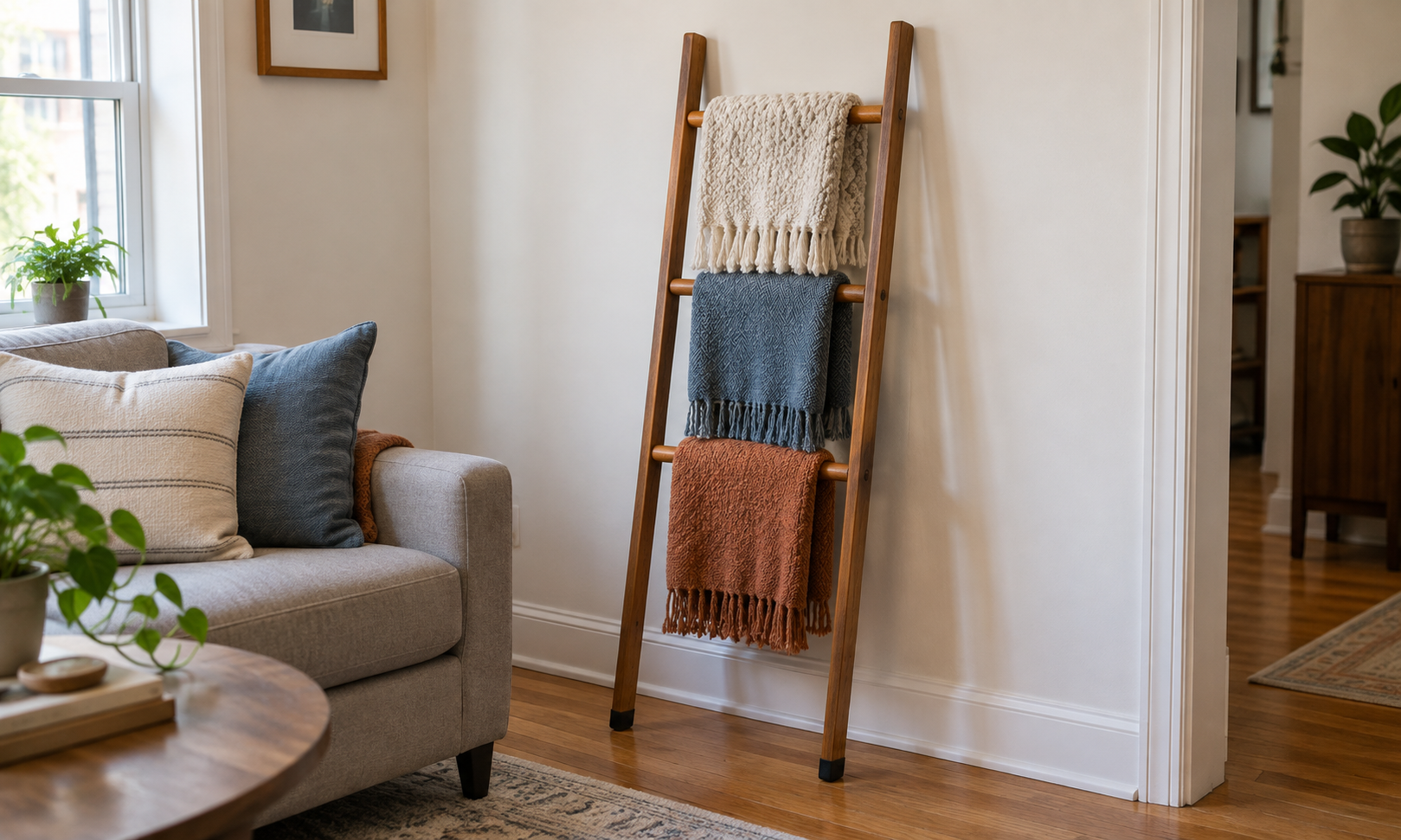
A blanket ladder can move throws off the sofa without taking the floor area of a deep basket, but “slim” does not mean zero-footprint. The rails lean into the room, blankets add bulk, and the setup needs a stable, permitted position where nobody will mistake decorative storage for climbing equipment.
As an Amazon Associate, The Good Home Doc may earn from qualifying purchases.
Quick decision before shopping
First measure the available space, identify the setup or surface constraints, and decide who will maintain the item. Skip the category if it blocks access, conflicts with the manufacturer's instructions or lease, or adds more upkeep than the problem justifies.
Compare a ladder by the room and blankets you already have:
- Browse category: Compare wood blanket laddersCheck finish, full dimensions, rung spacing, feet, and wall-contact parts.
- Browse category: Compare metal blanket laddersPrioritize smooth textile-contact points, stable feet, and suitable care.
- Browse category: Compare narrow blanket laddersVerify usable rung width instead of relying on listing photos.
These are category searches, not tested rankings. Confirm current dimensions, intended use, assembly instructions, stated load guidance, wall and floor contact, restraint guidance, care directions, and return terms.
This guide compares formats and fit; it does not name winners or claim hands-on testing. A decorative blanket ladder is textile storage, not a step ladder. Never climb, sit, hang from, or let children play on one.
Quick Best-Fit Guide
- Frequent blanket changes: choose open rungs with the everyday throw within easy reach.
- Thick throws: favor wider rung gaps and enough wall clearance to prevent bunching.
- A narrow wall: measure the projected feet and loaded blankets, not just rail width.
- Active children or pets: a closed basket, ottoman, or cabinet is usually a better fit.
Measure the Loaded Footprint
Measure wall width, ceiling height, baseboard depth, and distance to the sofa, doorway, outlet, vent, and walking route. Mark both floor feet with removable tape. The top sits nearer the wall while the feet project into the room; that projection is part of the footprint.
Add the thickness and overhang of folded blankets. Fringe should not pool on the floor or hide the feet. Test the route against the loaded—not empty—outline.
Compare the Main Formats
Simple Wood Rails
Compare joint construction, finish smoothness, supplied floor pads, wall-contact pieces, and care. Rough edges or exposed hardware can snag woven throws.
Metal Frames
Metal designs may use slimmer rails, but weight and contact points vary. Check for smooth joints, protective feet, wall pads, and finish-care limits.
Models With a Shelf or Basket
Extra storage changes depth and weight distribution. Choose it only when the added space has a defined purpose and the complete loaded footprint still works.
Must-Have Buying Checks
- Full assembled dimensions: include the front-to-back projection in the instructed position.
- Usable rung width and spacing: compare these with folded throws, including fringe.
- Protected contact points: verify supplied feet and wall pads suit your surfaces.
- Clear intended use: instructions should identify decorative textile storage, never climbing equipment.
- Assembly and placement instructions: account for every brace, fastener, restraint, and limit.
- Smooth fabric contact: avoid burrs, splinters, sharp hardware, and rough finish.
Placement and Renter Limits
Follow the maker's lean angle, anti-tip, restraint, and clearance directions. A baseboard can change how the rails sit. Keep the ladder away from swinging doors, busy routes, heaters, fireplaces, radiators, vents, and outlets that require access.
Renters should check lease rules before attaching a restraint or adhesive pad. If attachment is required and permission is unclear, use freestanding closed storage. Households with climbing children, active pets, or anyone likely to pull on rungs should generally skip a leaning ladder; appearance cannot establish stability.
Use and Maintenance
Keep frequently used throws on reachable middle rungs and distribute items as directed. Remove blankets before moving or cleaning the frame. Follow finish-care directions, check joints and pads, and stop using the ladder if it shifts, rocks, develops sharp damage, or no longer sits as instructed.
Who Should Skip One
- Anyone whose loaded ladder would enter a normal walking route.
- Homes where children or pets are likely to climb, pull, or run into it.
- Renters whose required restraint conflicts with the lease or wall.
- People needing concealed, dust-resistant, damp-textile, or high-capacity storage.
- Any household where it may be mistaken for climbing equipment.
Buying Checklist
- Count and measure the throws folded.
- Measure wall, baseboard, height, and projected floor area.
- Compare usable rung width, spacing, rail clearance, and fringe drop.
- Verify intended use, assembly, pads, restraints, and stated loads.
- Check fabric-contact surfaces, care, and the route for moving it.
- Choose an alternative if safe placement requires ignoring maker or lease limits.
Bottom Line
A blanket ladder fits when you want visible, frequently reached throw storage and can protect the walking path, floor, and wall. Choose by loaded footprint, rung spacing, contact points, and instructions—not styling alone. For concealed capacity or a more contained setup, use an ottoman, basket, or under-sofa bin.